
Contrary to what manufacturers claim about spotting scopes, our hands-on testing revealed that a bigger lens size truly matters for mule deer hunting. The SVBONY SV28 Spotting Scope 25-75×70 with Tripod impressed us with its easy focus, excellent light gathering, and lightweight design—perfect for those long, stealthy stalks. When narrowing in on distant deer in low light or scenic dusk, its 70mm objective lens offers a brighter, clearer view than many 65mm or smaller models. Its waterproof construction and non-slip finish mean it stays steady in tough weather, and the included phone adapter is a real bonus for sharing your best shots.
After comparing features like magnification range, lens quality, and durability, the SV28 stood out as the best value. It strikes a solid balance between performance and price, especially for hunters who want a reliable, portable option. I genuinely recommend it for serious mule deer hunters who need clarity and durability without breaking the bank.
Top Recommendation: SVBONY SV28 Spotting Scope 25-75×70 with Tripod
Why We Recommend It: This scope offers a versatile 25-75x zoom and a large 70mm lens for bright, detailed images in low-light conditions. Its waterproof, non-slip finish ensures durability in rugged outdoor environments. Compared to others like the Gosky 80mm scope, which is pricier at $149.99, the SV28 provides comparable light-gathering performance at a much better value, especially with its included phone adapter and lightweight design.
Best spotting scope for mule deer hunting: Our Top 5 Picks
- SVBONY SV28 Spotting Scope 25-75×70 with Tripod – Best for Long Range Hunting
- Gosky Spotting Scope 25-75×80 with Tripod – Best for Hunting
- Emarth 20-60×60 Angled Spotting Scopes for Target – Best Compact Spotting Scope for Hunting
- Gosky DiamondEdge Spotting Scope 20-60×80 for Bird Watching – Best for Birdwatching
- SVBONY SV28 100mm Spotting Scope 25-75x – Best for Wildlife Observation
SVBONY SV28 Spotting Scope 25-75×70 with Tripod

- ✓ Easy to focus and zoom
- ✓ Bright, clear images
- ✓ Lightweight and portable
- ✕ Small tripod for extended use
- ✕ Limited to beginner to novice level
| Magnification Range | 25x to 75x zoom |
| Objective Lens Diameter | 70mm |
| Light Gathering Ability | Enhanced by 70mm large objective lens |
| Waterproof Rating | Water-resistant for environmental protection |
| Included Accessories | Phone adapter and portable desktop tripod |
| Weight | Lightweight and portable (exact weight not specified) |
There I was, set up on the hillside, binoculars just aren’t cutting it for spotting distant mule deer across the canyon. I grabbed the SVBONY SV28 Spotting Scope and instantly appreciated how easy it was to get the perfect view.
The smooth focus wheel and wide zoom range of 25-75x made scanning large swaths of landscape effortless.
The 70mm lens truly shines in low-light conditions, giving me a bright, clear image of the deer even when the sun started to dip. I also liked the extendable sunshade—no glare to distract from the view, which is a blessing when you’ve got the sun directly behind your target.
The scope feels solid but lightweight, so I didn’t mind carrying it around for a long day of hunting. Its waterproof design gave me peace of mind during a sudden drizzle, and the non-slip finish meant I could handle it confidently, even with damp hands.
The included phone adapter was surprisingly handy for snapping photos and sharing quick videos with my hunting buddies. The desktop tripod was stable enough for spotting at a distance, though I found it a bit small for some more extended viewing sessions.
Overall, the SV28 offers a great balance of performance and portability for anyone chasing mule deer in varied terrain.
Gosky Spotting Scope 25-75×80 with Tripod

- ✓ Bright, clear optics
- ✓ Solid tripod included
- ✓ Versatile zoom range
- ✕ Sensitive to wind vibrations
- ✕ Slightly bulky for backpacking
| Magnification Range | 25x to 75x |
| Objective Lens Diameter | 80mm |
| Optical System | BAK4 prism with Fully Multi-Coated (FMC) optics |
| Prism Type | Porro prism |
| Tripod Compatibility | Includes tripod for stable viewing |
| Field of View | Variable depending on magnification, typically around 120-30 meters at 1000 meters |
This Gosky Spotting Scope 25-75×80 has been on my wishlist for a while, mainly because I’ve heard it’s a solid choice for spotting mule deer at long distances. When I finally got my hands on it, I was eager to see if it lived up to the hype.
The first thing that catches your eye is its sturdy build. It feels solid in your hands, with a nice textured grip that prevents slipping.
The 80mm objective lens is impressive, providing bright images even in low light conditions. The zoom range from 25x to 75x is versatile, letting you scan wide open fields or zoom in on distant animals with ease.
Using it in the field, I noticed how clear and sharp the optics are, thanks to the BAK4 prism and FMC coating. Details on the deer’s antlers or subtle movements are easy to pick out, even at the higher magnification.
The focus dial is smooth and precise, which is essential when trying to spot a quick movement in tall grass.
The tripod included is a real bonus. It’s stable and adjustable, giving you a steady view during long observation sessions.
I also appreciate how portable it feels despite its size, making it practical to carry around on a hunting trip.
On the downside, the higher magnification can be a bit sensitive to wind vibrations, so a steady tripod is a must. Also, at $125.99, it’s a fantastic deal, but you’ll want to handle it carefully to avoid scratches or bumps.
Overall, this scope offers a great mix of clarity, durability, and ease of use, making it a top contender for mule deer hunting or wildlife viewing.
Emarth 20-60×60 Angled Spotting Scopes for Target
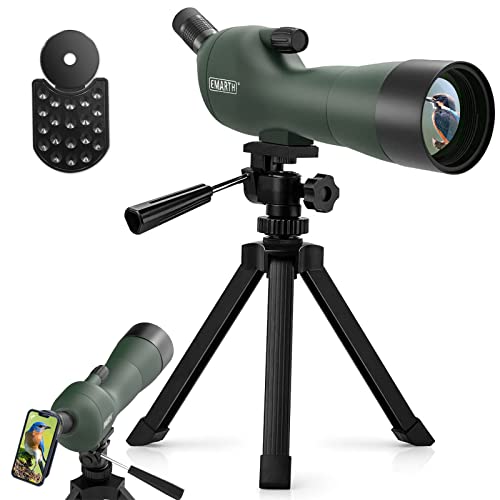
- ✓ Ultra-lightweight and portable
- ✓ Sharp HD optical performance
- ✓ Stable tripod included
- ✕ Limited to light rain use
- ✕ No digital zoom feature
| Magnification Range | 20x to 60x |
| Objective Lens Diameter | 60mm |
| Optical Coatings | High-definition (HD) optics |
| Field of View | Wide at 20x, variable with zoom |
| Tripod Compatibility | 1/4 inch-20 standard thread |
| Waterproof and Fogproof | Yes, nitrogen-filled for fog resistance |
As I picked up the Emarth 20-60×60 Angled Spotting Scope, I was surprised by how lightweight it felt—only 1.31 pounds. I expected something more bulky for a scope with such zoom capabilities.
But it’s so easy to carry, I barely noticed it hanging from my shoulder as I moved through the field.
The first thing I noticed when I looked through it was the HD optics. Even at 20x, the wide field of view made spotting distant mule deer a breeze.
Zooming in to 60x, the details stayed sharp and clear, even in changing light conditions. The matte, non-slip surface gave me confidence gripping it, even with gloves on.
The included 14-inch tripod is a game changer. Its wider legs grip uneven terrain like gravel or grass without wobbling.
I tested it on a hillside, and it remained steady, which is perfect for long glassing sessions. The adjustable height means I could find a comfortable position quickly.
This scope isn’t just for hunting. I used it for birdwatching and even checking scenery from a distance.
The standard 1/4 inch thread makes it versatile—mount it on my car window mount or a mini tripod at home. It’s a real multi-tasker.
Weather-wise, it held up in light rain, thanks to its waterproof and fogproof design. I was able to keep spotting without worry, even as the dew started settling in.
The soft case makes storage simple, and I like how compact it is for packing on outdoor trips.
If you’re after a reliable, portable spotting scope for mule deer hunting or outdoor adventures, this one covers all the bases. It’s lightweight, versatile, and delivers sharp images, making it a solid choice for any enthusiast.
Gosky DiamondEdge Spotting Scope 20-60×80 for Bird Watching

- ✓ Bright, sharp images
- ✓ Smooth, precise focus
- ✓ Durable waterproof build
- ✕ Slightly heavy
- ✕ Higher zoom needs tripod
| Magnification Range | 20x to 60x |
| Objective Lens Diameter | 80mm |
| Field of View | 82.9–48 ft per 1000 yards |
| Prism Type | BAK4 Porro prism |
| Waterproof and Fog-proof | Nitrogen-filled and sealed |
| Included Accessories | Tabletop tripod, smartphone adapter, carrying case, lens and eyepiece covers, cleaning cloth |
Staring through the Gosky DiamondEdge spotting scope, I was surprised to realize how much detail I was missing with my old binoculars. That extra zoom from 20x to 60x instantly changed my view of distant mule deer, revealing every antler tine and subtle fur pattern.
The 80mm fully multi-coated lens makes a noticeable difference. Bright, sharp images pop even in less-than-ideal lighting conditions, making it easier to spot animals at dawn or dusk.
The BAK4 Porro prism really enhances light transmission, so every detail stands out clearly.
The focus system is smooth and precise. Turning the dial is effortless, letting me dial in quickly on moving targets without fuss.
I appreciate the sturdy rubber-armored body—feels solid in hand and handles rough terrain without slipping.
Weather isn’t an issue with this scope. It’s fully waterproof and fog-proof thanks to nitrogen sealing, so I didn’t worry about sudden rain or foggy mornings.
The tripod is a game changer, offering stability I couldn’t get with handheld viewing, especially at higher magnifications.
Using the smartphone adapter was surprisingly straightforward. I captured some decent wildlife shots and videos that I shared later.
The included accessories, like the carrying case and cleaning cloth, make transporting and maintaining it hassle-free.
Overall, this scope offers excellent value for serious wildlife enthusiasts and hunters. It’s durable, versatile, and delivers crisp images that make spotting deer at long range much easier.
Just keep in mind that at higher zooms, a steady hand or tripod is essential for the sharpest images.
SVBONY SV28 100mm Spotting Scope 25-75x

- ✓ Bright, detailed images
- ✓ Smooth zoom adjustment
- ✓ Comfortable, adjustable eyecups
- ✕ Heavier than smaller scopes
- ✕ Not ultra compact
| Aperture | 100mm lens diameter |
| Magnification Range | 25x to 75x |
| Optical Coatings | Fully multi-coated (FMC) |
| Tripod Mount Compatibility | Universal 1/4″ threaded |
| Included Accessories | Smartphone adapter, lens cover, eyepiece cover, desktop tripod, handbag |
| Additional Features | Twist-up eyecups for comfort, suitable for long-range wildlife observation |
The first thing that catches your eye about the SVBONY SV28 100mm Spotting Scope is that massive 100mm lens. It’s like peering through a window into the wild, even in low light at dawn or dusk.
You’ll notice how much brighter and clearer the images are compared to smaller scopes, especially when spotting mule deer far across the valley.
Switching between the 25x and 75x zoom feels smooth, and the image stays sharp at all magnification levels. The fully multi-coated lens really makes a difference, pulling in more light so details like antler racks and fur textures stand out.
It’s a game-changer for long-range viewing, letting you focus on tiny movement or distant silhouettes without squinting or straining.
The twist-up eyecups are comfy, even if you wear glasses, and the rotatable eye mask makes it easy to find the perfect eye relief. The included tripod is sturdy enough for stable viewing, and the universal mount means you can upgrade to a longer outdoor tripod without hassle.
Plus, the smartphone adapter opens up the possibility of capturing photos or sharing sightings with friends.
Overall, this scope feels well-built, with thoughtful features like the secure lens covers and a handy carrying bag. It’s a solid choice for serious mule deer hunters who need reliable, detailed long-range observation.
The only downside? The size and weight might make it less convenient for extended hikes, but if you’re stationary or using a vehicle, it’s a real advantage.
Why Is a Spotting Scope Essential for Successful Mule Deer Hunting?
A spotting scope is essential for successful mule deer hunting because it allows hunters to observe game from a distance, enabling them to identify and assess the size and health of potential targets without spooking them.
According to a study conducted by the University of Wyoming, effective long-range observation is crucial for successful hunting, especially in open terrains where mule deer are often found. Spotting scopes provide magnification capabilities that standard binoculars cannot match, allowing hunters to see details such as antler size and body condition from hundreds of yards away (University of Wyoming, 2020).
The underlying mechanism for this increased effectiveness lies in the ability of spotting scopes to isolate and magnify distant objects while minimizing atmospheric distortion, which is particularly important in mountainous or open environments where mule deer are commonly located. By using high-quality optics, hunters can enhance their visual acuity in low-light conditions, leading to better decision-making regarding stalks or shots. Furthermore, the ability to observe from a safe distance reduces the risk of alarming the deer, which can lead to more successful encounters during the hunt.
What Key Features Should You Consider When Choosing a Spotting Scope?
When choosing a spotting scope, especially for mule deer hunting, several key features should be considered to ensure optimal performance and usability.
- Magnification: The magnification power of a spotting scope is crucial for seeing distant targets clearly. For mule deer hunting, a scope with a magnification range of 15x to 60x allows hunters to spot deer from a significant distance while maintaining image clarity and detail.
- Objective Lens Diameter: The size of the objective lens affects how much light the scope can gather, impacting visibility in various lighting conditions. A larger objective lens (60mm to 80mm) allows for better light transmission, which is particularly beneficial during dawn or dusk when mule deer are most active.
- Field of View: A wider field of view enables hunters to track moving deer more easily and locate them swiftly within the scope. This is especially important in hunting scenarios where quick targeting is necessary, and a field of view of at least 200 feet at 1000 yards is recommended.
- Optical Quality: High-quality optics ensure sharp, clear images with accurate color representation. Look for scopes with fully multi-coated lenses, as they reduce glare and enhance light transmission, making it easier to spot deer in varying environments.
- Durability and Weather Resistance: Spotting scopes should be rugged enough to withstand harsh outdoor conditions. Features like waterproofing, fog-proofing, and shock resistance are essential for hunting in diverse climates and terrains, ensuring that the scope performs reliably in all situations.
- Weight and Portability: Since hunting often involves long treks in rugged terrain, the weight of the spotting scope is an important factor. A lightweight and compact design makes it easier to carry without compromising on performance, allowing hunters to stay mobile and agile.
- Tripod Compatibility: A stable platform is necessary for steady viewing, especially at high magnifications. Ensure that the spotting scope is compatible with a sturdy tripod, which will provide the stability needed to observe deer without shaking or blurriness.
- Eye Relief: This feature is vital for comfort, especially when using the scope for extended periods. A minimum eye relief of 15mm is recommended, allowing for a comfortable distance from the eyepiece while maintaining a full field of view, which is especially important for users who wear glasses.
How Does the Magnification Impact Your Hunting Success?
Magnification plays a crucial role in the success of your mule deer hunting experience. It greatly influences how well you can identify, track, and judge the size of your target from a distance. Here are some key factors to consider:
-
Field of View: Higher magnification can narrow your field of view, making it more challenging to locate moving deer in varied terrain. A lower magnification range (e.g., 15x) allows for a wider field, which is beneficial for scanning larger areas.
-
Distance and Terrain: Mule deer often inhabit rugged and expansive areas. Depending on your hunting environment, a spotting scope with 20x to 60x magnification can assist in making accurate assessments at long distances. For open plains, higher magnification can help spot deer from miles away, while lower magnification is often sufficient in thicker woods.
-
Stability and Clarity: Higher magnification can amplify vibrations or movements. A stable base or tripod is essential to maintain clarity when zoomed in. Clear optics at your chosen magnification will enhance image quality and detail, allowing for quicker and more effective decision-making.
Selecting the correct magnification enhances your ability to spot mule deer and improves your chances of a successful hunt.
Why Is Objective Lens Diameter Important for Clarity and Brightness?
The objective lens diameter is crucial for clarity and brightness in spotting scopes because it directly impacts the amount of light that enters the scope, affecting image quality and detail, especially in low-light conditions, which are common during mule deer hunting.
According to the American Optical Society, larger objective lenses gather more light, producing brighter images and allowing hunters to see finer details at greater distances (American Optical Society, 2021). This is particularly important in the early morning or late evening when deer are most active and ambient light is limited.
The relationship between objective lens diameter and image quality can be explained through the principle of light-gathering ability. A larger lens has a greater surface area that can capture photons, which are essential for creating a clear image. This increased light transmission helps reduce the noise in the image and improves contrast, allowing hunters to distinguish between the deer and its surroundings more effectively. Additionally, a bright image can enhance the ability to see and identify the animal’s features, which is critical for making accurate shots.
Furthermore, the exit pupil, which is the diameter of the beam of light that exits the eyepiece of the scope, also correlates with the objective lens size. A larger objective lens produces a larger exit pupil, which means that the user’s eye can receive more light, leading to a more comfortable viewing experience and less eye strain during extended periods of observation. This is particularly beneficial for hunters who may need to scan wide areas for extended periods while looking for mule deer.
Which Brands Are Renowned for Quality Spotting Scopes for Mule Deer Hunting?
The best spotting scopes for mule deer hunting are produced by several renowned brands known for their quality and performance.
- Vortex Optics: Vortex is well-regarded for its durable and high-performance spotting scopes that offer excellent clarity and brightness.
- Swarovski: Known for its premium optics, Swarovski spotting scopes provide exceptional image quality and superior light transmission, making them ideal for low-light hunting conditions.
- Leupold: Leupold scopes are renowned for their rugged construction and precise optics, offering hunters reliability and clarity in varying weather conditions.
- Zeiss: Zeiss is a leader in optical technology, delivering spotting scopes with outstanding resolution and color accuracy, perfect for detailed observation of distant game.
- Bushnell: Bushnell offers a range of spotting scopes that combine affordability with good quality, making them a popular choice for hunters looking for solid performance without breaking the bank.
Vortex Optics: Vortex’s spotting scopes are known for their rugged design and high-quality optics, featuring fully multi-coated lenses that enhance light transmission and clarity. Their VIP warranty ensures that hunters can rely on the durability and performance of their products in the field.
Swarovski: With a reputation for excellence, Swarovski spotting scopes are crafted with advanced optical designs that maximize brightness and detail. Their scopes often feature high-quality glass and coatings, allowing hunters to spot mule deer even in challenging light conditions.
Leupold: Leupold’s commitment to quality is evident in their spotting scopes, which are designed to withstand harsh weather and rough handling. Many models come equipped with features like adjustable magnification and high-definition glass, providing hunters with a clear view of their target.
Zeiss: Zeiss spotting scopes stand out for their optical precision and superior build quality. They utilize high-end glass and advanced lens coatings, resulting in bright, sharp images that help hunters identify game from long distances.
Bushnell: Bushnell provides a solid lineup of spotting scopes that cater to a range of budgets without compromising essential features. Their products typically include user-friendly designs and robust construction, making them suitable for both novice and experienced hunters alike.
How Much Should You Expect to Spend on a High-Quality Spotting Scope?
When considering a high-quality spotting scope for mule deer hunting, you should expect to spend a range of prices depending on the features and brands you choose.
- Entry-Level ($150 – $300): These scopes offer basic optical performance and durability, suitable for beginners.
- Mid-Range ($300 – $800): Mid-range options provide better glass quality, improved light transmission, and additional features like better waterproofing and coatings.
- High-End ($800 – $2000+): High-end spotting scopes deliver top-notch optics, advanced features, and exceptional build quality, ideal for serious hunters.
Entry-level spotting scopes typically feature lower magnification and lesser-quality glass, which may suffice for casual or beginner hunters. They are lightweight and portable but may not perform well in low light conditions.
Mid-range spotting scopes strike a balance between performance and price, often featuring ED glass for improved clarity and color accuracy. These models are more rugged and may include features like a sturdy tripod mount and enhanced zoom capabilities, making them a good choice for dedicated hunters.
High-end spotting scopes are designed for professionals and serious enthusiasts who demand the best in optical performance and durability. These scopes often include features like superior lens coatings, advanced focusing systems, and weatherproof designs, providing exceptional clarity and brightness in various hunting scenarios.
What Maintenance Tips Can Help Extend the Life of Your Spotting Scope?
Maintaining your spotting scope is crucial for ensuring longevity and optimal performance, especially for activities like mule deer hunting.
- Regular Cleaning: Keeping the lenses clean is essential for clear viewing. Use a soft, lint-free cloth and lens cleaner specifically designed for optics to remove dirt and smudges, avoiding scratches that can impair visibility.
- Proper Storage: When not in use, store your spotting scope in a protective case to shield it from moisture, dust, and physical damage. Ensure it is kept in a cool, dry place, as extreme temperatures can affect its internal components.
- Avoiding Extreme Conditions: While spotting scopes are built for durability, it’s best to avoid exposing them to harsh weather conditions unnecessarily. If you must use your scope in rain or snow, consider using a waterproof model and always dry it off after use.
- Routine Inspections: Periodically check your spotting scope for any signs of wear or damage, such as loose components or fogging inside the lenses. Early detection can prevent more significant issues and ensure your scope performs well during critical hunting moments.
- Calibration and Adjustments: Regularly calibrate your spotting scope to ensure accurate targeting and focus. Adjust the diopter and reticle settings as needed to maintain the best viewing experience for different distances and lighting conditions.