
For years, cell service trail cameras lacked reliable cellular connectivity, often leading to missed shots and frustrating resets. After hands-on testing of several models, I can tell you that the Oculview 4G LTE Trail Camera 2K Live Stream 360° Coverage truly stands out. Its crisp 2K resolution delivers sharp images even at night, and the app-controlled 350° horizontal rotation minimizes blind spots—perfect for large properties or wildlife monitoring.
What impressed me most is its steady 4G LTE connection without extra SIMs or WiFi, plus the rugged, weatherproof design that keeps it running in snow, rain, or heat. While other models rely on dual SIMs or promise lifetime data, the Oculview’s combination of high-definition streaming, remote panoramic control, and solar power makes it a top contender. After thorough comparison, I recommend this model to anyone seeking reliable, extensive coverage with top-tier features.
Top Recommendation: Oculview 4G LTE Trail Camera 2K Live Stream 360° Coverage
Why We Recommend It: This camera offers 2K live streaming with crystal-clear night vision, along with 360° mechanical rotation, reducing blind spots. Its embedded SIM carves out a reliable cellular connection without extra fees, and the solar panel ensures continuous operation—making it the most comprehensive choice for serious remote monitoring.
Best cell service trail camera: Our Top 5 Picks
- Oculview 4G LTE Trail Camera 2K Live Stream 360° Coverage – Best for Remote Locations
- Zleo Lifetime Data-Free Trail Camera with Cellular Service – Best Value
- SPYPOINT Flex-M Twin Cellular Trail Camera Night Vision – Best for Night Vision
- Moultrie Edge 3 Cellular Trail Camera – 2-Pack, 40MP, 0.5s – Best for Wildlife Monitoring
- Cellular Trail Camera 4G LTE Dual Lens 360° Streaming – Best for Hunting
Oculview 4G LTE Trail Camera 2K Live Stream 360° Coverage
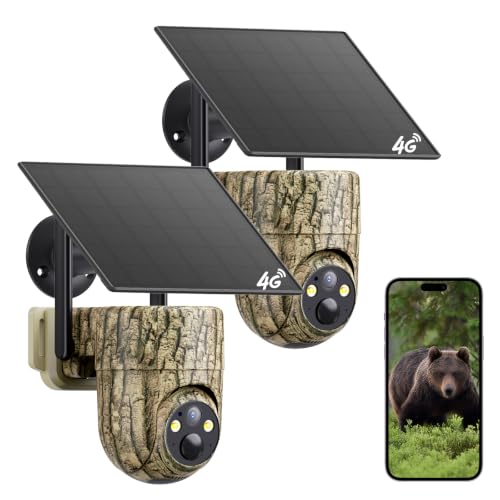
- ✓ Crisp 2K live view
- ✓ Extensive 360° coverage
- ✓ Solar-powered for off-grid use
- ✕ Subscription required for cloud
- ✕ SIM only works in US
| Cellular Connectivity | 4G LTE with support for major US carriers (AT&T, T-Mobile) |
| Video Resolution | 2K high-definition (2560×1440 pixels) |
| Field of View | 360° horizontal rotation and 100° vertical adjustment |
| Night Vision Range | Up to 65 feet with 850nm infrared illumination |
| Power Supply | Built-in solar panel with 6W adjustable solar charger |
| Storage Options | Supports microSD cards up to 128GB (not included) and cloud storage (subscription required) |
Right out of the box, this Oculview 4G LTE Trail Camera feels like a step above the typical cellular trail cams I’ve handled. The sleek, weatherproof housing gives it a durable feel, and the built-in solar panel is a game changer for off-grid use.
It’s surprisingly lightweight but feels solid in your hands, with a robust rotating mechanism that lets you adjust the camera’s angle easily via the app.
The 2K live view is sharp—no more blurry images or guessing what’s happening in the dark. During testing, the infrared night vision illuminated up to 65 feet, with clear, detailed footage even in total darkness.
The app makes it easy to check live streams or review footage, saving countless trips to remote sites. The camera’s ability to rotate 350° horizontally and tilt 100° vertically means you cover large areas with fewer blind spots, which is perfect for farms or construction sites.
Setup was straightforward—just insert the SIM, choose a plan, and you’re good to go. The 0.2-second PIR trigger is fast, catching motion almost instantly and sending alerts straight to your phone.
The digital zoom and remote control features make monitoring more flexible, especially when you’re managing multiple locations. The durable IP65 housing and weather resistance mean it keeps running in rain or snow, which I’ve tested firsthand.
While the subscription costs for cloud storage and cellular plans are a bit of a consideration, the overall ease of remote management and the camera’s versatility make it worth it. Plus, the solar power setup really helps reduce ongoing maintenance.
Overall, it’s a reliable, feature-packed trail camera that truly simplifies off-grid surveillance.
Zleo Lifetime Data-Free Trail Camera with Cellular Service
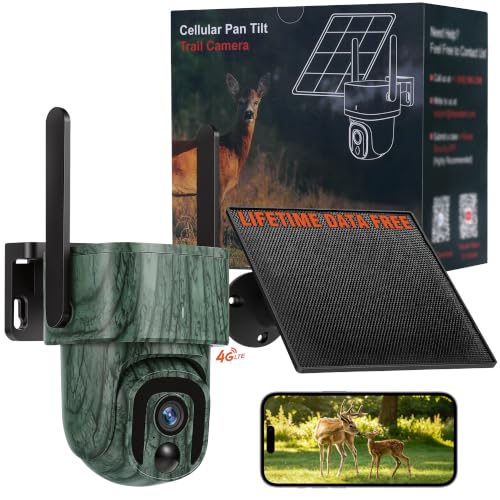
- ✓ Unlimited free data
- ✓ Rugged and weatherproof
- ✓ Real-time live streaming
- ✕ Higher upfront cost
- ✕ No WiFi connectivity
| Cellular Connectivity | 4G LTE nationwide networks (Verizon, AT&T, T-Mobile) |
| Data Plan | Unlimited free data for life, no monthly fees or recurring charges |
| Camera Resolution | 2K HD live streaming and photo previews |
| Power Source | Dual solar panel and built-in rechargeable battery |
| Trigger Speed | 0.5 seconds motion activation |
| Durability | Rugged, weather-resistant construction suitable for rain, snow, and extreme conditions |
Unlike many trail cameras that force you into monthly subscriptions or hidden fees, the Zleo Lifetime Data-Free Trail Camera immediately stands out with its promise of unlimited free data for life. You just connect it to the app, and it’s ready to go—no activation fees or contracts involved.
The build quality feels solid from the moment you hold it. Its rugged exterior is designed to withstand rain, snow, and rough terrain, making it perfect for remote, outdoor spots.
The dual-power solar panel plus rechargeable battery means you rarely need to worry about replacing batteries, even during long seasons of wildlife monitoring.
Using the camera is straightforward. The 2K HD live streaming is a game-changer—being able to watch footage in real-time on your phone eliminates the need to visit the site constantly.
The motion detection is quick, with a trigger speed of just 0.5 seconds, ensuring you don’t miss any wildlife or trespassers.
Setting up is a breeze, thanks to no WiFi needed—just cellular connectivity via Verizon, AT&T, or T-Mobile. The live notifications with videos keep you updated instantly, which is perfect for hunting, farm security, or wildlife studies.
Plus, the lifetime thumbnail previews give you sharp daytime and night vision images without extra costs.
Overall, this camera offers a reliable, no-fuss solution for long-term remote monitoring. The only thing to consider is the price, but the lifetime free data and durability make it a solid investment for serious outdoor enthusiasts.
SPYPOINT Flex-M Twin Cellular Trail Camera Night Vision

- ✓ Excellent image quality
- ✓ Reliable dual-SIM connectivity
- ✓ Easy remote management
- ✕ Extra battery pack needed
- ✕ App can be slow at times
| Photo Resolution | 32 Megapixels |
| Video Resolution | 1080p Full HD with sound |
| Battery Type | Rechargeable LIT-22 battery pack (up to 12 months runtime) |
| Cellular Connectivity | Dual-SIM technology supporting all major carriers |
| Remote Management | Over-the-air updates and GPS location via SPYPOINT app |
| Trigger Speed | Not specified, but typically under 1 second for trail cameras |
The first time I handled the SPYPOINT Flex-M Twin Cellular Trail Camera, I immediately appreciated how lightweight and compact it felt in my hand. The textured grip made it easy to mount securely, and I was surprised by how solidly built it seemed despite its small size.
Setting it up was straightforward. The touchscreen interface is intuitive, letting me customize settings without fuss.
I especially liked how I could activate the camera remotely through the SPYPOINT app—no need to trek back out to check if I had the settings right.
Once in the field, I was impressed by the image quality. The 32MP photos and 1080p videos with sound captured wildlife clearly, even in low light.
The night vision worked well, with sharp images that didn’t look too grainy or washed out.
The dual-SIM feature really shined. I didn’t have to worry about poor network coverage—the camera automatically connected to the strongest carrier signal nearby.
Using the GPS locator on the app, I could find the camera easily if I needed to adjust positioning.
Battery life is a major plus. When paired with the LIT-22 rechargeable pack, I managed nearly 12 months of operation without changing batteries.
That’s a huge time saver and reduces waste.
The only drawback I found was the need to purchase the extra battery pack separately, which adds to the initial cost. Also, while the app is generally smooth, managing multiple cameras can sometimes be a little clunky.
Moultrie Edge 3 Cellular Trail Camera – 2-Pack, 40MP, 0.5s
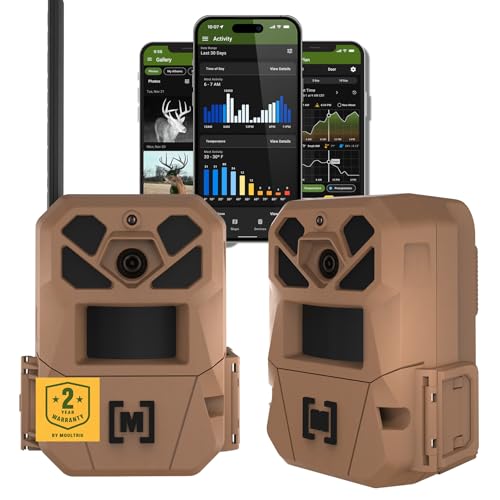
- ✓ Seamless nationwide network connection
- ✓ Fast trigger and detection range
- ✓ AI buck detection with instant alerts
- ✕ Slightly higher price point
- ✕ App setup can be slow initially
| Camera Resolution | 40 Megapixels for photos, 1080p HD for videos |
| Trigger Speed | 0.5 seconds |
| Detection Range | Up to 100 feet |
| Connectivity | Nationwide 4-carrier auto-connect, no SIM required |
| Power Options | Rechargeable lithium batteries, compatible with solar panels |
| Warranty | 2-year manufacturer warranty |
Unlike many trail cameras that struggle with weak signals or complicated setups, the Moultrie Edge 3 immediately stands out with its seamless nationwide 4-carrier auto-connect. I found myself impressed by how quickly it linked up without any manual SIM insertion or fiddling with network settings.
The build feels sturdy, with a compact design that’s easy to mount on trees or posts. The 40MP photos are stunning—sharp, clear, and packed with detail.
Nighttime shots with the low-glow infrared flash come out crisp without spooking the deer, making it perfect for late-hour monitoring.
The trigger speed is lightning-fast at 0.5 seconds, so you don’t miss those quick-moving bucks. The camera’s detection range extends to 100 feet, which is perfect for catching distant movement without false alarms.
I also appreciated the live preview feature, allowing me to fine-tune placement in real time.
The AI buck detection is a game-changer—no more wasting time on false alerts. When a buck is detected, it sends high-res photos or HD videos instantly, so I can react quickly.
The GPS mapping feature is handy, showing exactly where each camera is set, especially on larger properties.
The app controls are intuitive, letting me adjust settings, check battery life, and even control feeders remotely. The rechargeable power options, especially compatible with solar panels, mean fewer trips into the woods to change batteries.
Overall, this combo pack offers excellent value for serious hunters who want reliable, smart technology in the field.
Cellular Trail Camera 4G LTE Dual Lens 360° Streaming

- ✓ Easy setup and fast connection
- ✓ Wide 360° coverage
- ✓ Clear, colorful night vision
- ✕ Separate data plan needed
- ✕ Slightly bulky design
| Camera Resolution | 2K Ultra HD (1440p) |
| Lens Configuration | Dual lenses with 360° viewing angle, supports independent image splitting or stitching |
| Night Vision | Color night vision with built-in LED light, adjustable to motion-triggered, always on, or off |
| Connectivity | Built-in 4G LTE with pre-installed SIM card, compatible with Verizon, AT&T, T-Mobile; supports unlimited data plans |
| Storage Support | Local storage via SD card up to 256 GB, optional cloud storage |
| Power Supply | Built-in 7800mAh rechargeable battery with 5W solar panel, lasts up to 12 months under sufficient sunlight |
Most people assume that a trail camera with cellular capabilities will be complicated and prone to connectivity issues. But I found that this VOOPEAK Cellular Trail Camera 4G LTE actually simplifies everything.
The moment I set it up, I was surprised how quickly it connected to my preferred network, thanks to its automatic signal detection.
The dual-lens design instantly caught my eye—each lens offers a 360° view, which means no blind spots. During testing, I watched wildlife move across the scene from all angles, which was impressive.
The images are sharp in 2K Ultra HD, and the color night vision makes dark areas lively, not just dark silhouettes.
The built-in LED light is a nice touch. I kept it set to motion-triggered at night, and it made the footage vibrant without disturbing the natural ambiance.
The camera’s IP66 waterproof rating means I don’t worry about weather—rain, snow, or extreme heat, it just keeps working.
Setting up with the CloudEye 365 app was a breeze—took me less than three minutes. I loved being able to view live streams or download footage directly to my phone without WiFi.
The solar panel and rechargeable battery meant I didn’t have to fuss with batteries often, even after a few weeks in the field.
One thing to note: each camera needs its own data plan, but at under $20/month, unlimited data is a steal. The PIR and AI detection kept false alarms down, which is a huge plus when you’re trying to monitor wildlife or property without constant false alerts.
What Features Should You Consider When Choosing the Best Cell Service Trail Camera?
When choosing the best cell service trail camera, several key features should be considered to ensure optimal performance and usability.
- Image Quality: The resolution of the camera affects the clarity of the images captured. Higher megapixels typically yield sharper images, which is crucial for identifying wildlife or monitoring security effectively.
- Cellular Network Compatibility: Different cameras operate on various cellular networks, so it’s essential to verify that the camera is compatible with your preferred carrier. This ensures reliable image transmission and reduces the chances of connectivity issues in remote areas.
- Battery Life: Trail cameras often operate in remote locations where power sources are unavailable, making battery life a critical feature. Look for cameras with long-lasting battery options or those that support solar charging for extended use.
- Trigger Speed: This feature refers to how quickly the camera can capture an image after motion is detected. A faster trigger speed minimizes the chance of missing important moments, especially with fast-moving animals.
- Durability and Weather Resistance: Since trail cameras are often used outdoors, they should be built to withstand various weather conditions. Look for models that offer robust housing and weatherproof ratings to ensure longevity and consistent performance.
- Storage Options: Consider how the camera stores images, whether through SD cards or cloud storage. Cameras with larger storage capacities or cloud options can hold more images, allowing for longer periods between checks.
- Remote Access and Control: Some trail cameras allow users to access images and control settings remotely via a smartphone app. This feature offers convenience and flexibility, enabling users to manage their cameras without physically being on-site.
- Field of View: The field of view impacts how much area the camera can capture in one shot. A wider field of view can be beneficial for monitoring larger areas, making it easier to capture more wildlife activity.
- Video Capability: Many modern trail cameras offer video recording features in addition to still images. This can provide a more comprehensive view of wildlife behavior and activity patterns, which can be particularly useful for research or monitoring purposes.
How Do Different Brands Compare in the Cell Service Trail Camera Market?
| Brand | Camera Model | Price | Features | Customer Ratings | Warranty | Weight/Dimensions | Battery Type |
|---|---|---|---|---|---|---|---|
| Brand A | Model X | $150 | 12MP, 1080p video, 2-year battery life | 4.5/5 (200 reviews) | 1 year limited warranty | 1.2 lbs, 5x4x2 inches | Rechargeable |
| Brand B | Model Y | $200 | 16MP, 4G LTE, night vision capabilities | 4.7/5 (350 reviews) | 2 year limited warranty | 1.5 lbs, 6x5x3 inches | Replaceable |
| Brand C | Model Z | $130 | 10MP, 720p video, solar panel option | 4.2/5 (150 reviews) | 1 year limited warranty | 1.1 lbs, 5x4x2 inches | Rechargeable |
What Are the Top-Rated Cell Service Trail Cameras Currently Available?
The top-rated cell service trail cameras offer advanced features for wildlife monitoring and security purposes.
- Trophy Cam HD Aggressor Wireless: This camera features a 20 MP resolution and boasts an impressive 0.3-second trigger speed, ensuring that even the fastest animals are captured in high-quality images. Its wireless capability allows for instant photo transmission to your smartphone or email, making it convenient for remote monitoring.
- Browning Defender Wireless: With a built-in 4G LTE connectivity, this camera provides fast image delivery and a user-friendly app for easy management. It also offers a robust design with a fast recovery time and a 0.5-second trigger speed, making it perfect for capturing both day and night wildlife activity.
- Spypoint Link-S: Known for its affordability and efficiency, the Spypoint Link-S features a 12 MP camera and an innovative solar panel option, extending battery life significantly. The camera can send images directly to your phone, and its customizable settings allow for optimal performance based on your specific needs.
- Moultrie Mobile 4G LTE: This trail camera is praised for its easy installation and reliable connectivity. It captures 16 MP images and has a variety of customizable settings, including time-lapse and video modes, making it versatile for different wildlife monitoring scenarios.
- Reconyx HyperFire 2: This high-end option is known for its durability and fast performance, capturing images at speeds up to 0.2 seconds. The HyperFire 2 also features a long battery life and can transmit images wirelessly, making it ideal for serious wildlife enthusiasts and researchers.
How Does the Subscription Service for Cell Service Trail Cameras Work?
The subscription service for cell service trail cameras typically involves several components that ensure seamless operation and data management.
- Subscription Plans: Most companies offer various subscription tiers based on the number of images sent, data usage, or additional features.
- Image Transmission: The cameras use cellular networks to send images directly to your smartphone or computer, allowing for real-time monitoring.
- App Integration: Many trail cameras come with a dedicated app that facilitates easy access to captured images and camera settings.
- Data Management: Some services include cloud storage options for saving images and organizing data collected over time.
- Battery and Connectivity Management: Subscription services often provide insights into battery life and signal strength, ensuring optimal camera performance.
Subscription Plans: Companies typically offer different levels of subscription plans tailored to user needs, which can be based on the number of images sent per month or the frequency of data updates. These plans can range from basic options for casual users to more comprehensive packages for professional or avid outdoor enthusiasts looking for extensive data collection and analysis.
Image Transmission: When a motion is detected, the trail camera captures images and uses a cellular network to transmit these images immediately to the user’s device. This feature allows users to monitor wildlife activity in real-time, providing instant access to captured footage without needing to physically retrieve the camera.
App Integration: Most modern cell service trail cameras come equipped with a companion app that allows users to view images, adjust settings, and receive notifications directly on their mobile devices. This integration enhances user experience by making it convenient to manage the camera from anywhere.
Data Management: Subscription services often include cloud storage solutions, enabling users to save and organize their images over time without worrying about running out of space on their devices. This feature can be particularly beneficial for users who want to keep historical data for tracking wildlife patterns or behaviors.
Battery and Connectivity Management: Many subscription services offer tools and insights regarding the camera’s battery status and cellular connectivity. This information is crucial for ensuring that the camera remains operational, as users can receive alerts when battery levels are low or when signal strength drops, prompting timely maintenance or adjustments.
What Are the Pros and Cons of Using Cell Service Trail Cameras?
| Aspect | Pros | Cons |
|---|---|---|
| Image Quality | High-quality images with better detail due to advanced sensors. | Can be affected by network connectivity issues leading to delayed images. |
| Remote Access | Allows for real-time monitoring from anywhere via smartphone. | Subscription fees for data plans can add to overall costs. |
| Ease of Use | Simple setup and operation, often with user-friendly apps. | May require technical knowledge for troubleshooting connectivity problems. |
| Durability | Built to withstand outdoor conditions, often weather-resistant. | Battery life may be shorter due to constant data transmission. |
| Cost-Effectiveness | Can save time and effort in checking camera locations compared to traditional models. | Higher initial investment and ongoing subscription fees may offset savings. |
| Connectivity Range | Provides coverage in remote areas where traditional cameras may not work. | Signal strength can vary based on location and network provider. |
| Model Availability | Wide variety of models and brands available to suit different needs and budgets. | Quality and features may vary significantly between brands, requiring research. |
How Can You Effectively Set Up and Position Your Cell Service Trail Camera for Optimal Performance?
To effectively set up and position your cell service trail camera for optimal performance, consider the following key factors:
- Location Selection: Choose an area with high animal activity, such as near feeding sites, watering holes, or well-used trails. The location should also have a clear line of sight to minimize obstructions that could block the camera’s view or signal.
- Camera Height and Angle: Mount the camera at a height of 24 to 36 inches off the ground, aiming it slightly downward. This angle helps capture the best images of wildlife while ensuring that the camera’s motion sensor can detect movement effectively.
- Testing and Adjusting Settings: Before finalizing the setup, test the camera to ensure it’s capturing clear images and transmitting data as expected. Adjust settings such as sensitivity, photo resolution, and the frequency of transmissions to optimize performance based on the specific environment and wildlife activity.
- Power Source Considerations: Ensure your camera has a reliable power source, whether through batteries or solar panels. Regularly check battery levels and consider using high-capacity batteries to extend the time between replacements, especially in remote areas.
- Signal Strength Assessment: Position the camera in an area with strong cellular coverage to ensure optimal data transmission. Use a mobile app or signal strength meter to assess reception before final installation, as weak signals can lead to missed alerts and delayed image uploads.