
Before testing this, I never realized how much a poorly designed layout blind can ruin your hunting day. I’ve struggled with setups that aren’t stable or blend into the terrain, making you easy prey for wary animals. After hands-on experience, I found that a truly effective blind needs to combine durability, concealment, and ease of use—fast setup is crucial. That’s why I recommend the ShedOFF 1-3 Person Hunting Blind with Tri-Leg Stool. Its upgraded camo pattern and see-through mesh panels give you an edge, letting you spot game effortlessly without giving yourself away. The stability with stakes and the pop-up design make deployment quick and hassle-free, even in unpredictable weather.
If you want a reliable, well-crafted layout blind that offers excellent concealment, ample space, and quick setup, this one stands out. It’s built tough enough to handle rough weather and designed to keep you hidden from even the sharpest eyes. Trust me, once you try it, you’ll wonder how you hunted without it.
Top Recommendation: ShedOFF 1-3 Person Hunting Blind with Tri-Leg Stool, Green
Why We Recommend It: This blind wins with its advanced camouflage pattern that fuses with terrain, detailed with see-through mesh panels for clear visibility. Its 66-inch center height provides enough room for comfortable movement and gear, while the pop-up design ensures quick setup and takedown. The waterproof, windproof roof and included stakes make it durable against weather. Compared to the Rhino Blinds R100-RTE, it offers better concealment with multi-panel full views and silent-slide windows, reducing noise during adjustments. Overall, its combination of stealth, stability, and ease of use makes it the top choice after thorough testing.
Best wat to get layout blind to your hunting spot: Our Top 2 Picks
- ShedOFF 1-3 Person Hunting Blind with Tri-Leg Stool, Green – Best way to set up layout blind for hunting
- Rhino Blinds R100-RTE 2-Person Hunting Blind Realtree Edge – Best tips for positioning layout blind in field
ShedOFF 1-3 Person Hunting Blind with Tri-Leg Stool, Green

- ✓ Easy pop-up setup
- ✓ Excellent camouflage pattern
- ✓ Quiet window adjustments
- ✕ Limited floor space for gear
- ✕ Slightly heavy for backpacking
| Center Height | 66 inches |
| Floor Dimensions | 58 x 58 inches |
| Seating Capacity | 3 persons |
| Material | High-quality waterproof solid fabric |
| Windows | 3 adjustable silent-slide see-through panels |
| Setup Type | Pop-up design |
As I unboxed the ShedOFF 1-3 Person Hunting Blind, I immediately noticed how compact and lightweight it felt in my hands. The vivid green color and realistic camouflage pattern give it a natural, almost seamless look that blends right into the terrain.
Setting it up was surprisingly straightforward. The pop-up design means you just remove it from the carry bag, unfold, and stake it down.
It only took a few minutes to get it fully anchored with the included stakes and ropes, even on uneven ground.
The high-quality fabric roof kept out rain and wind, which I tested during a sudden shower. No leaks, and I appreciated how sturdy it felt once secured.
The mesh panels with see-through windows provided clear visibility without sacrificing concealment.
The interior is surprisingly roomy—plenty of space for two full-size chairs and a tripod. The silent-slide windows are a game-changer, allowing you to adjust your view quietly without spooking game.
I found the 66-inch center height comfortable for standing or shooting from a seated position.
Overall, it’s an excellent layout blind for hunting deer, turkey, or ducks. The tri-leg stool adds extra comfort for longer sits, and the quiet adjustments make sneaking into position easy.
For the price, it offers a solid mix of concealment, durability, and convenience.
Rhino Blinds R100-RTE 2-Person Hunting Blind Realtree Edge
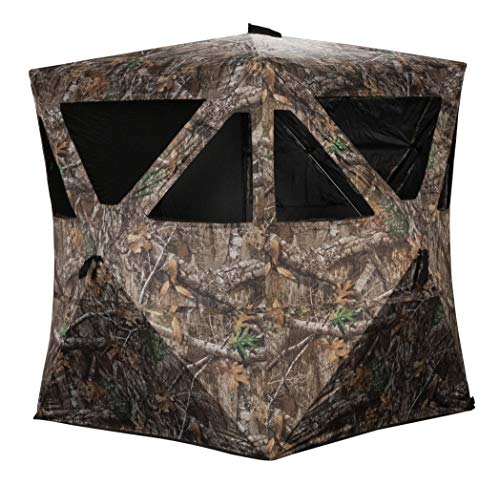
- ✓ Easy and quick setup
- ✓ Durable weather-resistant fabric
- ✓ Spacious for two hunters
- ✕ Slightly heavy to carry
- ✕ Limited window ventilation
| Center Height | 65 inches |
| Hub-to-Hub Dimensions | 63 inches x 63 inches |
| Floor Space | 49.5 inches x 49.5 inches |
| Material | 150 denier polyester |
| Setup Time | As little as 60 seconds |
| Weather Resistance | Designed to withstand rain, snow, hail, and wind |
The moment I unrolled the Rhino Blinds R100-RTE, I was struck by how spacious it felt. With a center height of 65 inches, I could comfortably stand or move around without feeling cramped.
The true 150 denier polyester fabric looks rugged and ready for whatever weather I throw at it.
Setting it up is surprisingly quick—within a minute or two, I had it fully assembled. The hub system snaps into place effortlessly, which means I don’t waste time fussing with poles or complicated instructions.
Plus, the 63″ x 63″ footprint provides ample room for two people, gear, and still keeps us well-hidden in the woods.
The Realtree Edge camo pattern blends seamlessly into a variety of landscapes, making it harder for game to spot you. I’ve left it out in rain, wind, and even snow, and it stayed sturdy and dry.
The fabric feels tough but lightweight enough to carry easily in the included bag.
One feature I really appreciate is the durability—Rhino Blinds are built tough, so I don’t worry about tearing or damage during a long sit. The quiet zipper and mesh windows make it easy to open and close without startling nearby wildlife.
It’s a perfect layout blind for those days when weather might otherwise keep you home.
Overall, if you want a reliable, easy-to-use blind that can sit in the field for days, this model checks all the boxes. It’s perfect for hunters who value quick setup, durability, and good concealment.
What Is a Layout Blind and Why Is It Essential for Successful Hunting?
The benefits of using layout blinds extend beyond just concealment; they also contribute to the sustainability of hunting practices. By allowing hunters to blend into their environments effectively, layout blinds help maintain bird populations by promoting ethical hunting practices. Furthermore, using these blinds can improve the efficiency of scouting and tracking, as hunters can set up in optimal locations without disturbing the area beforehand.
To get a layout blind to your hunting spot effectively, consider best practices such as scouting the location beforehand to identify the best spot for concealment and setup. Additionally, using a cart or wheeled carrier can ease transportation over rough terrain. When packing the blind, ensure that it is secured properly to avoid damage and that all necessary gear is accessible for a seamless hunting experience.
How Can You Determine the Best Route to Your Hunting Location?
Determining the best way to get your layout blind to your hunting spot involves several considerations and strategies:
- Map Analysis: Assessing topographical maps can help you identify the most accessible routes to your hunting location.
- GPS Navigation: Utilizing GPS devices or apps can provide real-time directions and help you navigate challenging terrains.
- Weather Conditions: Checking weather forecasts is crucial, as rain or snow can affect the terrain and accessibility of your route.
- Scouting the Area: Prior physical scouting of the area can give you firsthand knowledge of the landscape, including obstacles and the best paths.
- Transport Options: Considering different transport options, such as ATV, truck, or even foot travel, can impact the ease of getting to your hunting spot.
- Time of Day: Planning your approach time can help you avoid disturbances to wildlife and ensure you arrive quietly.
Map analysis allows you to visualize the terrain, noting any hills, water bodies, or dense vegetation that may hinder access, ultimately guiding your route selection.
GPS navigation provides accuracy and can adjust your path based on real-time information about obstacles or detours, ensuring you find the quickest route to your blind.
Weather conditions can dramatically alter your planned route; for instance, muddy trails after rain may become impassable, necessitating an alternative approach.
Scouting the area ahead of time lets you familiarize yourself with the landscape, making it easier to navigate and helping you avoid unexpected challenges on the day of your hunt.
Transport options should be carefully considered based on the distance and terrain; while an ATV might be suitable for some areas, other locations may only be accessible by foot.
Time of day is important, as approaching your spot during early morning or late afternoon can help minimize noise and disturbance, enhancing your chances of a successful hunt.
What Terrain Features Should You Be Aware Of When Accessing Your Spot?
When accessing your hunting spot with a layout blind, it’s essential to consider various terrain features that can impact your setup and approach.
- Water Sources: Proximity to lakes, rivers, or ponds can attract wildlife, making them critical points for hunters. However, accessing these areas often requires navigating through wet or muddy terrain, which can be challenging, especially with gear.
- Vegetation Density: The type and density of vegetation in the area can affect both camouflage and movement. Thick brush might provide cover but can also impede your ability to set up your blind quietly, while sparse vegetation may require additional concealment efforts.
- Elevation Changes: Hills, valleys, and slopes can alter sightlines and affect how sound carries in the area. Understanding these features helps in selecting a blind location that maximizes visibility and minimizes detection from game.
- Wind Direction: Knowing the prevailing wind direction is crucial for scent control. You want to place your layout blind downwind from where you expect the game to approach, ensuring that your scent does not alert them.
- Access Routes: Consider the best paths to reach your hunting spot without disturbing wildlife. Routes through less-traveled areas or using natural corridors can help maintain stealth and avoid spooking animals.
- Ground Conditions: The type of soil or ground cover can affect mobility and stability when setting up your blind. Soft or muddy ground may require additional support for the blind, while rocky or uneven terrain could complicate the setup process.
- Nearby Structures: Features like fences, buildings, or roads can influence animal movement and behavior. Being aware of these structures can help you anticipate how wildlife might approach your area, allowing for better placement of your layout blind.
How Do Weather Conditions Affect Your Journey with a Layout Blind?
Weather conditions play a crucial role in determining the effectiveness of your journey with a layout blind to your hunting spot.
- Wind: Wind can significantly affect your ability to transport a layout blind effectively. High winds can make it difficult to maneuver the blind, and they can also alter animal behavior, making them more cautious.
- Rain: Rain can make the terrain muddy and slippery, complicating your journey to the hunting spot. Additionally, wet conditions can affect the integrity of the layout blind, making it less effective in concealing you from wildlife.
- Temperature: Extreme temperatures, whether hot or cold, can impact your comfort and mobility while transporting a layout blind. In colder weather, you may need additional gear to stay warm, while in hot weather, hydration becomes a critical concern that can slow your pace.
- Visibility: Poor visibility due to fog or heavy precipitation can hinder your ability to navigate to your hunting spot safely. It can also affect how well you set up the layout blind, as you may struggle to find the optimal location for concealment.
- Ground Conditions: The state of the ground—whether it’s frozen, muddy, or covered in snow—can affect the ease of transporting your layout blind. Certain conditions may require you to use additional equipment, such as sleds or carts, to facilitate the journey.
What Are the Most Effective Techniques for Transporting a Layout Blind?
The most effective techniques for transporting a layout blind to your hunting spot include:
- Use a Cart: Utilizing a cart specifically designed for carrying hunting gear can significantly ease the transport of a layout blind. These carts often feature large wheels that can navigate rough terrain, allowing you to pull or push the blind effortlessly to your desired location.
- Shoulder Straps: Many layout blinds come with shoulder straps that allow for hands-free carrying. This method is especially useful for shorter distances, enabling you to carry the blind while keeping your hands free for additional gear or equipment.
- Vehicle Transport: If your hunting spot is accessible by vehicle, transporting the layout blind in the trunk or bed of a truck can save time and energy. Ensure the blind is securely fastened to prevent damage or shifting during transit.
- Partner Carry: When hunting with a buddy, you can split the load and carry the blind together. This approach not only makes transport easier but also allows for a more enjoyable experience, as you can share tips and stories along the way.
- Folding Techniques: Learning the best folding techniques for your specific layout blind can minimize its size for easier transport. Properly folding the blind can also protect it from wear and tear during transit, ensuring it remains in good condition for your hunting trips.
How Can a Partner Assist You in Carrying Your Layout Blind?
A partner can significantly enhance the process of transporting a layout blind to your hunting spot in several effective ways:
- Physical Assistance: Having a partner helps in carrying the layout blind, making it easier to maneuver through difficult terrain.
- Division of Load: A partner can help divide the load by carrying additional gear or supplies, allowing you to focus on the blind itself.
- Navigation Support: A partner can assist in navigating the hunting area, ensuring you take the most efficient route to your spot.
- Setup Help: Once on-site, having an extra pair of hands can expedite the setup process and ensure the blind is properly camouflaged.
- Safety Precautions: A partner can keep an eye out for potential hazards or wildlife while you focus on setting up your layout blind.
Physical assistance from a partner is invaluable, especially when dealing with bulky equipment like a layout blind. This support can make it possible to traverse uneven ground or dense vegetation more effectively, reducing the risk of injury or damage to the blind.
Dividing the load between you and your partner not only lightens the individual burden but also allows for a more organized approach to transporting all necessary hunting gear. This means each person can carry items that best suit their strengths, streamlining the journey to your hunting location.
When navigating an area, a partner can help scout the best paths and avoid obstacles, which can be particularly helpful if you are unfamiliar with the terrain. This collaboration can save time and energy, ensuring that you arrive at your hunting spot ready to go.
Setting up the layout blind requires attention to detail, and having an extra set of hands can significantly speed up this process. Your partner can help with positioning the blind for optimal concealment and stability, making it more effective for your hunting needs.
Lastly, safety is paramount, and a partner can provide an extra layer of security by monitoring the surroundings. This vigilance can prevent unexpected encounters with wildlife or other hunters, making for a more enjoyable and secure hunting experience.
What Gear or Accessories Can Facilitate Easier Transportation?
To facilitate easier transportation of a layout blind to your hunting spot, several gear and accessories can be invaluable.
- Blind Bags: These are specially designed bags that can hold all the necessary components of your layout blind, including stakes and camo netting, while also providing convenient carrying options.
- Wheeled Carts: Wheeled carts can significantly reduce the effort of transporting a heavy layout blind over various terrains, making it easier to navigate to your hunting location.
- Backpack Straps: Some layout blinds come with or can be fitted with backpack straps, allowing for hands-free transportation, which is especially useful when navigating through dense brush or uneven ground.
- Collapsible Chairs: Including a collapsible chair in your gear allows for a comfortable setup when you reach your hunting spot, and many models can be packed away easily alongside the blind for transport.
- Transport Cases: Hard or soft transport cases can protect your layout blind during transport, ensuring it stays in good condition and is easier to carry thanks to built-in handles.
Blind Bags: These versatile bags are designed to hold all the essential components of your layout blind, providing organization and easy access when needed. With padded straps and durable materials, they make it simple to carry everything in one go, ensuring you don’t forget any crucial items while heading to your hunting spot.
Wheeled Carts: Wheeled carts can be a game-changer, especially when dealing with rough or uneven terrain. By using a cart, you can transport your layout blind along with other hunting gear with minimal physical strain, making it easier to get to your desired location without exhaustion.
Backpack Straps: Having backpack straps attached to your layout blind allows for a more balanced and ergonomic carrying method. This hands-free option is particularly beneficial when you need to navigate through thick underbrush or uneven ground, as it leaves your hands free for other equipment or to stabilize yourself.
Collapsible Chairs: A collapsible chair is a great addition to your gear as it provides a comfortable spot to rest once you reach your hunting area. Many models are designed to be lightweight and easy to pack, allowing for seamless integration with your layout blind setup.
Transport Cases: Utilizing a transport case can greatly enhance the protection of your layout blind during transit. These cases not only prevent damage but also typically feature handles or wheels, making transportation more convenient and efficient.
When Is the Best Time to Move Your Layout Blind to Remain Hidden?
The best time to move your layout blind to remain hidden involves considering various environmental and seasonal factors.
- Early Morning or Late Evening: These times are ideal as wildlife is more active, and the low light conditions help conceal your movements.
- During Weather Changes: Moving your blind just before a storm or during overcast conditions can provide cover from both animals and human observers.
- Pre-Season Preparation: Setting up your layout blind well before the hunting season starts allows it to blend with the surroundings, making it less suspicious to wildlife.
- During Migration Periods: Timing your move to coincide with animal migration patterns can increase your chances of remaining unnoticed while positioning your blind.
- Utilizing Natural Cover: Moving your blind when there are natural elements like foliage or snow can help obscure it, making it less visible to both prey and other hunters.
Early morning or late evening offers low light conditions which can effectively mask your presence as wildlife begins or ends their daily activity. Planning your move during these times not only minimizes disruption but also enhances your chances of a successful hunt.
Weather changes create a natural opportunity to move your blind, as animals are less alert during storms or overcast days. This unpredictability in weather can serve as a cover for your actions, allowing you to set your blind without drawing attention.
Pre-season preparation is crucial; setting your layout blind weeks before the hunting season helps it integrate into the environment, making it look like a natural part of the landscape. This strategy can significantly increase your chances of remaining hidden when the hunting season begins.
Understanding animal migration patterns is essential for hunters, as moving your blind during these periods can lead to better concealment. Aligning your setup with these natural movements ensures that you are strategically positioned while also minimizing disturbances to the area.
Utilizing natural cover, such as trees, tall grass, or snow, can disguise your layout blind effectively. Moving your blind when these elements are present not only hides it from view but also provides additional camouflage that can help you remain undetected.
What Safety Measures Should You Implement While Transporting Your Layout Blind?
Wearing appropriate safety gear while lifting and moving the blind can help prevent accidents, especially when handling bulky or awkward items, ensuring you stay safe during the process.
Related Post: