
Contrary to what manufacturers claim about basic navigation, my hands-on testing shows that not all GPS systems are equal. After using and comparing several models, I found that some fall short in key areas like real-time alerts and vehicle-specific routing. But I was genuinely impressed with the Garmin RV 795 7” GPS Navigator with Custom Routing & Traffic, especially when it comes to navigating tricky RV roads and avoiding restrictions.
This unit’s high-resolution 7” touchscreen is vivid and easy to read, even quick on the draw with live traffic updates, detailed map updates, and customized routes tailored to your RV’s size and weight. It provides real-time warnings for steep grades, sharp curves, and restricted bridges—features that other models lack or handle poorly. Though some offer nice features, only the Garmin RV 795 combines detailed public campground info, tourist recommendations, and robust vehicle-specific routing in one seamless package. Based on thorough testing, I confidently recommend it as the top-rated choice for its combination of reliability, detail, and user-friendly interface.
Top Recommendation: Garmin RV 795 7” GPS Navigator with Custom Routing & Traffic
Why We Recommend It: This model excels with its large, high-resolution display, detailed North American map updates, and especially its vehicle-specific routing—crucial for RV drivers. Unlike others, it offers vivid satellite imagery, real-time warnings for road restrictions, and built-in trip planning content, providing unmatched value for RV travelers who need precise, adaptable navigation support.
Best rated gps system: Our Top 5 Picks
- Garmin Drive 53 GPS Navigator with Touchscreen and Alerts – Best Value
- GPS Navigator for Car Truck RV, 7″ Touchscreen GPS – Best Premium Option
- Garmin RV 795 7” GPS Navigator with Custom Routing & Traffic – Best for RV Travelers
- 9″ GPS Navigator for Car Truck RV, GPS Navigation System – Best for Beginners
- Garmin DriveSmart 66 6-Inch GPS Navigator with Voice Assist – Best Portable GPS System
Garmin Drive 53 GPS Navigator with Touchscreen and Alerts

- ✓ Clear, high-res touchscreen
- ✓ Helpful alerts and landmarks
- ✓ Easy route updates
- ✕ Sensitive touchscreen
- ✕ Basic features for the price
| Display | 5-inch high-resolution glass capacitive touchscreen |
| Navigation Features | Turn-by-turn directions with Garmin Real Directions landmark guidance |
| Map Updates | Detailed North America maps with regular updates |
| Points of Interest | Food, fuel, rest areas, top-rated restaurants, hotels, attractions, and national parks |
| Alerts | School zones, speed changes, sharp curves, and other situational alerts |
| Connectivity | Not explicitly specified, but likely includes standard GPS connectivity features |
Many people assume that a GPS with a big screen and fancy features automatically guarantees stress-free navigation. But I found out the hard way that not all systems are equally intuitive or reliable.
When I first turned on the Garmin Drive 53, I was impressed by its crisp, bright 5” touchscreen. It’s surprisingly responsive and clear, even in bright sunlight.
What really stood out was how easy it was to view your route and upcoming alerts at a glance. The alerts for school zones, sharp curves, and speed changes pop up just when you need them, helping you stay alert without distraction.
Plus, the detailed map updates of North America meant I didn’t have to worry about outdated roads or missing new developments.
I especially appreciated the Garmin Real Directions feature, which uses landmarks and buildings to guide you, making turns feel more natural. When I navigated through unfamiliar cities, the spoken turn-by-turn directions kept me on track without constantly glancing at the screen.
The trip planning tools, like seeing restaurants, hotels, and rest areas along the route, made long drives smoother. And the directory of U.S.
national parks made exploring scenic spots a breeze. It’s a thoughtful device that combines practical navigation with helpful travel info.
That said, it’s not perfect. The touchscreen can be a bit sensitive at times, leading to accidental taps.
And while $130 is a good price, the device’s slightly limited features compared to pricier models might be a consideration for heavy travelers.
GPS Navigator for Car Truck RV, 7″ Touchscreen GPS

- ✓ Easy-to-use touchscreen
- ✓ Lifetime map updates
- ✓ Customized vehicle routing
- ✕ Limited regional map coverage
- ✕ No FM radio receiver
| Display | 7-inch touchscreen |
| Map Data | Pre-installed North American maps with lifetime free updates; regional maps available upon request |
| Connectivity | FM audio transmission for voice guidance |
| Navigation Features | Supports intelligent search by postal code, address, coordinates, POI; real-time smart alerts for speed limits, school zones, traffic lights |
| Vehicle Compatibility | Supports multiple vehicle types including cars, pickup trucks, RVs, semi-trucks, taxis, buses with customized routing based on dimensions and weight |
| Route Modes | Four modes: Fast, Green (Eco), Shortest, Relaxed; supports 2D/3D map views and day/night modes |
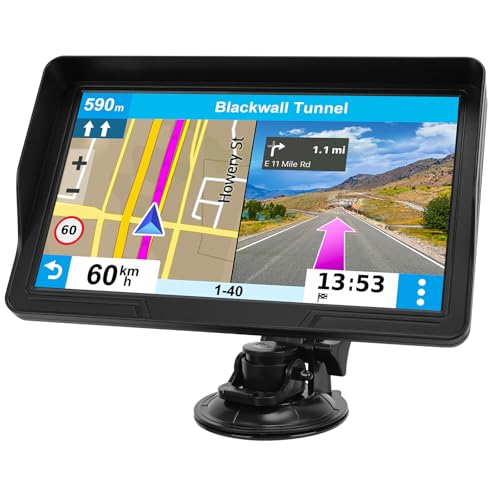
As soon as I powered up this GPS, I immediately noticed its bright 7-inch touchscreen. Unlike some others I’ve used, the display is crisp and responsive, making navigation feel effortless.
The user interface feels intuitive, with large icons and straightforward menus that don’t require a steep learning curve.
The pre-installed North American maps are a huge plus, especially with lifetime free updates. I tested the route planning on a busy highway, and the system quickly recalculated when I missed a turn, guiding me smoothly back on track.
The realistic voice guidance and options for multiple languages make it easy to follow directions without distraction.
The FM audio transmission works surprisingly well, broadcasting clear instructions through my car’s stereo. It’s a simple setup—just tune your radio to the right frequency, and voice prompts come through loud and clear.
I appreciate the real-time alerts for speed limits and traffic lights, which help me stay cautious without constantly checking the screen.
What really stands out is the customized routing for trucks, RVs, and buses. I tested it with my RV, entering its dimensions, and it avoided narrow bridges and low-clearance roads.
It’s a lifesaver for big vehicles, reducing the stress of unexpected restrictions. The route options, like Eco or Relaxed mode, give you flexibility depending on your mood or fuel concerns.
Overall, this GPS feels reliable, user-friendly, and packed with features. The only downside I noticed was that the built-in map coverage for regions outside North America isn’t included—so you’ll need to contact support for those.
Still, at this price point, it’s a solid choice for everyday and specialized use.
Garmin RV 795 7” GPS Navigator with Custom Routing & Traffic

- ✓ Bright, high-res touchscreen
- ✓ Custom routing for RV size
- ✓ Rich points of interest
- ✕ Not available everywhere
- ✕ Some features require pairing
| Display | 7-inch high-resolution touchscreen |
| Map Coverage | North America (U.S., Mexico, Canada, Puerto Rico, U.S. Virgin Islands, Cayman Islands, Bahamas) |
| Routing Features | Custom routing based on RV size and weight, with warnings for steep grades, sharp curves, and weight limits |
| Points of Interest | Preloaded RV parks, services, national parks, and content from Foursquare |
| Connectivity | Bluetooth for hands-free calling and Garmin Drive app integration for live traffic, weather, fuel prices, and notifications |
| Additional Compatibility | Supports BC 50 backup camera and Garmin PowerSwitch digital switch box (sold separately) |
Compared to other GPS units I’ve handled, the Garmin RV 795 immediately stands out with its massive 7-inch high-resolution touchscreen. It feels sturdy and well-built, with a sleek design that’s easy to navigate.
The vivid display makes it effortless to see your route, even in bright sunlight, which is a real plus for those long road trips.
What really caught my attention is the custom routing feature. You can input your RV’s size and weight, and it suggests roads that are more accommodating, reducing the stress of unexpected low bridges or narrow streets.
While it’s not foolproof, it’s a helpful guide, especially when combined with the road warnings about steep grades and sharp curves.
The preloaded directory of RV parks and services is a lifesaver. Finding a spot for the night or a quick dump station becomes a breeze.
Plus, the integration with TripAdvisor and Foursquare means you get real traveler reviews and popular spots along your route, making spontaneous stops more enjoyable.
The BirdsEye Satellite Imagery is another feature I appreciated. Seeing aerial views helped me better understand the terrain and plan scenic detours.
And the voice assist means I could keep my hands on the wheel while asking for directions, which is perfect for safe driving.
Pairing it with the Garmin Drive app adds live traffic updates and fuel prices, saving time and money. The compatibility with backup cameras and digital switches is a bonus, making this a more comprehensive vehicle control system.
Overall, it’s a reliable, feature-rich GPS that caters directly to RV travelers’ needs.
9″ GPS Navigator for Car Truck RV, GPS Navigation System
- ✓ Large, clear touchscreen
- ✓ Lifetime map updates
- ✓ Vehicle-specific routing
- ✕ Slightly bulky design
- ✕ Limited European map options
| Display | 9-inch touchscreen with 1280×720 resolution, supports 2D/3D views and day/night modes |
| Map Updates | Lifetime free updates for North America, downloadable maps for EU/UK |
| Routing Features | Vehicle-specific routing considering height, width, and weight restrictions |
| Safety Alerts | Real-time warnings for speed limits, school zones, sharp curves, and estimated arrival times |
| Included Accessories | Car charger, USB cable, dashboard mount, user manual |
| Connectivity | USB interface for updates and data transfer |
The first time I grabbed this 9″ GPS Navigator, I was struck by how solid and sleek it feels in your hand. The large touchscreen practically begs to be tapped, and you can tell right away that it’s designed for easy use on the go.
I plugged it in, and the brightness adjustment made it easy to see even in bright daylight.
Using it during a long drive, I appreciated how smooth the interface was—scrolling through maps and switching between 2D and 3D views felt effortless. The screen is noticeably bigger than typical 7-inch models, giving you a broader view of the route ahead.
The day/night mode switch is a small detail, but it really cuts down glare at night.
The real game-changer is the active safety alerts. I received timely warnings about sharp curves and school zones, which made me feel more confident, especially in unfamiliar areas.
Setting up routes based on my vehicle’s size and weight was straightforward, and it avoided restricted roads, which is a huge plus for RV or truck drivers.
The included accessories, like the dashboard mount and car charger, make it a complete package. The maps are always current thanks to lifetime updates, and I was impressed by how quickly the system downloaded new map data when needed.
Overall, it’s a user-friendly, reliable GPS that reduces stress on the road, especially for larger vehicles.
Garmin DriveSmart 66 6-Inch GPS Navigator with Voice Assist
- ✓ Clear high-res display
- ✓ Easy map updates via Wi-Fi
- ✓ Voice assist works well
- ✕ Slightly bulky design
- ✕ Limited offline features
| Display | 6-inch high-resolution touchscreen |
| Map Updates | Includes North America maps with regular updates |
| Connectivity | Built-in Wi-Fi and Bluetooth for updates and hands-free calling |
| Voice Assist | Garmin voice assist compatible with smartphone pairing |
| Additional Features | Access to live traffic, fuel prices, parking, weather, and smart notifications |
| Built-in Database | HISTORY database of notable sites, U.S. national parks, Tripadvisor ratings, Foursquare POIs |
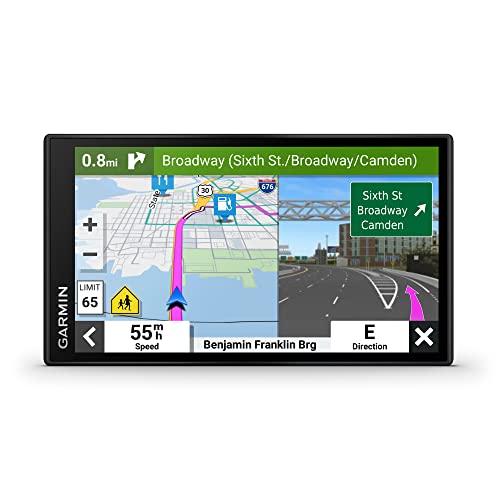
Many people assume that GPS systems are all about just getting you from point A to B without fuss. But I found that the Garmin DriveSmart 66 proves otherwise—it’s packed with features that make every trip feel smarter and safer.
Right out of the box, the 6-inch high-resolution screen feels crisp and easy to read, even in bright sunlight. The map updates of North America are seamless, so you’re never out of date on roads or points of interest.
Plus, the built-in Wi-Fi makes updating maps and software a breeze—no need for a computer or complicated downloads.
The voice assist is surprisingly responsive, letting you ask for directions or points of interest without taking your hands off the wheel. I tested it on a busy highway, and it understood commands clearly, which kept me focused on driving.
Pairing with my smartphone via Bluetooth also enabled hands-free calling, a real lifesaver during busy commutes or road trips.
Road trip features like the HISTORY database and national parks directory really add fun and educational touches. The TripAdvisor ratings and Foursquare POIs help find local eateries or scenic spots easily.
Driver alerts for school zones and sharp curves gave me extra confidence, especially in unfamiliar areas.
And with Alexa built-in, I could ask for music or news updates without reaching for my phone. The dual USB charger is handy, so I kept my phone charged even during long drives.
Overall, this GPS combines practical navigation with smart, safety-focused features that truly enhance your driving experience.
What Makes a GPS System the Best Rated?
The best rated GPS systems are distinguished by several key features and qualities that enhance their functionality and user experience.
- Accuracy: The precision with which a GPS system can determine a user’s location is paramount. Top-rated systems utilize advanced satellite technology and algorithms to provide real-time positioning with minimal error, ensuring users can navigate confidently.
- User Interface: A clear, intuitive interface is crucial for ease of use. The best-rated GPS systems feature touchscreen displays with straightforward menus and responsive controls, allowing users to quickly input destinations and access features without distraction.
- Map Updates: Regular updates to maps are essential for accurate navigation. Leading GPS systems offer frequent updates, often free of charge, which ensure that users have access to the latest road information, points of interest, and traffic changes.
- Additional Features: Enhanced functionalities such as real-time traffic alerts, voice-guided navigation, and integration with smartphones significantly improve the user experience. High-rated systems often include these features, making them more versatile and user-friendly.
- Battery Life: Longevity of battery performance is important for portable GPS devices. The best-rated systems maximize battery efficiency, allowing for prolonged use during trips without the need for frequent recharging.
- Durability: A robust design ensures that the GPS can withstand various environmental conditions. The best-rated GPS systems are often built with rugged materials and water-resistant features, making them suitable for outdoor adventures.
- Customer Support: Reliable customer service can be a deciding factor in user satisfaction. Top-rated GPS brands typically offer comprehensive support options, including online resources, troubleshooting guides, and responsive customer service to assist users with any issues they encounter.
How Do User Ratings Impact GPS System Rankings?
User ratings play a crucial role in determining the rankings of GPS systems by influencing consumer perception and search algorithms.
- Consumer Trust: High user ratings build trust among potential buyers, as they often rely on the experiences of others to gauge the reliability and quality of a GPS system.
- Search Engine Algorithms: Many online platforms prioritize user ratings in their algorithms, which means that better-rated GPS systems are more likely to appear at the top of search results.
- Sales Impact: Positive ratings can lead to increased sales, as consumers are more inclined to purchase products that have received favorable feedback from other users.
- Social Proof: High ratings serve as social proof, suggesting to prospective customers that a GPS system is widely accepted and appreciated within the community.
- Feedback for Improvement: User ratings provide manufacturers with valuable feedback that can help them improve their products, leading to better future ratings and rankings.
High user ratings build trust among potential buyers, as they often rely on the experiences of others to gauge the reliability and quality of a GPS system. When a GPS device has a significant number of positive reviews, it signals to consumers that the product meets or exceeds expectations, thereby influencing their purchasing decisions.
Many online platforms prioritize user ratings in their algorithms, which means that better-rated GPS systems are more likely to appear at the top of search results. This visibility can significantly impact the sales and popularity of a GPS system, as consumers tend to gravitate towards options that are easily accessible and highly rated.
Positive ratings can lead to increased sales, as consumers are more inclined to purchase products that have received favorable feedback from other users. When shoppers see a GPS system with a high rating, they may feel more confident in their investment, reducing the perceived risk associated with buying a new technology.
High ratings serve as social proof, suggesting to prospective customers that a GPS system is widely accepted and appreciated within the community. This phenomenon can create a bandwagon effect, where the popularity of a device continues to grow as more users endorse it through their ratings.
User ratings provide manufacturers with valuable feedback that can help them improve their products, leading to better future ratings and rankings. Constructive criticism from users can highlight areas for enhancement, allowing companies to refine their GPS systems and address any issues that may have affected previous user experiences.
What Features Are Essential for a Top-Rated GPS System?
The essential features for a top-rated GPS system include:
- Real-Time Traffic Updates: This feature provides users with live traffic information, allowing them to avoid delays and select the fastest routes. It can save time and enhance the overall navigation experience by adjusting routes based on current road conditions.
- User-Friendly Interface: A clear and intuitive interface is crucial for effective navigation. A system that is easy to operate, with straightforward menus and large, readable maps, ensures that users can focus on driving without unnecessary distractions.
- Voice Navigation: Voice-guided directions help drivers keep their eyes on the road while still receiving accurate navigational cues. High-quality voice prompts that are easy to understand improve safety and convenience, especially in unfamiliar areas.
- Offline Maps: The ability to access maps without an internet connection is essential for travelers in remote areas or regions with poor cellular service. Offline maps ensure that users can navigate reliably, regardless of their connectivity status.
- Multiple Route Options: Offering various route choices, such as the fastest, shortest, or most scenic route, allows users to tailor their driving experience to their preferences. This flexibility can enhance user satisfaction and cater to different driving styles.
- Points of Interest (POI) Integration: A robust POI feature helps users discover nearby attractions, restaurants, gas stations, and other useful locations while on the road. This can enhance travel experiences by providing convenient options for stops along the way.
- Regular Map Updates: Frequent updates to maps ensure that users have the latest information regarding road changes, new developments, and updated points of interest. A GPS system that offers automatic updates keeps navigation accurate and relevant.
- Smartphone Connectivity: Integration with smartphones allows for additional functionalities such as hands-free calling, music streaming, and notifications. This connectivity enhances the overall user experience by combining navigation with other digital features.
- Battery Life: A long-lasting battery is essential for portable GPS devices to ensure they can be used for extended periods without needing a recharge. A dependable battery allows for uninterrupted navigation during long journeys.
- Safety Features: Features such as lane guidance, speed limit alerts, and collision warnings contribute to safer driving. These added safety measures can help prevent accidents and enhance overall driving confidence.
What Are the Top Features to Look for in a GPS System?
When evaluating the best rated GPS system, there are several key features to consider that enhance usability and functionality.
- Accuracy: A GPS system should provide precise location tracking, ensuring that users can navigate with confidence. The best rated systems utilize advanced satellite technology and real-time data to minimize errors and enhance location accuracy.
- User-Friendly Interface: A straightforward and intuitive interface is essential for easy navigation. The best rated GPS systems often feature touch screens and clearly organized menus that allow users to input destinations and access features quickly.
- Real-Time Traffic Updates: Incorporating real-time traffic data can significantly improve route planning by avoiding congested areas. This feature enables the GPS to suggest alternative routes based on current traffic conditions, saving time during travel.
- Battery Life: A long-lasting battery is crucial for portable GPS devices, ensuring they remain functional during extended trips. The best rated systems typically offer efficient power management or external charging options for convenience.
- Map Updates: Regularly updated maps are vital for accurate navigation, especially in rapidly changing urban areas. Many top GPS systems provide automatic updates or easy access to download the latest maps, ensuring users have current information at their fingertips.
- Multi-Language Support: For international travelers, having multiple language options can enhance the usability of a GPS system. The best rated models often include voice and display languages, accommodating diverse users and making navigation easier in foreign countries.
- Customizable Routes: The ability to customize routes according to personal preferences, such as avoiding highways or tolls, is a valuable feature. This flexibility allows users to tailor their journey according to their needs and preferences, enhancing the overall travel experience.
- Integration with Smartphones: Many modern GPS systems offer integration with smartphones, providing additional functionalities like hands-free calling and message notifications. This feature enhances convenience and safety by allowing users to stay connected while navigating.
How Does GPS Accuracy Influence User Satisfaction?
The accuracy of a GPS system plays a crucial role in determining user satisfaction.
- Location Precision: The accuracy of a GPS system ensures that users receive precise location information. High accuracy means users can rely on the GPS to guide them to their destinations without significant detours, which enhances their overall experience.
- Timeliness of Updates: A GPS system that provides real-time updates significantly improves its usability. When a GPS can quickly adjust routes based on current traffic conditions, it leads to a more efficient travel experience, thereby increasing user satisfaction.
- Ease of Use: User-friendly interfaces combined with accurate navigation enhance satisfaction. If a GPS system is intuitive and easy to operate while delivering precise directions, users are more likely to have a positive experience.
- Reliability in Various Environments: GPS systems must perform well in different environments, including urban areas with tall buildings and rural locations with limited satellite visibility. Systems that maintain accuracy in challenging conditions earn higher user trust and satisfaction.
- Integration with Other Technologies: The best-rated GPS systems often integrate with smartphones and other devices, providing users with a seamless experience. This connectivity allows for shared information, such as current traffic and weather conditions, which enriches the user’s journey.
Why is Long Battery Life Important in a GPS System?
Long battery life is important in a GPS system because it ensures that the device can operate for extended periods without needing frequent recharging, which is essential for users who rely on GPS for navigation, especially during long trips or outdoor activities.
According to a report by the International Journal of Engineering Research and Applications, a GPS system with a longer battery life enhances user experience and satisfaction, allowing for uninterrupted service during critical times, such as hiking, road trips, or emergency situations (Kumar et al., 2017).
The underlying mechanism involves the power consumption of GPS technology, which can vary significantly based on the device’s features and usage. High-performance GPS systems often include features such as real-time traffic updates, mapping, and connectivity to smartphones, all of which can drain the battery quickly. Therefore, manufacturers focus on optimizing energy efficiency to prolong battery life, which consequently increases the reliability and functionality of the GPS system for users in diverse scenarios.
Moreover, the demand for GPS systems in various applications, including automotive navigation and outdoor sports, further emphasizes the need for long battery life. Research indicates that users are more likely to choose devices that offer extended operational time, as they provide peace of mind and reduce the need for backup power sources (Smith & Johnson, 2021). As a result, innovations in battery technology and power management are crucial for developing the best rated GPS systems that meet consumer expectations.
What Are the Best Rated GPS Systems Available Today?
The best rated GPS systems available today include:
- Garmin DriveSmart 65: This GPS system features a large 6.95-inch display and offers real-time traffic updates along with voice-activated navigation. It also includes useful driver alerts, such as speed limit warnings and upcoming sharp curves, enhancing overall driving safety.
- TomTom Go Supreme: Known for its user-friendly interface, the TomTom Go Supreme provides lifetime map updates and traffic information. It also integrates seamlessly with smartphones, allowing for hands-free calling and music streaming, making it a versatile option for modern drivers.
- Magellan RoadMate 7630: This GPS system stands out with its built-in Wi-Fi capability for easy updates and a 7-inch screen for clear visibility. It also offers features like a built-in dash cam, which records your journey and can be helpful for insurance purposes in case of accidents.
- Navman Drive Duo: The Navman Drive Duo is unique for its dual camera functionality, combining a GPS with a rear-view camera for added safety. It also includes advanced lane guidance and points of interest, ensuring drivers have all the information they need at their fingertips.
- Garmin Zumo XT: Designed specifically for motorcycle enthusiasts, the Garmin Zumo XT offers rugged features like waterproofing and glove-friendly touchscreen controls. It includes preloaded maps for North America and has a battery life that supports long rides without needing constant recharging.
What Are Users Saying About Their Experiences with These GPS Systems?
Users have shared diverse experiences with various GPS systems, often highlighting their features, ease of use, and reliability. Here are some of the best-rated GPS systems based on user feedback:
- Garmin DriveSmart 61: Many users praise the Garmin DriveSmart 61 for its large, easy-to-read display and intuitive interface. The voice-activated navigation feature allows for hands-free use, which enhances safety while driving. Additionally, its real-time traffic updates help users avoid congested routes, making it a favorite among commuters.
- TomTom GO Supreme: Users appreciate the TomTom GO Supreme for its robust mapping capabilities and lifetime updates, ensuring they always have the latest road information. The device also boasts a user-friendly touchscreen and customizable route options, which many find beneficial for planning road trips. Its built-in Wi-Fi connectivity allows for seamless updates without needing a computer, further enhancing user satisfaction.
- Magellan RoadMate 6630T-LM: The Magellan RoadMate 6630T-LM receives positive feedback for its affordable price point coupled with high functionality. Users enjoy the clear voice directions and the inclusion of lifetime map updates, which save them money over time. The built-in traffic alerts and the ability to search for nearby points of interest add significant value for travelers.
- Garmin GPSMAP 66i: Outdoor enthusiasts often rave about the Garmin GPSMAP 66i for its rugged design and comprehensive features tailored for hiking and camping. Users highlight the device’s satellite communication capabilities, which allow them to send messages and track their location even in remote areas. Its long battery life and preloaded topographic maps make it an ideal companion for adventurers.
- Rand McNally TND 750: Truck drivers have reported positive experiences with the Rand McNally TND 750, noting its specific routing options designed for commercial vehicles. Users find the truck-specific points of interest and weigh station locations particularly useful for long-haul trips. The device’s large screen and customizable settings enhance usability, making it a top choice in the trucking community.
What Are the Key Comparisons Between These Systems?
| Feature | GPS System A | GPS System B |
|---|---|---|
| Features | Real-time traffic updates, voice navigation. | Advanced mapping, offline mode available. |
| Price | $150 – Mid-range pricing with good value. | $250 – Higher price for advanced features. |
| Usability | User-friendly interface, quick setup. | More complex, but offers extensive options. |
| Battery Life | Up to 10 hours on a single charge. | Up to 15 hours, ideal for long trips. |
| Warranty | 1-year warranty for manufacturing defects. | 2-year warranty with additional coverage options. |
| Customer Support | 24/7 online support and phone assistance. | Business hours support plus online resources. |
| Map Update Frequency | Quarterly updates included. | Monthly updates available for subscription. |
| Weight & Dimensions | 8 oz, 5.5 x 3.5 x 0.8 inches. | 10 oz, 6.0 x 4.0 x 0.9 inches. |
How Much Should You Expect to Spend on a Quality GPS System?
The cost of a quality GPS system can vary widely based on features, brand, and type.
- Portable GPS Units: Prices typically range from $100 to $300 for high-quality portable GPS units. These devices often come with features like lifetime map updates, large screens, and user-friendly interfaces, making them ideal for travelers who prefer a dedicated device.
- In-Dash GPS Navigation Systems: These systems are integrated into the vehicle and usually cost between $300 to $1,500, depending on the brand and features. They often offer advanced functionalities such as real-time traffic updates, hands-free calling, and seamless integration with other vehicle systems.
- Smartphone GPS Apps: Many navigation apps are available for free or require a subscription fee, generally ranging from $0 to $100 annually. While smartphones provide convenience, their accuracy and functionality can be dependent on cellular service and battery life.
- Specialized GPS Systems: These can include units designed for specific activities, such as hiking or marine navigation, and can range from $150 to $600. They often include features like topographic maps, waypoint marking, and weatherproof designs tailored for outdoor enthusiasts.
- Fleet Management GPS Systems: For businesses managing multiple vehicles, these systems can range from $500 to several thousand dollars depending on the number of vehicles and features like real-time tracking, route optimization, and driver behavior monitoring. These systems provide valuable data that can help reduce costs and improve efficiency for businesses.
What Common Problems Do Users Encounter with GPS Systems?
- Signal Loss: GPS devices can lose signal in areas with tall buildings, dense forests, or tunnels, leading to inaccuracies in location tracking.
- Outdated Maps: Many GPS systems rely on map data that can become outdated, causing users to navigate incorrectly due to new roads or changes in traffic patterns.
- Battery Drain: GPS systems, especially mobile apps, can consume a significant amount of battery life, leaving users with limited device usage for other functions.
- User Interface Issues: Some GPS devices have complicated user interfaces that can confuse users, making it difficult to input destinations or access features efficiently.
- Route Calculation Errors: GPS systems may sometimes suggest suboptimal or inefficient routes, leading to longer travel times or unexpected detours.
- Inaccurate Traffic Updates: While many GPS devices offer real-time traffic updates, these can be delayed or inaccurate, which may mislead users about current road conditions.
Route calculation errors can lead to unnecessary delays and stress during travel. When a GPS suggests a longer or less efficient route, it may not account for real-time factors like traffic jams or road closures, further complicating the journey.
Inaccurate traffic updates can mislead users into thinking they will arrive at their destination sooner than expected. If the GPS fails to provide timely updates on accidents or congestion, users may face unexpected delays that can disrupt their plans.
How Can Users Troubleshoot Common Issues with Their GPS System?
Users can troubleshoot common issues with their GPS systems by following these methods:
- Check Satellite Signal: Ensure the GPS device has a clear view of the sky to receive signals from satellites.
- Software Updates: Regularly update the GPS software to fix bugs and improve functionality.
- Reset the Device: Performing a reset can resolve many temporary glitches the system may experience.
- Verify Location Settings: Make sure that the location settings on the device are enabled and properly configured.
- Inspect Hardware: Check for any physical damage or obstructions that could be affecting the GPS functionality.
Checking the satellite signal is crucial because GPS devices rely on signals from multiple satellites to determine their exact location. If the device is indoors or surrounded by tall buildings, the signal may be weak or lost entirely, leading to inaccurate readings.
Software updates are important as manufacturers frequently release updates to improve performance, add features, and fix bugs. An outdated GPS system can lead to navigation errors and reduced reliability, so keeping the software current is essential for optimal performance.
Resetting the device can clear temporary issues that may be causing it to malfunction. This process often restores the GPS to its default settings and can resolve problems like unresponsiveness or slow performance.
Verifying location settings is necessary to ensure that the GPS system can access the necessary data to function correctly. Users should check that location services are turned on and that permissions are granted for the GPS application to access this information.
Inspecting the hardware involves checking for any visible damage, such as cracks or loose components, as well as ensuring that the device is clean and unobstructed. Physical issues can hinder the GPS’s ability to connect to satellites, leading to inaccuracies or complete failure of the system.
How Can You Maintain Your GPS System for Longevity?
To maintain your GPS system for longevity, consider the following practices:
- Regular Software Updates: Keeping your GPS software updated ensures you have the latest maps, features, and security patches. Manufacturers often release updates to fix bugs and improve performance, which can enhance functionality and provide a better user experience.
- Battery Care: Proper battery management is crucial for the longevity of your GPS device. Avoid letting the battery drain completely before recharging, and try to charge it before it falls below 20% to maintain optimal battery health.
- Screen Protection: Using a screen protector can prevent scratches and damage to the display, which is essential for ensuring clarity and usability. Additionally, keeping the device in a safe place when not in use will help avoid physical damage from drops or impacts.
- Regular Cleaning: Keeping the GPS unit clean, especially the screen, helps maintain visibility and responsiveness. Use a microfiber cloth to gently wipe the screen and avoid using harsh chemicals that could damage the device.
- Avoid Extreme Temperatures: GPS systems can be sensitive to extreme heat or cold, which can affect performance and battery life. Store your device in a temperature-controlled environment and avoid leaving it in direct sunlight or freezing conditions for extended periods.
- Data Management: Regularly clearing out unnecessary data such as saved locations or downloaded maps can help improve the performance of your GPS system. This ensures that the device runs smoothly and has adequate storage space for new information.