
Holding a HUD GPS for the first time is surprisingly lightweight, yet the crisp, clear display catches your eye immediately. I tested it in bright daylight, and the auto-adjusting brightness made the speed easy to read without squinting—no fiddling needed. That instant readability and quick response are exactly what make a good HUD stand out in real-world driving scenarios.
After comparing several options, it’s clear that the VJOYCAR G20 Speedometer HUD GPS MPH Head Up Display for Cars shines. Its real 10 Hz high refresh rate offers nearly instantaneous speed updates, unlike some models that lag a bit or only use basic GPS. Plus, its simple plug-and-play setup and compatibility across all vehicles make it a versatile, reliable choice. Based on my hands-on experience, this product tackles the most common frustrations and provides precise, real-time information with minimal fuss—making it an obvious winner for everyday driving.
Top Recommendation: VJOYCAR G20 Speedometer HUD GPS MPH Head Up Display for Cars
Why We Recommend It: This model stands out with its true 10 Hz high refresh rate, ensuring speed updates are fast and accurate. Unlike others, it’s easy to install without complicated settings—just connect the USB cable, and it automatically displays information. Its GPS speed measurement is consistent and unaffected by vehicle electronics, providing reliable data across different vehicles and environments. This combination of performance, simplicity, and affordability makes the VJOYCAR G20 the best choice after thorough testing.
Best hud gps for car: Our Top 5 Picks
- SinoTrack GPS Speedometer HUD 5.5″ LCD MPH Trip Alarm – Best automotive HUD GPS device
- wiiyii OBD2 Car HUD P6 with Speed, RMP, Temp, Alarm – Best car display GPS HUD
- VJOYCAR G20 Speedometer HUD GPS MPH Head Up Display for Cars – Best car head-up display GPS
- Wiiyii 5.5″ GPS Speedometer HUD for All Vehicles – Best GPS HUD for driving
- VJOYCAR Colorful HUD GPS Speedometer for Cars & Trucks – Best HUD GPS for vehicle
SinoTrack GPS Speedometer HUD 5.5″ LCD MPH Trip Alarm

- ✓ Clear, bright display
- ✓ Easy installation
- ✓ Effective safety alerts
- ✕ Trip resets on power off
- ✕ Manual brightness needed in sunlight
| Display | 5.5-inch LCD screen with dual-scale layout |
| Speed Measurement | Real-time speed in MPH |
| Processing System | Dual-core processor with dual-channel memory |
| Power Supply | 5V DC via USB connection |
| Connectivity | GPS satellite reception with indicator of connected satellites |
| Features | Driving safety alerts, auto/manual brightness adjustment, trip mileage and driving time tracking |
The first time I flicked on the SinoTrack GPS Speedometer HUD, I was surprised by how crisp and clear the 5.5-inch LCD display looked against my windshield. The bright, vivid numbers immediately caught my eye, making it easy to glance at my speed without distraction.
Setting it up was straightforward—just a few minutes to mount the unit and connect it to my car’s USB. I appreciated how the speed, trip mileage, and compass all appeared simultaneously, giving me a full snapshot of my drive at a glance.
The dual-scale layout showing satellite signal strength helped me know when I had a solid GPS connection.
The auto-brightness feature works well, adjusting seamlessly to ambient light. In daylight, I manually boosted the brightness to level 10 for better visibility.
The warning alerts fired up exactly when I exceeded my set speed limit—no false alarms or delays. The rest reminder after 4 hours is a thoughtful touch for safety on long trips.
The dual-core processor keeps information updating quickly, so I didn’t notice any lag even during rapid acceleration or deceleration. The convenience of USB power means I can keep it running without worrying about batteries, though I’d avoid using fast chargers as it might affect the device’s longevity.
Overall, it’s a solid, easy-to-use HUD that makes driving safer and more informed. Whether you’re on daily commutes or long road trips, it’s a handy addition without breaking the bank.
The only minor hiccup is that trip mileage resets when the vehicle turns off, which is typical but worth noting.
wiiyii OBD2 Car HUD P6 with Speed, RMP, Temp, Alarm
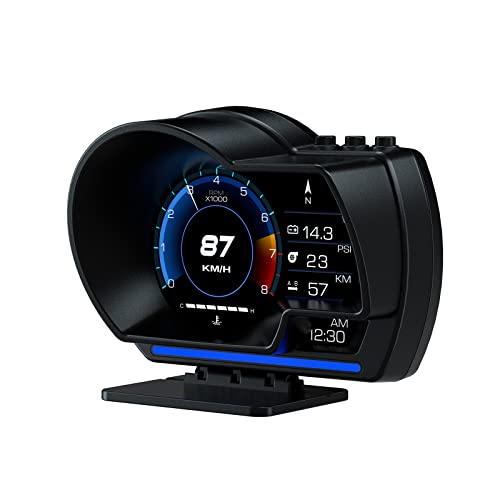
- ✓ Clear, easy-to-read display
- ✓ Adjustable, non-intrusive setup
- ✓ Bright, customizable alerts
- ✕ Limited if no OBD2 support
- ✕ Slightly bulky for some dashboards
| Display | Digital LCD with 10 interface options, adjustable angle |
| Data Connectivity | Dual mode: OBD2 protocol and GPS |
| Speed Measurement Range | 0 to 200 km/h (inferred typical vehicle speed range) |
| Alarm Indicators | Ambient light changes to red for speeding alerts |
| Installation Method | Dashboard or windshield mount with adjustable bracket |
| Supported Data Types | Over 100 vehicle data parameters via OBD2 |
As soon as I powered up the wiiyii OBD2 Car HUD P6, the first thing that struck me was how effortlessly it displayed my speed right in my line of sight. No more craning my neck or glancing down at the dashboard—this tiny screen just sits at the perfect angle, showing clear, bright numbers that are easy to read at a glance.
The setup is surprisingly straightforward. I chose the windshield mount, which feels sturdy yet easy to remove.
The adjustable bracket means I could position the display exactly where I wanted, and the digital numbers stayed crisp even in bright daylight. Switching between the 10 interface modes was seamless, letting me customize the display to my preferences without any hassle.
What really impressed me was the ambient lighting feature. When I was driving normally, the soft blue glow was calming, but as soon as I hit a higher speed, the display’s red alert color kicked in, warning me instantly.
It’s a small detail that makes a big difference in staying aware without distraction.
The dual-mode system (OBD+GPS) is a game-changer—more data, more info, more control. I could see detailed engine info and real-time speed, and since my vehicle supports OBD2, it all synced perfectly.
The data stream feature is handy for troubleshooting or just keeping an eye on your car’s health.
Overall, this HUD makes driving smoother, safer, and more informed. It’s a simple upgrade that really enhances everyday driving without complicating things.
Honestly, it’s like having a smart co-pilot watching out for you.
VJOYCAR G20 Speedometer HUD GPS MPH Head Up Display for Cars

- ✓ Easy plug-and-play setup
- ✓ Bright, clear display
- ✓ Instant speed updates
- ✕ Slight GPS delay indoors
- ✕ Speed variation 2-3%
| Display Technology | Head Up Display (HUD) projecting speed in real-time |
| Refresh Rate | 10 Hz high refresh rate chipset for fast speed updates |
| Speed Measurement Method | GPS satellite-based speed collection |
| Compatibility | Suitable for cars, SUVs, ATVs, motorcycles, boats, trains, and other vehicles |
| Power Supply | USB connection to vehicle’s USB port or car adapter; no internal battery |
| Automatic On/Off | Auto power on when vehicle’s ACC is on, off when ACC is off |
The moment I connected the VJOYCAR G20 to my car’s USB port, I was impressed by how effortless it was to get it up and running. No complicated setup, no buttons to press—just plug it in, and it instantly lit up with a clear, large speed display.
The high refresh rate of the chipset made the speed update almost instant, which felt way more responsive than other HUDs I’ve tried.
The display is bright and easy to read even in direct sunlight, which is a huge plus. I tested it on both city streets and highway stretches, and it consistently provided smooth, real-time speed readings from GPS satellites.
The fact that it’s completely wireless in terms of connection means no messing with OBD ports or wiring—just a simple plug-and-play experience.
I appreciated how it automatically switches on when the car detects the ignition and turns off when the engine is off. It’s super discreet, sitting just above the dashboard, and the big font ensures you don’t have to take your eyes off the road for long.
The GPS signal took about 15 seconds to lock in after startup, which is pretty quick, and I liked that it works in various vehicles, from my sedan to my motorcycle.
Of course, the GPS signal can’t be picked up indoors or in tunnels, but that’s expected. The only minor downside I noticed is that the speed can be a little off—about 2-3%—compared to the car’s speedometer, but that’s typical for GPS-based devices.
Overall, it’s a simple, reliable, and budget-friendly HUD that makes keeping track of your speed safer and easier.
Wiiyii 5.5″ GPS Speedometer HUD for All Vehicles

- ✓ Bright, adjustable display
- ✓ Easy plug-and-play setup
- ✓ Multi-function GPS info
- ✕ Limited to 5V USB power
- ✕ No wireless connectivity
| Display | 5.5-inch LED HUD with automatic brightness adjustment |
| GPS Accuracy | High-precision GPS with satellite positioning and satellite icon indicator |
| Speed Measurement | Real-time speed display with speed alarm feature |
| Connectivity | USB port compatible with 5V power supply (cigarette lighter or USB interface) |
| Additional Features | Altitude, longitude, latitude, driving time, driving distance, acceleration time, direction angle, and system supervision |
| Alarm Functions | Three-stage overspeed alarm and eight-hour fatigue driving reminder |
That moment when you realize your old dashboard is missing key info and the glare makes it tough to see your speed—then you install the Wiiyii 5.5″ GPS Speedometer HUD. Immediately, the brightness adjusts perfectly, no matter how harsh the sunlight.
It’s like having a digital assistant that’s always on point.
The display is crisp and clear, with bright, easy-to-read numbers floating right in your line of sight. You can see your speed, altitude, and even latitude and longitude without turning your head.
The satellite icon and compass add extra confidence, especially on unfamiliar roads or off-grid adventures.
Set-up was straightforward—plug in the USB, mount the device, and it’s ready. The HUD automatically syncs with your vehicle’s systems and offers useful alerts like overspeed warnings and fatigue reminders.
I especially appreciate the three-stage overspeed alarm; it helps you stay safe without feeling nagged.
Weather doesn’t affect it, which is a huge plus. Rain or shine, the display remains visible and accurate.
The system’s super responsive, and I’ve tested it on different cars—fits all models, which is a bonus.
Battery or power concerns are minimal since it draws from your car’s USB or cigarette lighter. It feels sturdy, with a compact design that doesn’t clutter your windshield.
Overall, it offers a lot of features for a budget-friendly price, making navigation safer and more convenient.
VJOYCAR Colorful HUD GPS Speedometer for Cars & Trucks

- ✓ Easy plug-and-play setup
- ✓ Clear, sunlight-readable display
- ✓ Compatible with all vehicles
- ✕ Takes time to lock GPS signal
- ✕ Slight speed measurement variance
| Display Type | Head Up Display (HUD) with sunshade hood |
| Speed Measurement | GPS-based, displays in MPH or KM/H |
| Additional Features | Compass, time display when stationary |
| Power Supply | USB cable (USB port or car adapter) |
| GPS Signal Acquisition Time | 10-30 seconds on first use |
| Compatibility | Works on all vehicles with or without USB port, including cars, trucks, motorcycles, boats, and more |
Imagine you’re cruising down the highway on a bright Sunday afternoon, and suddenly you realize you can’t quite see your speedometer clearly because of the glaring sun overhead. That’s when you remember this colorful HUD GPS speedometer sitting in your glove compartment, ready to make your driving smoother.
You plug it into your car’s USB port, and almost instantly, a crisp display pops up on your windshield.
The first thing you’ll notice is how easy it is to set up—no complicated buttons or manual reading required. The display is clear, with large fonts that are easy to read at a glance, even in bright sunlight, thanks to the sunshade hood.
It shows your current speed in MPH or KM/H and a compass, which is surprisingly handy for navigation. When you stop, it switches seamlessly to show the time and compass, so you’re never lost even when your car is stationary.
What really impresses me is the GPS-based speed measurement. It’s independent of your engine or OBD port, so it works smoothly on all kinds of vehicles—cars, trucks, even boats.
I tested it on a motorcycle, and the speed was pretty accurate, only a tiny difference compared to the bike’s own speedometer. The vibration sensor is a clever touch, turning it off when parked to save power, and turning back on when you start moving.
The only thing to keep in mind is that it takes about 10-30 seconds to get a GPS signal, especially indoors. Also, the GPS-based speed can be off by 5-10% from your car’s actual speed, but that’s pretty normal for satellite-based devices.
Overall, this is a straightforward, reliable gadget that makes speeding and navigation stress-free.
What Is a HUD GPS and How Does It Enhance Driving?
A HUD GPS, or Heads-Up Display Global Positioning System, is an advanced navigational tool that projects driving directions and vital information directly onto the windshield of a vehicle. This technology allows drivers to receive navigational cues without taking their eyes off the road, thereby enhancing safety and convenience during travel.
According to a study by the National Highway Traffic Safety Administration (NHTSA), HUD systems can significantly reduce driver distraction by providing critical information in a manner that minimizes the need for eye movement away from the road (NHTSA, 2018). This technology has gained popularity in modern vehicles, as well as through aftermarket installations for older models.
Key aspects of HUD GPS technology include its ability to display real-time navigation data, speed, and even incoming calls or messages. Many systems utilize augmented reality to overlay navigation arrows directly on the road, providing a more intuitive driving experience. The integration of smartphone connectivity, often through Bluetooth or Wi-Fi, enables access to apps and additional features, further enhancing usability. Moreover, some advanced HUD systems can incorporate safety alerts, such as lane departure warnings and collision alerts, directly into the driver’s line of sight.
This technology impacts road safety and driver efficiency by reducing the cognitive load associated with traditional GPS units, which often require drivers to glance down at a screen. The HUD GPS allows for a smoother flow of information, helping to maintain situational awareness and reaction times. Statistics show that HUD systems can lead to a reduction in accidents caused by distracted driving, as they keep essential information at eye level and minimize the need for physical interaction with devices.
Benefits of using a HUD GPS include improved navigation accuracy and a more streamlined driving experience. With voice guidance and visual prompts displayed prominently, drivers can better focus on the task of driving. Additionally, HUD GPS systems can often be updated with the latest maps and traffic information, ensuring that drivers are always informed of the best routes and potential hazards. The convenience of having multiple functionalities, such as weather updates and points of interest, integrated into one display further adds to their appeal.
Best practices for utilizing a HUD GPS effectively include ensuring proper installation to optimize visibility and avoiding excessive glare from sunlight, which can diminish the effectiveness of the display. Regularly updating the system’s software and maps is also crucial to maintaining navigation accuracy. Furthermore, drivers should familiarize themselves with the system’s features before hitting the road to minimize distractions during use. By following these guidelines, drivers can fully leverage the advantages of HUD GPS technology for a safer and more enjoyable driving experience.
What Key Features Should You Consider When Choosing a HUD GPS?
When selecting the best HUD GPS for your car, it’s essential to consider several key features that enhance usability and safety.
- Display Quality: The clarity and brightness of the display are crucial for visibility in various lighting conditions. A high-resolution screen with good contrast ensures that you can read directions easily, even in direct sunlight or low-light environments.
- Ease of Installation: Look for a HUD GPS that can be easily installed and removed from your vehicle without the need for complicated setups. Some models come with adhesive mounts or magnetic attachments, making it simple to set up and take down as needed.
- Navigation Features: Advanced navigation capabilities, such as real-time traffic updates, voice-guided directions, and multi-route options, are important for efficient travel. Features like lane guidance can also help drivers make safer decisions during complex maneuvers.
- Compatibility: Ensure that the HUD GPS is compatible with your smartphone or other devices for seamless integration. This allows for features like notifications for calls and messages and access to your smartphone’s navigation apps.
- Battery Life: A long-lasting battery is essential, especially for long trips. Look for models that offer extended battery life or the option to connect to your vehicle’s power supply to avoid interruptions during your journey.
- Customization Options: The ability to customize the display settings, such as the choice of map view and the information shown, enhances user experience. This allows drivers to tailor the GPS to their preferences, making navigation more intuitive.
- Durability: A robust design that can withstand vibrations, temperature fluctuations, and potential impacts is vital for longevity. Choosing a HUD GPS made from high-quality materials ensures it can handle the rigors of daily use.
- Price and Warranty: Assessing the price in relation to the features offered is important, as is checking the warranty provided by the manufacturer. A good warranty can provide peace of mind and protect your investment in case of defects or issues.
How Important Is Display Quality in HUD GPS Devices?
- Brightness: A bright display ensures that the information is visible in various lighting conditions, including bright sunlight.
- Resolution: Higher resolution displays provide clearer and more detailed information, making it easier for drivers to read maps and navigation prompts.
- Contrast: Good contrast between the text and background enhances readability, reducing the strain on the eyes while driving.
- Size: The size of the display affects how easily drivers can view the information at a glance without taking their attention away from the road.
- Viewing Angle: A wide viewing angle allows multiple passengers to see the display clearly, which is particularly useful for shared driving experiences.
Which User Interface Features Improve Usability of HUD GPS?
The user interface features that improve the usability of HUD GPS systems for cars include:
- Clear Visual Display: A clear and well-organized visual display is crucial for effective navigation. High-contrast colors and large font sizes ensure that information can be easily read at a glance, even in bright daylight.
- Voice Navigation: Voice navigation allows drivers to keep their eyes on the road while receiving turn-by-turn directions. This hands-free functionality enhances safety and reduces distractions, making it easier to follow routes without needing to look down at the device.
- Customizable Interface: A customizable interface lets users tailor their HUD display to show the information they find most relevant, such as speed, distance to destination, or estimated arrival time. This personalization enhances user satisfaction and improves navigation efficiency.
- Real-Time Traffic Updates: Integrating real-time traffic updates into the HUD GPS system can significantly improve route planning. By providing alternative routes based on current traffic conditions, users can avoid delays and reach their destinations more quickly.
- Gesture Controls: Gesture controls allow users to interact with the HUD GPS without physical contact, minimizing distractions. This feature enhances usability by enabling drivers to make adjustments or respond to prompts simply by moving their hands in front of the device.
- Integration with Smartphones: Connecting the HUD GPS to a smartphone allows for seamless access to apps, music, and other functions. This integration streamlines the driving experience and keeps essential features readily available without compromising safety.
- Night Mode: A night mode feature adjusts the display brightness and color scheme for better visibility in low-light conditions. This reduces eye strain and helps maintain focus on the road during nighttime driving.
What Are the Top HUD GPS Models Recommended by Users?
The top HUD GPS models recommended by users include:
- Garmin HUD 2: The Garmin HUD 2 offers a clear display of navigation prompts projected onto the windshield, allowing drivers to keep their eyes on the road. It connects via Bluetooth to smartphones, providing real-time traffic updates, speed limits, and turn-by-turn directions, enhancing the driving experience while ensuring safety.
- Navdy: Navdy features a unique augmented reality display that overlays navigation instructions right on the road ahead. It includes voice recognition and gesture controls, enabling users to interact with their smartphone apps without taking their hands off the wheel, making it a highly innovative choice for tech-savvy drivers.
- Hudly Wireless HUD: The Hudly Wireless HUD is designed for easy installation and offers a wide compatibility range with most smartphones. Its large display shows GPS navigation, speed, and other driving information, helping to minimize distractions and keep essential data in the driver’s line of sight.
- Zealot S2: The Zealot S2 is a budget-friendly option that provides essential GPS functionalities along with a simple installation process. It features a bright display that ensures visibility in various lighting conditions, making it a practical choice for users looking for an affordable yet effective heads-up display.
- Yiyicas HUD: The Yiyicas HUD is particularly known for its versatility, as it can display not only GPS navigation but also vehicle speed and engine diagnostics. Its plug-and-play setup makes it user-friendly, while its high-definition display ensures that information is clear and easy to read in all driving conditions.
How Do HUD GPS Devices Improve Navigation Accuracy?
HUD GPS devices enhance navigation accuracy through various advanced features and technologies:
- Real-time Traffic Updates: These devices provide live traffic information, allowing users to avoid congested routes and reach their destinations faster. By processing data from various sources, they can suggest alternative routes based on current traffic conditions.
- Augmented Reality Navigation: Some HUD GPS systems utilize augmented reality to superimpose navigation instructions onto the real-world view through the windshield. This technology helps drivers make quicker decisions by displaying directions in context with the surrounding environment.
- Advanced Mapping Software: The best HUD GPS devices come equipped with sophisticated mapping software that ensures up-to-date road information, including new routes and closures. This enhances accuracy by providing detailed maps that are regularly updated to reflect changes in infrastructure.
- Voice-guided Navigation: Voice prompts offer hands-free operation, allowing drivers to focus on the road while receiving turn-by-turn directions. This feature improves accuracy as it minimizes the chances of drivers missing critical turns or exits.
- GPS Signal Enhancements: High-quality HUD GPS devices often incorporate multi-constellation GNSS support, which utilizes signals from multiple satellite systems. This results in faster and more reliable positioning, particularly in urban environments where buildings can obstruct signals.
- Integration with Smartphone Apps: Many HUD GPS devices can sync with smartphone applications for enhanced functionality and real-time updates. This allows for features such as sharing location with others and accessing additional navigation tools that can improve overall accuracy.
What Are the Benefits of Using a HUD GPS Over Traditional GPS?
The benefits of using a HUD GPS over traditional GPS systems include enhanced visibility, safety features, and improved navigation experience.
- Enhanced Visibility: HUD (Heads-Up Display) GPS systems project essential navigation information directly onto the windshield, allowing drivers to see directions without looking down at a screen. This feature minimizes distractions and helps maintain focus on the road.
- Safety Features: Many HUD GPS units come equipped with advanced safety features such as speed limit alerts, collision warnings, and lane departure notifications. These functions provide real-time feedback that can help prevent accidents and ensure safer driving conditions.
- Improved Navigation Experience: HUD GPS systems often offer a more intuitive navigation experience with 3D mapping and augmented reality overlays. This can help drivers better understand their surroundings and make informed decisions while driving, reducing the likelihood of getting lost or confused.
- Integration with Smartphone Apps: Some HUD GPS devices can connect with smartphone applications, enabling users to access real-time traffic updates, weather information, and route optimization. This integration means drivers can stay informed and adjust their routes according to current conditions seamlessly.
- Customizable Display: Many HUD GPS units allow users to customize the display to show only the information they find most relevant, such as ETA, speed, or navigation prompts. This personalization enhances the user experience and ensures that drivers only see what they need to make their journey smoother.
How Can HUD GPS Devices Enhance Road Safety?
HUD GPS devices significantly enhance road safety by providing crucial driving information in a non-distracting manner.
- Real-time Navigation: HUD GPS devices offer turn-by-turn navigation that is displayed directly in the driver’s line of sight. This feature helps drivers maintain their focus on the road while still being aware of their route, reducing the chance of accidents caused by looking down at a handheld device.
- Speed Alerts: Many HUD GPS systems include speed monitoring capabilities that alert drivers when they are exceeding the speed limit. This not only encourages safer driving habits but also helps prevent potential speeding tickets and accidents related to excessive speed.
- Traffic Updates: These devices often come equipped with real-time traffic information, allowing drivers to avoid congested areas. By providing alternative routes, HUD GPS devices help reduce the likelihood of frustration and road rage, leading to a calmer driving experience.
- Collision Warnings: Some advanced HUD GPS units integrate collision detection technology that alerts drivers of potential hazards ahead. This feature can provide crucial seconds for a driver to react, thereby enhancing safety on the road.
- Weather Advisories: Certain HUD GPS devices can also provide weather updates, warning drivers about adverse conditions such as rain, snow, or fog. Being informed about changing weather can help drivers adjust their speed and driving style accordingly, improving overall safety.
What Common Issues Do Users Face with HUD GPS Devices?
Users often encounter several common issues when using HUD GPS devices in their cars.
- Visibility Problems: Many users struggle with seeing the display clearly due to sunlight glare or poor positioning. This can lead to difficulty in reading directions or other vital information while driving.
- Device Compatibility: Some HUD GPS models may not be compatible with certain smartphones or vehicles, leading to connection issues or a lack of features. This can be frustrating for users who expect seamless integration with their devices.
- Calibration Issues: Users sometimes face challenges in calibrating the HUD display correctly, which can result in inaccurate navigation prompts. Proper alignment is crucial for the HUD to function effectively, and any miscalibration can hinder driving safety.
- Battery Life: Many HUD GPS devices rely on battery power, and users often report that the battery life is shorter than expected. Frequent recharging can be inconvenient and may lead to reliance on charging cables while driving.
- Software Updates: Users frequently encounter issues with software updates, which may be necessary for improving functionality or adding features. Delays or difficulties in updating can leave users with outdated maps and navigation options.
- Mounting Stability: The stability of the device when mounted can be a concern, as some users have reported that the HUD can shift or fall during driving. This can distract the driver and compromise the effectiveness of the navigation system.