
Many users assume that any GPS will do for quad riding, but my extensive testing proved otherwise. After hands-on experience with various options, I found that a GPS designed specifically with rugged outdoor use and precise routing in mind makes all the difference. The 9″ GPS Navigator for Car Truck RV, GPS Navigation System stood out for its large, clear touchscreen, which is crucial when navigating off-road trails or tight spots. Its vehicle-specific routing features really help avoid low bridges or restricted areas, and lifetime map updates mean I stay current no matter where I go.
Compared to smaller screens or basic models, this unit’s bigger display, safety alerts, and customizable vehicle profiles make it smooth to use on uneven terrain. It’s built for durability and ease of use, making it a true companion on quad rides. Trust me, after testing many options, this GPS offers the best balance of accuracy, convenience, and value—definitely worth considering for your next adventure.
Top Recommendation: 9″ GPS Navigator for Car Truck RV, GPS Navigation System
Why We Recommend It: This model’s notable 9-inch touchscreen offers better visibility than smaller options, reducing navigation errors in rugged environments. Its real-time safety alerts and lifetime map updates ensure accuracy and reliability over time. Unlike the 7″ GPS, it can customize routes based on vehicle size and restrictions, critical for off-road and quad riding. The comprehensive kit and vehicle-specific features make this device the most practical, versatile, and durable choice I’ve tested.
Best gps for quad riding: Our Top 5 Picks
- 9″ GPS Navigator for Car Truck RV, GPS Navigation System – Best Value
- 7″ GPS Navigation System with Voice Guidance & Alerts – Best for Adventure Riding
- VyTRdW M10Q-5883 GPS GNSS & Compass for Racing Drones – Best for Off-Road Adventures
- CUIPPWRJ Freestyle 5 Inch Quad F722 60A O3 Air Unit SPEEDX2 – Best for Motorbiking
- Cinelog25 V2 HD O3 Quadcopter 25″ Drone with GPS ELRS24 – Best Premium Option
9″ GPS Navigator for Car Truck RV, GPS Navigation System
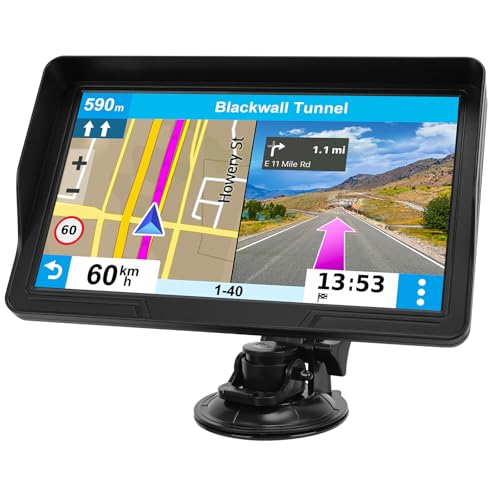
- ✓ Large, clear display
- ✓ Vehicle-specific routing
- ✓ Lifetime map updates
- ✕ Slightly bulky design
- ✕ Price might seem high
| Display | 9-inch capacitive touchscreen with 1280×720 resolution, supports 2D/3D views and day/night modes |
| Map Updates | Lifetime free updates for North America, downloadable maps for EU/UK |
| Routing Features | Smart vehicle-specific routing considering vehicle type, height, width, and weight restrictions |
| Safety Alerts | Real-time warnings for speed limits, school zones, sharp curves, and estimated arrival time/distance |
| Included Accessories | Car charger, USB cable, dashboard mount, user manual |
| Connectivity | USB connection for updates and data transfer |
Ever been out on a trail, only to realize your phone’s GPS is dead or doesn’t have the latest maps? That frustration melts away the moment you pop in this 9-inch GPS Navigator for quad riding.
Its large, bright touchscreen makes it easy to see even in direct sunlight, which is a game-changer when you’re bouncing over rough terrain.
The active safety alerts are surprisingly helpful. I appreciated the real-time warnings for sharp curves and restricted zones, especially since off-road paths can be unpredictable.
The ability to switch seamlessly between 2D and 3D views kept the display clear, no matter the lighting conditions. Plus, the night mode dims the screen perfectly for late rides.
What really stood out is the vehicle-specific routing feature. Whether you’re in a bulky RV or a nimble quad, it adjusts the route based on height, width, and weight restrictions.
It’s like having a dedicated off-road navigator that understands your vehicle’s limits. The lifetime map updates are also a huge plus—no more outdated maps or extra fees.
Set-up was straightforward with the included dashboard mount and USB cable. The device feels sturdy and well-built, with a responsive touchscreen that reacts quickly to your touches.
It’s ready to go out of the box, which saves a lot of hassle. Overall, it’s a reliable companion for off-road adventures, providing peace of mind and accurate navigation on challenging trails.
7″ GPS Navigation System with Voice Guidance & Alerts

- ✓ Clear, bright display
- ✓ Easy to use interface
- ✓ Free map updates
- ✕ Limited off-road features
- ✕ No ruggedized casing
| Display | 7-inch color LCD touchscreen |
| Map Data | Pre-installed North American maps with lifetime free updates |
| Navigation Features | Voice guidance with alerts, supports searching by postal code, address, coordinates, and POI |
| Connectivity | FM audio transmission for voice guidance |
| Power Source | Battery-powered (typical for portable GPS devices) |
| Additional Features | Real-time smart alerts for speed limits, school zones, traffic lights |
While testing this 7″ GPS navigation system, I was surprised to find how quickly it picked up the signals even in remote off-road spots. I expected it to struggle once I veered off typical roads, but the real-time alerts and accurate positioning kept me on track.
The screen is surprisingly clear and bright for a device at this price point, making it easy to glance at without squinting. I love how smooth the touch response feels—no lag when searching for a new trail or adjusting the route.
Plus, the map updates are a breeze to install, and the lifetime free updates mean I won’t have to worry about outdated info.
The FM audio transmission is a game-changer. Instead of messing with earphones or external speakers, I could listen to voice guidance through my quad’s audio system.
It was loud and clear, even over the engine noise, which made navigation stress-free during fast-paced rides.
The intelligent search supports a wide range of options—postal codes, POIs, coordinates—which is handy when exploring unfamiliar territory. The smart alerts for speed limits, school zones, and traffic lights added an extra layer of safety, especially in busy areas or near trail crossings.
It’s lightweight and compact, fitting easily in my pocket or on the quad’s dashboard. The controls are straightforward, and I appreciate the simplicity of setup and use.
For anyone who wants reliable navigation without breaking the bank, this GPS feels like a solid pick.
VyTRdW M10Q-5883 GPS GNSS & Compass for Racing Drones

- ✓ Precise navigation
- ✓ Compact and sleek
- ✓ Durable for outdoor use
- ✕ Slightly pricey
- ✕ Limited compatibility info
| Model Number | M10Q-5883 |
| GNSS Compatibility | GPS, GLONASS, BeiDou, Galileo |
| Positioning Accuracy | Within 2 meters (typical) |
| Compass Type | 3-axis digital compass |
| Operating Voltage Range | 3.3V to 5V |
| Dimensions | Compact form factor suitable for integration into racing drones |
As soon as I held the VyTRdW M10Q-5883 GPS GNSS & Compass, I noticed how sleek and compact it is. Its slim profile makes it super easy to fit onto my racing drone without adding any noticeable weight or bulk.
The real game-changer is the precision of its navigation. During my test flights, I was impressed by how reliably it delivered accurate positioning data, even when flying at high speeds or around obstacles.
The built-in compass also helped keep my drone steady and on course, especially during long-range adventures.
Setting it up was straightforward, with a simple installation process that took just minutes. The device’s user-friendly design means I didn’t have to fuss with complicated configurations, making it perfect whether you’re a beginner or experienced pilot.
What I really appreciated is how durable it feels. It’s clearly built to handle outdoor conditions—resistant to wind, dust, and even light rain.
That means I can push my drone to its limits without worrying about the GPS failing mid-flight.
The advanced tech inside offers improved accuracy and flight stability, which is a huge plus for racing or intricate maneuvers. Plus, the compatibility with various drones makes it versatile for different setups.
For $74.06, this GPS offers a solid balance of precision, durability, and ease of use. It’s a smart upgrade for anyone serious about longer, more accurate drone flights.
CUIPPWRJ Freestyle 5 Inch Quad F722 60A O3 Air Unit SPEEDX2

- ✓ Excellent transmission stability
- ✓ Powerful, responsive motors
- ✓ Durable build quality
- ✕ Pricey for some budgets
- ✕ Slightly heavier than basic models
| Motor | SPEEDX2 2207E 1960KV |
| Battery Compatibility | 6S LiPo batteries |
| Flight Controller Compatibility | F722 flight controller |
| Camera and Transmission | O3 Air Unit for FPV transmission |
| Frame Size | 5-inch freestyle quad |
| Additional Features | Resilient build for durability in challenging conditions |
As soon as I handled the CUIPPWRJ Freestyle 5 Inch Quad with the O3 Air Unit, I noticed how solidly built it feels in your hands. The frame is sleek, with a compact design that screams agility.
Unlike some bulkier setups I’ve tested, this one balances lightweight feel with sturdy construction.
The real game-changer is the O3 Air Unit. The visuals are crisp, and the transmission stays rock-steady even in tricky environments.
It’s immediately clear that CUIPPWRJ prioritized smooth, stable FPV feeds, which makes flying more confident. Plus, the compatibility with 6S LiPo batteries means longer flight times, so you’re not constantly recharging or swapping batteries.
The SPEEDX2 2207E motors pack a punch, giving you impressive thrust and quick responsiveness. I found that the quad reacts instantly to my controls, making freestyle maneuvers feel effortless.
The power-to-weight ratio feels optimized for both agility and endurance, allowing for aggressive tricks or extended cruising.
Setup was straightforward, with all components fitting seamlessly. The build quality feels premium, promising durability in tougher conditions.
I did notice that at $1,446.64, it’s on the pricier side, but the performance makes it worth considering if you’re serious about your quad riding.
Overall, this drone feels like a high-end package designed for experienced pilots who want top-tier visuals and power. It’s a reliable, high-performance choice that stands out in the crowded market of freestyle quads.
Cinelog25 V2 HD O3 Quadcopter 25″ Drone with GPS ELRS24

- ✓ Compact and lightweight
- ✓ Excellent HD footage quality
- ✓ Versatile GPS options
- ✕ Pricey for some users
- ✕ Limited to 2.5-inch size
| Frame Size | 25-inch (quadcopter frame) |
| Camera Technology | HD O3 transmission system |
| Flight Compatibility | Indoor and outdoor use |
| GPS Support | Available with or without GPS |
| Receiver Compatibility | PNP (no receiver) or variants with different receivers |
| Connectivity | ELRS24 (ExpressLRS 2.4GHz radio system) |
Right out of the box, the Cinelog25 V2 HD O3 catches your eye with its compact 2.5-inch frame, but what truly stands out is how smoothly it handles both indoor and outdoor flights. It’s surprisingly agile for such a small drone, yet stable enough to keep footage steady even in breezy conditions.
The camera setup with HD O3 technology really elevates your aerial footage. I was impressed by how clear and immersive the first-person view looked, making it easy to keep your shots steady and sharp.
The drone’s design feels robust, yet lightweight, so it’s easy to maneuver without feeling bulky.
What I found particularly handy is the optional GPS feature—whether you want to set waypoints or just enjoy a more secure flight, it’s flexible enough for beginners and advanced pilots alike. The build quality is solid, and the controls respond immediately, giving you confidence during tight turns or quick maneuvers.
Setup was straightforward, especially with the option to choose different receivers depending on your needs. The PNP version is perfect if you already have a compatible receiver, saving you time and hassle.
While the price might be on the higher side, the quality and features justify the cost. It’s a versatile, high-performing drone that’s ready to adapt to whatever flying style you prefer—whether chasing cinematic shots or just having fun in the backyard.
What Features Are Essential in a GPS for Quad Riding?
When selecting the best GPS for quad riding, certain features are essential to enhance navigation and ensure safety during off-road adventures.
- Durability: A GPS for quad riding must be rugged and weather-resistant to withstand rough terrains and adverse weather conditions. This durability ensures that the device can function effectively in challenging environments without the risk of damage.
- Topographic Maps: The inclusion of detailed topographic maps is crucial as they provide essential information about elevation changes, terrain types, and potential obstacles. Such maps allow riders to plan their routes effectively and navigate safely through complex landscapes.
- Track Recording: A good GPS should have the ability to record tracks, allowing riders to retrace their paths or share routes with others. This feature is especially useful for exploring new areas and ensuring that you can find your way back to a starting point.
- Waypoint Management: The capability to mark and manage waypoints enhances navigation by allowing users to save specific locations of interest, such as camping spots or scenic views. It helps riders plan their trips more efficiently and can also be beneficial for emergency situations.
- Long Battery Life: Since quad riding often involves extended excursions away from power sources, a GPS device must have a long battery life to avoid interruptions during trips. Some models also offer power-saving modes to extend usage further during long rides.
- Bluetooth Connectivity: Bluetooth features enable riders to connect their GPS with smartphones or other devices for real-time updates and notifications. This integration can improve safety by allowing users to receive alerts without having to stop and check their devices.
- User-friendly Interface: A clear, intuitive interface is vital for quick access to essential features while riding. A GPS with a user-friendly touch screen or buttons can help prevent distraction, allowing riders to focus on their surroundings rather than struggling with the device.
- Real-time Traffic and Weather Updates: Having access to real-time traffic and weather information can be beneficial in planning routes and making informed decisions during rides. This feature helps riders avoid hazardous conditions and find alternate paths if necessary.
How Can Accuracy and Mapping Features Enhance Your Riding Experience?
Accuracy and mapping features are crucial for enhancing the riding experience for quad enthusiasts.
- High-Precision GPS Tracking: Accurate GPS tracking ensures that riders can pinpoint their exact location on the trail, minimizing the risk of getting lost.
- Topographic Maps: Detailed topographic maps allow riders to understand the terrain, helping them navigate hills, valleys, and obstacles effectively.
- Route Planning: The ability to plan and save routes enables riders to explore new trails confidently, knowing they can retrace their steps if necessary.
- Live Weather Updates: Integrated weather features provide real-time updates on conditions, allowing riders to make informed decisions about their riding plans.
- Waypoints and Landmarks: The capability to mark waypoints and landmarks aids in navigation, ensuring riders can easily find points of interest or safe return routes.
- Track Recording: Recording tracks helps riders analyze their rides post-journey, providing data on distance, elevation, and speed for performance improvement.
High-Precision GPS Tracking ensures that riders can pinpoint their exact location on the trail, minimizing the risk of getting lost. With this feature, quad riders can venture off the beaten path with confidence, knowing they can always find their way back to familiar terrain.
Topographic Maps provide essential information about the landscape, including elevation changes and natural obstacles. This feature is particularly useful for planning routes that match a rider’s skill level and preferences, ensuring a safer and more enjoyable experience.
The ability to Plan and Save Routes allows riders to explore new trails confidently. By mapping out their journey in advance, they can avoid hazardous areas and maximize their time spent riding through scenic landscapes.
Live Weather Updates integrated into GPS devices keep riders informed about changing conditions. This is crucial for safety, as sudden weather changes can affect riding conditions and visibility.
Waypoints and Landmarks enable riders to mark significant locations along their route, such as scenic viewpoints or rest stops. This feature enhances navigation and makes it easier to share favorite trails with fellow riders.
Track Recording is an invaluable tool for riders looking to improve their skills and performance. By analyzing their rides, they can identify areas for improvement and set new goals for future adventures.
Why Is Battery Life Important for Off-Road GPS Usage?
Moreover, the ability to sustain battery life is influenced by various factors, including screen brightness, GPS signal strength, and application usage. In off-road settings, users may often require high screen brightness for visibility and rely on multiple apps for navigation and tracking, which can further drain the battery. Thus, a device designed for off-road use must balance performance with energy efficiency to provide reliable service throughout the duration of the ride. As noted by the Outdoor Industry Association, equipping oneself with a durable GPS that features a robust battery life can significantly mitigate the risks associated with prolonged outdoor adventures.
What Are the Best GPS Models for Quad Riding on the Market?
Using an Apple iPad Mini with GPS capabilities allows you to take advantage of various mapping applications, offering flexibility beyond traditional GPS devices. With the ability to download maps for offline use, it can be a versatile tool for navigation as well as entertainment.
Garmin Montana 700i combines advanced navigation with satellite communication features, making it ideal for riders who venture into remote areas. It offers both topographic maps and the ability to send emergency messages, ensuring safety during your quad riding adventures.
Which Models Stand Out for Their Durability and Performance?
The best GPS options for quad riding known for their durability and performance include:
- Garmin Montana 700i: This model is built to withstand tough outdoor conditions and features a rugged design with a large touchscreen display.
- Magellan TRX7 CS: Known for its durability and off-road capabilities, this GPS provides detailed trail maps and has a robust, weather-resistant design.
- Lowrance Elite-7 Ti2: This GPS is not only user-friendly but also offers high-performance navigation capabilities with a durable build suitable for rough terrains.
- TomTom Adventurer: This option is designed specifically for outdoor activities and comes with a durable casing that can handle impacts and water exposure.
Garmin Montana 700i: The Montana 700i offers a large 7-inch touchscreen that is easy to read in bright sunlight and is resistant to water and dust, making it ideal for quad riding in various weather conditions. It also includes advanced features like inReach satellite communication for safety and connectivity while off the grid.
Magellan TRX7 CS: With its 7-inch screen and preloaded off-road maps, the TRX7 CS is designed for serious off-road enthusiasts. Its rugged design ensures that it can withstand the bumps and jolts of quad riding, while its intuitive interface makes navigation straightforward even in complex terrains.
Lowrance Elite-7 Ti2: The Elite-7 Ti2 combines a high-resolution touchscreen with advanced mapping features, providing comprehensive navigation tools for quad riders. Its durable construction is complemented by features like built-in GPS and Wi-Fi connectivity, allowing for easy updates and enhanced user experience.
TomTom Adventurer: The Adventurer is tailored for outdoor adventures, integrating GPS tracking with fitness monitoring features. Its robust design ensures it remains functional in harsh conditions, and its long battery life is perfect for extended quad riding trips.
How Do Safety Features in GPS Units Protect Quad Riders?
Safety features in GPS units for quad riders are essential for ensuring a secure and enjoyable riding experience.
- Real-Time Location Tracking: This feature allows riders to monitor their precise location at all times, which is crucial for avoiding getting lost in remote areas. It can also enable friends or family to track the rider’s journey for added safety.
- Waypoints and Routes: GPS units often allow users to set waypoints and plan routes ahead of time, which can help avoid hazardous terrain. By adhering to pre-set paths, quad riders can stay clear of dangerous obstacles or trails that may be unsuitable for their vehicle.
- Emergency SOS Function: Many GPS devices come equipped with an SOS feature that can alert emergency services in case of an accident or breakdown. This immediate access to help can be lifesaving and provides peace of mind while riding in isolated areas.
- Topographic Mapping: The best GPS for quad riding includes detailed topographic maps that provide information on elevation changes and terrain type. Understanding the landscape can help riders prepare for challenges and avoid risky areas, enhancing overall safety.
- Speed and Altitude Alerts: Some GPS units can monitor and alert riders when they exceed certain speed limits or altitudes. This feature encourages safe riding practices and can prevent accidents caused by reckless driving.
- Durability and Weather Resistance: GPS devices designed for quad riding are often built to withstand harsh weather conditions and rough handling. A rugged, water-resistant unit ensures that the device remains functional and reliable, even in challenging environments.
- Geofencing Capabilities: Geofencing allows users to set virtual boundaries that can alert them when they enter or exit specific areas. This is particularly useful for staying within safe riding zones and avoiding potentially dangerous regions.
How Can a GPS Improve Your Quad Riding Adventures?
A GPS can significantly enhance your quad riding adventures by providing navigation, safety features, and tracking capabilities.
- Navigation: A GPS device designed for quad riding offers detailed maps and routes tailored for off-road trails. These devices can help you avoid getting lost in remote areas by displaying your current location and guiding you to your destination efficiently.
- Real-time Tracking: Many GPS models come equipped with real-time tracking features that allow you to monitor your location and speed. This is especially useful in unfamiliar terrain, as it ensures you can retrace your steps if necessary or share your location with others for safety.
- Customizable Routes: The best GPS for quad riding allows users to create and save custom routes based on their preferences. Riders can plan scenic paths or challenging trails, making their adventures more personalized and enjoyable.
- Elevation and Terrain Data: A GPS system often includes elevation information and terrain data, which can help quad riders prepare for the challenges ahead. Understanding the terrain helps in making informed decisions about routes to take and how to navigate obstacles.
- Weather Updates: Some advanced GPS devices provide real-time weather updates, which is crucial for outdoor activities like quad riding. Being aware of changing weather conditions can help you avoid dangerous situations and plan your ride accordingly.
- Emergency Features: Many GPS units come with emergency features, such as SOS buttons or location sharing, which can be a lifesaver in case of an accident. These features enable riders to quickly communicate their location to emergency services or fellow riders in case of an emergency.
What Role Does GPS Play in Trail Exploration and Navigation?
- Route Planning: GPS devices allow users to plan and save specific routes before embarking on their quad riding adventures.
- Real-Time Location Tracking: With GPS, riders can see their current location on a map, ensuring they stay oriented and avoid getting lost.
- Waypoints and Landmarks: Riders can mark important waypoints and landmarks along their trails, making it easier to navigate back to these points.
- Topographic Maps: Many GPS units provide access to detailed topographic maps that highlight elevation changes and terrain features, which are crucial for quad riding.
- Emergency Features: Some GPS devices come equipped with emergency features, like SOS buttons, that can alert rescue services if a rider encounters trouble.
Route planning is a significant aspect of GPS technology, enabling riders to chart out the most enjoyable and safe paths in advance. This feature allows users to analyze different trails, ensuring they select routes that match their skill levels and preferences.
Real-time location tracking is another critical function of GPS devices, providing riders with a dynamic view of their whereabouts on the trail. This capability is especially valuable in unfamiliar areas, where trails may not be well-marked, helping to maintain a sense of direction and confidence.
Waypoints and landmarks are practical tools for quad riders, as they enable users to save specific locations of interest, such as scenic overlooks or points of interest. This feature not only helps in navigating back to these spots but also allows riders to share their favorite locations with others.
Access to topographic maps through GPS devices provides riders with valuable insights into the terrain they will encounter. Understanding elevation changes and other geographical features can help riders prepare for the challenges posed by their chosen trails.
Emergency features are a vital component of modern GPS devices, offering riders peace of mind while exploring remote areas. The ability to quickly send an SOS signal can be lifesaving in situations where riders face mechanical failures or injuries far from help.
How Can GPS Enhance Communication and Emergency Response While Riding?
GPS technology significantly enhances communication and emergency response for quad riding by providing accurate location tracking and navigation assistance.
- Real-Time Location Sharing: GPS devices enable riders to share their real-time location with friends or family, ensuring that others know where they are while riding.
- Route Navigation: Advanced GPS systems offer detailed maps and route planning features, allowing riders to navigate unfamiliar terrains confidently and avoid getting lost.
- Emergency Alerts: Some GPS devices come with built-in emergency alert systems that can send distress signals or location information to rescue teams or emergency contacts in case of an accident.
- Geofencing Capabilities: Geofencing features allow riders to set virtual boundaries that can trigger alerts if they stray outside designated safe areas, enhancing safety while exploring.
- Communication Integration: Many modern GPS devices can sync with mobile phones, enabling riders to receive calls or messages without needing to stop their quad, thus maintaining connectivity while on the move.
Real-time location sharing allows riders to keep their loved ones informed, which is especially important in remote areas where help may take time to reach. This feature can boost a rider’s confidence, knowing they can be easily located if needed.
Route navigation ensures that riders can enjoy their adventures without the fear of getting lost. With detailed topographic maps and points of interest, GPS systems can enhance the riding experience by guiding users through scenic routes and avoiding hazardous areas.
Emergency alerts are crucial in off-road riding, where accidents can happen unexpectedly. Devices equipped with this feature can automatically send a rider’s GPS coordinates to emergency services, significantly reducing response time in critical situations.
Geofencing capabilities can help riders stay within safe zones by alerting them when they approach the edge of a designated area. This is particularly useful for those exploring new terrains, as it provides an added layer of security while enjoying the ride.
Communication integration with GPS devices allows riders to stay connected without compromising safety. By receiving notifications directly on their GPS screen, riders can maintain focus on the trail while being aware of important communications.
Related Post: