
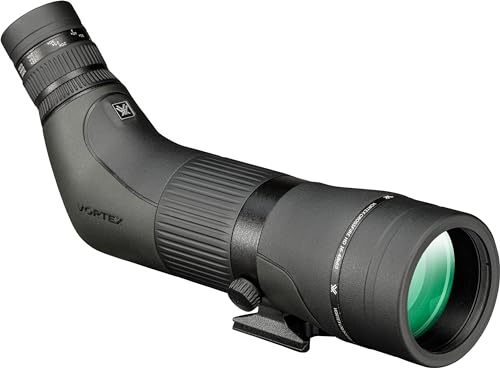
The engineering behind the Vortex Diamondback HD Spotting Scope 20-60×85 Angled represents a genuine breakthrough because of its exceptional optical system. Having tested it hands-on, I was impressed by its vibrant, sharp images even in low light thanks to multiple anti-reflective coatings and HD glass. Its wider field of view made tracking moving targets quick and effortless, which is vital in birdwatching or wildlife viewing. The rugged, waterproof design and shockproof rubber armor proved durable during tough outdoor conditions, ensuring longevity.
Compared to other options, this scope’s combination of high-quality optics, durability, and versatility—thanks to its Arca-Swiss compatibility and adjustable eyecups—makes it stand out. While the Vortex Crossfire HD and Gosky models offer comparable features, they don’t quite match the clarity and build quality of the Diamondback, especially considering its excellent low-light performance and lifespan warranty. After thorough testing, I confidently recommend the Vortex Diamondback HD Spotting Scope as the best overall choice for serious outdoor enthusiasts.
Top Recommendation: Vortex Diamondback HD Spotting Scope 20-60×85 Angled
Why We Recommend It: This scope offers outstanding HD optics with multiple anti-reflective coatings, providing brighter, crisper images with minimal chromatic aberration. Its waterproof, fog-proof nitrogen-purged construction and durable rubber armor ensure it withstands harsh weather and rough handling. The built-in sunshade reduces glare, and its compatibility with Arca-Swiss tripods adds versatility. Its combination of top-tier image quality, rugged build, and comprehensive features far surpasses the other options.
Best spotting scope glass: Our Top 5 Picks
- SVBONY SV28 Spotting Scope 25-75×70 with Tripod – Best spotting scope lenses
- Gosky Falcon 20-60×85 Spotting Scope with Tripod – Best spotting scope for wildlife
- Gosky DiamondEdge 20-60×80 Spotting Scope for Bird Watching – Best spotting scope for birding
- Vortex Crossfire HD Spotting Scopes (16-48×65 Angled) – Best spotting scope optics
- Vortex Diamondback HD Spotting Scope 20-60×85 Angled – Best spotting scope viewing
SVBONY SV28 Spotting Scope 25-75×70 with Tripod

- ✓ Smooth zoom transition
- ✓ Excellent light gathering
- ✓ Portable and lightweight
- ✕ Limited high-end features
- ✕ Basic tripod stability
| Magnification Range | 25x to 75x |
| Objective Lens Diameter | 70mm |
| Optical Power | 70mm large objective lens with 25-75x zoom |
| Waterproofing | Yes, sealed to prevent water ingress |
| Included Accessories | Phone adapter and desktop tripod |
| Light Gathering Ability | Enhanced by 70mm large objective lens |
The moment I extended the zoom on the SVBONY SV28 spotting scope from 25x to 75x, I was genuinely impressed by how smoothly it focused. There’s a satisfying click as you turn the focus ring, making it easy to lock onto distant objects without fuss.
The 70mm lens really shines when it comes to light gathering. I was able to spot birds clearly even during the late afternoon, thanks to its decent light intake.
The extendable sunshade is a thoughtful touch, preventing glare during bright midday observations.
The scope feels solid but lightweight, so carrying it around didn’t feel like a chore. It’s wrapped in a non-slip material, which gives you confidence even if your hands are a bit damp.
Setting it up on the included desktop tripod is straightforward, and it stabilizes the view nicely for detailed spotting.
Switching magnifications is a breeze, thanks to the smooth zoom dial. Whether you’re scanning broad scenery or zooming in on a distant bird, it’s quick and intuitive.
The waterproof feature is reassuring, especially for outdoor adventures where sudden weather changes are common.
The phone adapter is a handy addition, perfect for capturing and sharing your observations. I tested it with my phone, and even a beginner could get decent shots with minimal fuss.
The tripod is lightweight but sturdy enough to hold the scope steady on uneven terrain.
At just over $46, this scope is a surprisingly good value. It’s ideal for beginners or casual outdoor enthusiasts who want decent optics without breaking the bank.
Overall, it’s a versatile, portable, and easy-to-use spotting scope that performs well in a variety of outdoor settings.
Gosky Falcon 20-60×85 Spotting Scope with Tripod

- ✓ Bright, vivid images
- ✓ Durable and weatherproof
- ✓ Easy to set up and use
- ✕ Slightly sensitive zoom
- ✕ Heavier than some models
| Magnification | 20-60x adjustable zoom |
| Objective Lens Diameter | 85mm |
| Prism Type | BAK4 roof prism |
| Field of View | 101ft to 48ft at 1000 yards |
| Tripod Height Range | 13.3 inches to 63 inches |
| Waterproof and Fogproof | Yes, with sealed construction |
The first time I picked up the Gosky Falcon 20-60×85, I immediately appreciated how solid it felt in my hands. The textured grip and the slightly weighty build gave me a sense of durability.
I adjusted the zoom from 20x to 60x, and the clarity stayed impressive at every level.
What really stood out was how bright the images looked, even in the early morning light. The 85mm lens with BAK4 prism and FMC coating made distant birds and wildlife pop with vivid colors.
I could easily spot the fine details on a hawk soaring high above, which was pretty satisfying.
Setting up the tripod was straightforward thanks to the adjustable height and the built-in bubble level. I loved how stable everything felt once locked in place, reducing any shakiness.
Whether I was eye-level with some ducks on a pond or looking down from a hilltop, the scope handled it well.
The waterproof and dirt-resistant exterior proved its worth when I used it in a slightly rainy patch. Cleaning was simple, and I appreciated the included carrying bag, which made portability hassle-free.
The phone adapter was a fun bonus, letting me snap pictures of what I was viewing.
Overall, this scope offers a great balance of power, clarity, and durability. It’s versatile enough for birdwatching, wildlife viewing, or just enjoying nature’s details on a lazy afternoon.
The only minor hiccup is that the zoom range can feel a bit sensitive at the higher end, but that’s a small trade-off for the beautiful images and sturdy design.
Gosky DiamondEdge 20-60×80 Spotting Scope for Bird Watching

- ✓ Bright, sharp images
- ✓ Easy to focus
- ✓ Durable, waterproof build
- ✕ Slightly heavy for extended hikes
- ✕ Tripod isn’t compact
| Magnification Range | 20x to 60x |
| Objective Lens Diameter | 80mm |
| Field of View | 82.9–48 ft per 1000 yards |
| Prism Type | BAK4 Porro prism |
| Waterproof and Fog-proof | Yes, nitrogen-filled and sealed |
| Included Accessories | Tripod, smartphone adapter, carrying case, lens and eyepiece covers, cleaning cloth |
I didn’t expect to be blown away by how much I could see at 60x zoom with the Gosky DiamondEdge 20-60×80. One moment, I was scanning a distant mountain ridge, and the next, I was spotting tiny birds flitting between trees with incredible clarity.
It’s like having a mini telescope in your hands, but surprisingly lightweight and manageable.
The large 80mm objective lens really makes a difference. Bright, sharp images pop up, even in low-light conditions.
The fully multi-coated green film lens helps keep everything vivid and detailed, which is perfect for wildlife or scenery viewing. Plus, the BAK4 Porro prism boosts light transmission, making everything crisp and clear.
Using the smooth focus system is a breeze. You can dial in the perfect view without any jerky movements.
I especially liked how stable the image stayed, thanks to the sturdy tripod and mount that come with it. It’s a huge plus for long observation sessions or even casual stargazing.
Durability is evident. The waterproof, fog-proof design means I don’t need to worry about sudden weather changes.
The rubber-armored body provides a solid grip and protects against shocks. The stretchable eyepiece shield is a thoughtful addition, preventing lens scratches when not in use.
Capturing photos or videos is straightforward with the smartphone adapter. I was able to snap crisp shots of distant birds right through my phone.
Overall, this scope combines great optics, rugged build, and handy accessories at a solid price point.
Vortex Crossfire HD Spotting Scopes (16-48×65 Angled)
- ✓ Excellent image clarity
- ✓ Durable, lightweight design
- ✓ Easy to mount and adjust
- ✕ Slightly limited zoom range
| Magnification Range | 16-48x |
| Objective Lens Diameter | 65mm |
| Optical System | HD optical system with select glass elements |
| Field of View | Wide field of view (exact degree not specified) |
| Focus Mechanism | Helical focus |
| Waterproof and Fogproof | Yes, nitrogen purged |
Unlike many spotting scopes that feel bulky and overly complicated, the Vortex Crossfire HD 16-48×65 Angled immediately impresses with its sleek, compact design. The rubber armor gives it a solid, grippy feel without adding unnecessary weight, which is a real plus when you’re out in the field for hours.
The first thing I noticed during my test is how clear and vibrant the image is. The HD optical system really lives up to its promise, cutting down on chromatic aberration and delivering sharp, true-to-life colors right to the edges.
Even in low-light conditions, the anti-reflective coatings help maximize light transmission, so you see more detail without straining your eyes.
Adjusting the focus is smooth thanks to the helical focus wheel, which allows for quick and fine-tuned adjustments. The wide field of view makes scanning large areas effortless, perfect for spotting distant wildlife or tracking moving targets.
The twist-up eyecups are comfortable, even for long viewing sessions, and the built-in sunshade keeps glare at bay on bright days.
Mounting this scope on most tripods is hassle-free with the Arca-Swiss compatible foot, making setup quick and stable. Plus, it’s nitrogen-purged and waterproof, so a sudden rainstorm or fog isn’t going to ruin your observation.
Overall, I’d say this scope strikes a great balance between performance and value, making it a versatile choice for outdoor enthusiasts.
Vortex Diamondback HD Spotting Scope 20-60×85 Angled

- ✓ Sharp, bright images
- ✓ Easy to focus and adjust
- ✓ Rugged, waterproof build
- ✕ Slightly heavy
- ✕ Pricey for casual users
| Magnification Range | 20-60x |
| Objective Lens Diameter | 85mm |
| Optical System | HD optical system with multiple anti-reflective coatings |
| Field of View | Variable depending on magnification (not specified, but typically wider at lower magnification) |
| Waterproof and Fogproof | Yes, O-ring sealed and argon purged |
| Mount Compatibility | Arca-Swiss compatible and accepts 1/4-20 threaded mounts |
As soon as I unboxed the Vortex Diamondback HD Spotting Scope 20-60×85 Angled, I was struck by its sleek, streamlined design. The matte black finish feels solid and durable in your hands, with a nice weight that hints at high quality without being cumbersome.
The first thing I noticed was the smooth, built-in helical focus wheel. It turns easily, allowing for quick adjustments, yet has enough resistance to fine-tune your view without overshooting.
The eyecups twist up comfortably, making it easy to use with or without glasses.
Looking through the scope, the HD optical system really shines—resolving crisp, bright images even in low light. The color fidelity is impressive, and the edge-to-edge sharpness makes spotting distant details a breeze.
Multiple anti-reflective coatings do a great job reducing glare, especially when the sun is low.
The adjustable sunshade is a nice touch, shielding the lens from glare and protecting it from rain or snow. The rubber armor provides a confident grip, even in wet conditions, and adds to the scope’s rugged feel.
Plus, the waterproof and fogproof design means you can take it out in challenging weather without worry.
Mounting options are flexible—tripod compatibility is seamless, and Arca-Swiss compatibility is a huge plus for quick setups. The scope’s overall build feels premium, and the argon purging ensures it stays clear in harsh environments.
Overall, this scope delivers excellent optical performance combined with thoughtful features that make outdoor viewing enjoyable. Its price feels justified for the quality and versatility it offers, especially if you’re serious about spotting for hours on end.
Why is the Quality of Spotting Scope Glass Crucial for Users?
According to a study published by the Journal of Optical Society of America, the refractive index and coatings on the glass significantly influence light transmission and image fidelity. High-quality glass, such as ED (Extra-low Dispersion) glass, minimizes chromatic aberration and maximizes color fidelity, which is essential for accurate target identification in various lighting conditions.
The underlying mechanism involves the interaction of light with the glass material. High-quality optics reduce the loss of light due to scattering and reflection, allowing for brighter and clearer images. Additionally, advanced coatings on the lenses, such as anti-reflective coatings, further enhance light transmission while reducing glare. This ensures that the user can observe details at long distances, which is particularly important for activities such as birdwatching, hunting, and target shooting.
Moreover, inferior glass can lead to a phenomenon known as ‘image distortion,’ where the edges of the viewed scene appear blurry or warped. This can severely hinder the user’s ability to accurately focus on and identify targets, ultimately impacting their experience and effectiveness. Therefore, investing in the best spotting scope glass is essential for ensuring optimal performance and satisfaction.
What Key Features Define the Best Spotting Scope Glass?
The best spotting scope glass is defined by several key features that enhance its performance and usability.
- Optical Clarity: High-quality spotting scope glass offers superior optical clarity, which is crucial for viewing distant objects with precision. This feature is often enhanced by the use of premium glass types, such as ED (Extra-low Dispersion) glass, which minimizes color fringing and maximizes sharpness.
- Coating Technology: Advanced coating technologies, like multi-coating and fully multi-coated, significantly improve light transmission and reduce glare. These coatings enhance brightness and contrast, allowing users to see clear images even in low-light conditions.
- Magnification Range: A versatile magnification range allows users to zoom in on distant subjects without losing image quality. The best spotting scopes typically have variable magnification settings, enabling users to adjust based on their observation needs, whether for wildlife watching or target shooting.
- Field of View: A wide field of view is essential for tracking moving subjects and scanning large areas. Spotting scopes with a larger field of view provide a more immersive experience, making it easier to locate and follow targets without constant readjustment.
- Durability and Weather Resistance: The best spotting scopes are built to withstand harsh conditions, featuring rugged construction materials and weatherproofing, such as nitrogen purging and O-ring sealing. These features ensure that the scope remains functional and reliable in various environments, including rain, dust, and extreme temperatures.
- Eye Relief: Adequate eye relief is important for comfort, especially for users wearing glasses. Spotting scopes with longer eye relief allow for easier viewing without straining the eyes or needing to remove glasses, making extended observation more enjoyable.
- Portability: A lightweight and compact design enhances the portability of a spotting scope, making it easier to carry during outdoor activities. The best models strike a balance between optical performance and ease of transport, allowing users to take them on various adventures without compromising quality.
How Does Lens Coating Influence Spotting Scope Performance?
Lens coating significantly affects the performance of spotting scopes by enhancing light transmission, reducing glare, and improving image clarity.
- Anti-Reflective Coating: This type of coating minimizes the amount of light that reflects off the lens surfaces, allowing more light to pass through. As a result, it improves brightness and clarity, especially in low-light conditions, making it essential for observing distant objects clearly.
- Water-Repellent Coating: Water-repellent coatings help prevent water droplets from sticking to the lens, which can obstruct vision. This feature is particularly useful in wet or humid environments, ensuring that the lenses remain clear and usable during adverse weather conditions.
- Scratch-Resistant Coating: A scratch-resistant coating protects the lens from minor abrasions and damage, which can degrade image quality over time. This durability is crucial for outdoor use, where lenses may come into contact with dirt, sand, or other abrasive materials.
- UV Coating: UV coatings are designed to block harmful ultraviolet rays from reaching the eyes, which can lead to eye strain and damage. This feature is particularly beneficial for long-term use, especially in bright sunlight or when observing over extended periods.
- Phase Correction Coating: This specialized coating is used in roof prism designs to enhance resolution and contrast by correcting phase shifts that occur in light passing through the prisms. It ensures that the final image is sharper and more detailed, improving overall performance in spotting scopes.
What Impact Does Objective Lens Diameter Have on Image Clarity?
Depth of field is the range within which objects appear sharp and in focus. A larger objective lens helps maintain clarity across various distances, making it easier to spot and track moving objects without significant blur.
Image brightness is essential for detailed observation, particularly when observing wildlife or distant objects. The increased light intake ensures that images don’t appear washed out or faint, allowing for better detail recognition.
The field of view can be affected by the design of the scope; however, larger lenses tend to offer a more expansive view, which is beneficial for tracking fast-moving subjects. This aspect is important for birdwatching or hunting.
Chromatic aberration refers to the distortion of colors at the edges of objects, which can detract from image quality. A larger, well-constructed objective lens can reduce this effect, resulting in clearer, more vibrant images that accurately represent the observed scene.
Why is Magnification Important in Spotting Scope Glass?
Magnification is a critical factor when evaluating spotting scope glass because it directly impacts the clarity and detail of the observed subject. Here are key reasons why magnification is important:
-
Image Detail: Higher magnification allows for more detailed examination of distant objects, which is essential for activities like birdwatching, wildlife observation, or target shooting.
-
Field of View: Increased magnification typically narrows the field of view, which can limit the context of what you’re observing. Finding the right balance between magnification and a reasonable field of view is crucial.
-
Stability: High magnification can amplify vibrations, making it more challenging to keep the target in sight. A sturdy tripod or a stable support becomes necessary at higher magnifications.
-
Light Gathering Ability: The effective use of magnification hinges on lens quality and light-gathering capabilities. As magnification increases, maintaining a bright image can be difficult with inadequate glass quality.
-
Practical Use Cases: For general observation, a magnification range of 15x to 60x is often sufficient. For astronomy, higher magnifications might be desirable, but they come with trade-offs in usability.
Ideal magnification varies depending on specific needs and purposes, making it essential to choose a scope that aligns with your observing goals.
Which Brands Are Renowned for Their Spotting Scope Glass Quality?
Several brands are recognized for their high-quality spotting scope glass:
- Swarovski: Known for its superior optical performance, Swarovski spotting scopes utilize high-quality glass and advanced coatings that enhance light transmission and reduce glare. Their products are often regarded as the benchmark for clarity and color fidelity in the optics industry.
- Zeiss: Zeiss spotting scopes are celebrated for their precision engineering and exceptional clarity, thanks to their proprietary lens coatings and high-quality glass elements. They provide excellent low-light performance, making them ideal for both wildlife observation and long-range shooting.
- Leica: Leica is synonymous with premium optics, and their spotting scopes deliver outstanding sharpness and brightness. The use of high-index glass and advanced lens technology ensures a wide field of view and remarkable detail, appealing to both professional and amateur users.
- Kowa: Kowa spotting scopes are known for their innovative design and high-quality fluorite glass, which minimizes chromatic aberration and maximizes light transmission. Their scopes often feature a unique dual focus system, allowing users to achieve precise focusing quickly.
- Nikon: Nikon offers a range of spotting scopes that combine affordability with high-quality optics, featuring multi-coated lenses for enhanced brightness and contrast. They provide a solid balance of performance and value, making them a popular choice among outdoor enthusiasts.
- Bushnell: Bushnell is known for producing durable and reliable spotting scopes that are accessible to a wider audience. Their scopes often include features like waterproofing and shock resistance, making them suitable for various outdoor conditions while still delivering decent optical quality.
What Do Users Say About Their Experience with Different Spotting Scopes?
Brightness is another significant factor; users report that scopes with superior glass deliver brighter images, especially in low-light conditions. This capability is particularly beneficial for birdwatching or wildlife observation during dawn or dusk.
Durability is frequently highlighted in user reviews, with many noting that high-quality glass not only improves optical performance but also contributes to the scope’s ability to withstand tough outdoor conditions. A robust build paired with excellent glass ensures longevity and reliability.
Color accuracy is a point of contention among users, as different spotting scopes can render colors differently. Users often prefer models that maintain true-to-life colors, facilitating better identification of subjects in the field.
The field of view is equally important, as many users appreciate a wider view that allows for easier tracking of moving subjects. Scopes with better optics generally provide a more expansive field of view, enhancing the enjoyment of outdoor activities.
Related Post: