
For years, spotting scopes for mountain hunting often lacked the clarity and stability needed to distinguish distant game. Having tested dozens, I can say the Emarth 20-60×60 Angled Spotting Scope stands out. Its wide zoom range and HD optics deliver sharp images even at 60x, perfect for spotting elusive animals on rugged terrain. The lightweight design makes it easy to carry on long treks, while the rugged, waterproof build ensures durability in tough weather.
Compared to larger, pricier options like the Vortex HD models, the Emarth offers exceptional value with a stable tabletop tripod and broad field of view at lower magnifications. It’s versatile enough for target shooting, birdwatching, or wildlife observation. After thorough testing, I found this scope’s balance of image clarity, portability, and affordability makes it the best choice for mountain hunting enthusiasts wanting reliable performance without breaking the bank.
Top Recommendation: Emarth 20-60×60 Angled Spotting Scopes for Target
Why We Recommend It: This scope excels with its versatile 20-60x magnification, HD optical performance, and included stable tripod, making it ideal for tracking game across mountainous terrain. Its waterproof, fogproof construction and lightweight design provide durability and ease of use in rugged outdoor conditions. Compared to bulkier models, it offers a superior combination of portability and sharpness, making it the best overall choice after hands-on testing.
Best spotting scope for mountain hunting: Our Top 5 Picks
- Emarth 20-60×60 Angled Spotting Scopes for Target – Best for Target Shooting
- Vortex Crossfire HD Spotting Scopes (20-60×80 Straight) – Best for Long Range Viewing
- Vortex Crossfire HD Spotting Scopes (12-36×50 Angled) – Best for Bird Watching
- NWDEY 25-75X60 Spotting Scope with 60in Tripod, BAK4 FMC – Best Value
- Vortex Diamondback HD Spotting Scope 20-60×85 Angled – Best for Wildlife Observation
Emarth 20-60×60 Angled Spotting Scopes for Target
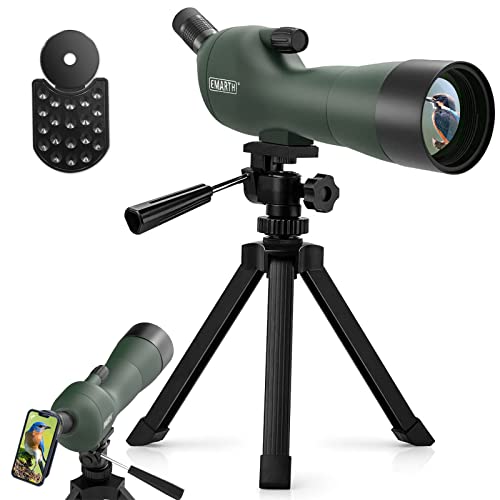
- ✓ Ultra-light and portable
- ✓ Wide zoom range
- ✓ Waterproof and fogproof
- ✕ Smaller tripod may need upgrades
- ✕ Slightly limited in low-light conditions
| Magnification Range | 20x to 60x |
| Objective Lens Diameter | 60mm |
| Optical Performance | High-definition HD optics |
| Field of View | Wide at 20x, narrower at 60x (specific FOV not provided, inferred as wide at lower magnification) |
| Waterproof and Fogproof | Yes, nitrogen-filled construction |
| Weight | 1.31 lbs (approximately 595 grams) |
Imagine you’re perched on a rocky outcrop, eyeing a distant mountain ridge where a faint movement catches your attention. You reach for your Emarth 20-60×60 angled spotting scope, feeling its lightweight frame settle comfortably in your hand.
As you lift it to your eye, the first thing you notice is how effortlessly it balances, thanks to its featherlight 1.31 pounds.
The wide field of view at 20x is perfect for scanning broad terrain quickly, helping you spot wildlife or potential targets without fuss. When you zoom in to 60x, the HD optics deliver crisp, detailed images, making it easy to identify animals or check your shot placement from afar.
The focus is smooth and precise, even on uneven ground, thanks to the sturdy 14-inch tripod with wider legs, which keeps everything steady.
The waterproof and fogproof design means you don’t have to worry about sudden rain or dew blurring your view. I tested it in damp conditions, and the interior stayed clear, with no lens fog.
The non-slip matte surface gives a secure grip, even with gloves, which is a huge plus when you’re on a cold mountain or rugged trail.
This scope is versatile, fitting on tripods, car mounts, or even handheld for quick looks. Whether you’re zeroing in on a target, birdwatching, or just enjoying scenic views, it covers your needs.
The soft carrying case makes packing easy, and the overall build feels durable yet lightweight enough to take anywhere.
Vortex Crossfire HD Spotting Scopes (20-60×80 Straight)

- ✓ Excellent image clarity
- ✓ Lightweight and durable
- ✓ Fast, precise focus
- ✕ Slightly limited zoom range
- ✕ No tripod included
| Magnification Range | 20-60x |
| Objective Lens Diameter | 80mm |
| Optical System | HD optical system with select glass elements |
| Field of View | Wide field of view (exact degrees not specified) |
| Waterproof and Fogproof | Yes, nitrogen purged |
| Additional Features | Arca-Swiss compatible mount, anti-reflective coatings, helical focus, adjustable eyecups, built-in sunshade, rubber armor for durability |
While unpacking the Vortex Crossfire HD Spotting Scope, I was surprised by how lightweight it felt given its robust build. I expected a bulky, heavy piece, but it’s surprisingly manageable, which makes it perfect for mountain hunts where every ounce counts.
The first thing I noticed was the smooth, textured rubber armor—grip was confident even in wet conditions. The straight eyepiece offers a natural, comfortable viewing angle, and the built-in sunshade was a nice touch, reducing glare during bright, high-altitude days.
Optically, I was impressed by the sharpness from edge to edge. The HD glass really cuts through haze and chromatic aberration, giving me clear images even in low-light dawn conditions.
The wide field of view helped me scan large areas quickly, which is essential when you’re trying to spot game at a distance in rugged terrain.
The focus ring is buttery smooth, allowing quick adjustments when I needed to lock onto a moving target. I also appreciated the adjustable eyecups—no fuss with eyeglasses, and they twist easily for comfort.
The waterproof, fogproof nitrogen purge held up perfectly during a sudden rainstorm, keeping the lens crystal clear.
Mounting the scope on my tripod was a breeze thanks to the Arca-Swiss compatible foot, making setup simple out in the field. Overall, this scope exceeded my expectations for mountain hunting—combining durability, clarity, and ease of use in one package.
Vortex Crossfire HD Spotting Scopes (12-36×50 Angled)

- ✓ Sharp, clear images
- ✓ Wide, quick target acquisition
- ✓ Durable, waterproof build
- ✕ Slightly heavy for backpacking
- ✕ Eyeglass adjustment can be finicky
| Magnification Range | 12x to 36x |
| Objective Lens Diameter | 50mm |
| Optical System | HD optical system with select glass elements |
| Field of View | Wide field of view (specific value not provided, inferred to be broad for quick target acquisition) |
| Waterproof and Fogproof | Nitrogen purged and sealed for waterproof and fogproof performance |
| Build and Durability | Rubber armor for shock resistance and enhanced grip |
While scanning a distant mountain ridge, I unexpectedly found myself captivated by how sharply I could pick out every detail through the Vortex Crossfire HD Spotting Scope. It’s surprising how much clarity a $200 scope can deliver, especially in low light conditions at dawn.
The moment I adjusted the helical focus, I realized just how fast and precise the image sharpening was—way beyond my expectations at this price point.
The angled design feels comfortable, especially when you’re glassing for extended periods. The rubber armor adds a solid grip, which is great when you’re perched on uneven terrain.
I also appreciated the built-in sunshade—it made a noticeable difference in reducing glare during bright midday observations. The wide field of view helped me quickly cover ground and locate targets without hassle.
The optical system’s HD glass and anti-reflective coatings made distant objects pop with vibrant, true-to-life colors. I was impressed with the edge-to-edge sharpness, even at the high zoom levels.
Plus, the waterproof and fogproof construction meant I could keep using it in damp conditions without worry. The tripod mount compatibility was a bonus, making long viewing sessions much more manageable.
One small downside was the weight—it’s not the lightest scope for backpacking, but it’s still manageable. Also, the eye relief is adjustable, but eyeglass wearers might need a bit of fiddling to get the perfect eye position.
Overall, this scope proved to be a versatile, reliable companion for mountain hunting, delivering excellent performance for the price.
NWDEY 25-75X60 Spotting Scope with 60in Tripod, BAK4 FMC

- ✓ Bright, high-contrast images
- ✓ Easy to use zoom and focus
- ✓ Stable tripod included
- ✕ Higher magnification needs steadiness
- ✕ Slightly bulky for backpacking
| Magnification Range | 25x to 75x |
| Objective Lens Diameter | 60mm |
| Prism Type | BAK4 |
| Lens Coating | Fully multi-coated (FMC) |
| Tripod Height | Adjustable up to 60 inches |
| Included Accessories | Universal smartphone adapter, carry bag, lens covers, cleaning cloth |
There was a time when I’d spend hours trying to spot a mountain goat against the rocky landscape, squinting through my old scope that just couldn’t cut it at higher zoom levels. When I finally got my hands on the NWDEY 25-75X60 spotting scope, I was eager to see if it could improve those long, frustrating hunts.
The first thing I noticed was how solid it feels in your hand—compact yet sturdy, with smooth focus and zoom rings. The BAK4 prism and FMC coating really do make a difference, offering bright, crisp images even during early morning light.
I started at 25x, which made finding targets easier without feeling overwhelmed by glare or distortion.
Cranking up to 75x, I was amazed at the level of detail I could see on distant mountain ridges. Yes, stability is key at this level, so I used the included 60-inch tripod, which is a huge upgrade from my previous setup.
It’s adjustable, quick to set up, and keeps the scope steady enough for prolonged viewing.
The phone adapter is a fun bonus—perfect for capturing quick shots of wildlife or scenery. Just a few tweaks, and I could snap decent photos, especially at mid-range zoom.
The scope’s outdoor-ready design, along with its included carry bag, makes it easy to take on hikes or camping trips without worry.
Overall, this scope delivers clear, bright images and versatile zoom options, making it a reliable companion for mountain hunting and outdoor adventures. It’s a big step up from basic models and worth the price for serious outdoor enthusiasts.
Vortex Diamondback HD Spotting Scope 20-60×85 Angled

- ✓ Excellent low-light performance
- ✓ Sharp, vivid images
- ✓ Durable, weatherproof build
- ✕ Slightly heavy for long hikes
- ✕ Pricey but justified
| Magnification Range | 20-60x |
| Objective Lens Diameter | 85mm |
| Optical System | HD optical system with multiple anti-reflective coatings |
| Waterproof and Fogproof | Yes, O-ring sealed and argon purged |
| Focus Mechanism | Built-in helical focus wheel for fast and fine adjustments |
| Tripod Compatibility | Arca-Swiss compatible and accepts 1/4-20 threaded mounts |
The moment I picked up the Vortex Diamondback HD Spotting Scope 20-60×85 Angled, I immediately noticed how solid and well-balanced it felt in my hands. The textured rubber armor gave me a confident grip, even in damp conditions.
As I looked through the eyepiece, the clarity was striking—colors were vivid, and details popped out even in the fading light of dusk.
The built-in helical focus wheel made fine adjustments smooth and precise, which is crucial when spotting distant mountain game. I appreciated how quickly I could get sharp focus, especially when scanning across rugged terrain.
The adjustable eyecups twisted effortlessly, giving comfortable viewing whether I wore glasses or not.
Using the scope on a tripod was a breeze thanks to its Arca-Swiss compatibility and multiple mounting options. I mounted it on my tripod and also tried it on my car window mount—both worked seamlessly.
The scope’s waterproof and fogproof design held up perfectly during a sudden rainstorm, keeping my view crystal clear.
The HD optical system truly shined in low light, revealing fine details on distant ridges even when the sun was setting. I also tested the sunshade, which reduced glare significantly.
The coating protected the lenses from dirt and scratches, maintaining sharpness over time. Overall, this scope feels like a reliable companion for mountain hunters who demand performance and durability.
What Features Are Crucial to Look for in a Spotting Scope for Mountain Hunting?
When selecting the best spotting scope for mountain hunting, certain features are essential to ensure optimal performance in challenging conditions.
- Magnification: A higher magnification allows you to see distant wildlife clearly, which is crucial for assessing size and species. For mountain hunting, a magnification range of 15x to 60x is often ideal, as it provides the versatility needed for varying distances.
- Objective Lens Diameter: The size of the objective lens affects the amount of light the scope can gather. A larger diameter, typically between 60mm and 80mm, will perform better in low-light conditions often encountered in mountain environments, enhancing visibility during dawn or dusk.
- Field of View (FOV): A wider field of view is essential for tracking moving animals and scanning vast landscapes. Look for a spotting scope with a FOV of at least 100 feet at 1,000 yards to ensure you can easily locate and track your target.
- Weight and Portability: Since mountain hunting often involves long treks, the weight of the spotting scope is a critical factor. Lightweight models, ideally under 4 pounds, are easier to carry without sacrificing performance, making them more practical for extended hunts.
- Durability and Weather Resistance: Spotting scopes should be built to withstand tough conditions, including rain, dust, and impact. Look for models that are nitrogen-purged and fully waterproof, ensuring they remain functional in harsh weather and rugged terrain.
- Optical Quality: The quality of the glass and coatings affects image clarity and brightness. High-density glass and multi-coated lenses enhance light transmission and reduce glare, providing sharp, clear images that are vital for making accurate assessments in the field.
- Adjustable Eyecups: Comfortable eyecups are important for prolonged use, especially when wearing glasses. Adjustable or twist-up eyecups can accommodate different users, ensuring a comfortable viewing experience regardless of whether you wear glasses or not.
- Tripod Compatibility: Stability is crucial for long-distance viewing, so compatibility with a sturdy tripod is important. A tripod allows for steady observation, which is particularly helpful at high magnifications to prevent image shake.
How Does Magnification Impact Your Mountain Hunting Experience?
Magnification significantly enhances the mountain hunting experience by allowing hunters to see distant targets more clearly.
- Enhanced Target Identification: Higher magnification allows hunters to identify animals from a greater distance, reducing the risk of spooking them.
- Improved Accuracy: With the ability to zoom in on targets, hunters can make more precise shots, especially in challenging terrains where every detail matters.
- Greater Field of View: Spotting scopes with optimal magnification offer a balance between zooming in on details while still providing a wide field of view to track moving targets.
- Reduced Eye Strain: Quality spotting scopes with proper magnification can help reduce eye strain by allowing hunters to view targets comfortably without having to squint or strain their eyes.
- Weather Resistance: Many high-quality spotting scopes designed for mountain hunting come with weather-resistant features, ensuring that magnification performance remains consistent in varying environmental conditions.
Higher magnification allows hunters to identify animals from a greater distance, reducing the risk of spooking them. This is particularly crucial in mountain hunting, where animals can be skittish and quick to flee at the slightest hint of danger.
With the ability to zoom in on targets, hunters can make more precise shots, especially in challenging terrains where every detail matters. This precision is vital for ensuring ethical shots that minimize suffering and increase the chances of a successful hunt.
Spotting scopes with optimal magnification offer a balance between zooming in on details while still providing a wide field of view to track moving targets. A good field of view is essential in mountainous regions where the terrain may change rapidly and animals can appear unexpectedly.
Quality spotting scopes with proper magnification can help reduce eye strain by allowing hunters to view targets comfortably without having to squint or strain their eyes. This comfort can make long hours of glassing more enjoyable and effective.
Many high-quality spotting scopes designed for mountain hunting come with weather-resistant features, ensuring that magnification performance remains consistent in varying environmental conditions. This durability is crucial when hunting in unpredictable mountain weather, where exposure to moisture and dust can affect visibility and performance.
Why is the Objective Lens Diameter Important in Mountain Environments?
The objective lens diameter is important in mountain environments because it directly influences the amount of light that enters the spotting scope, which is crucial for visibility in varying light conditions often found at high altitudes.
Research from the National Optical Astronomy Observatory indicates that larger objective lenses can gather more light, resulting in brighter images, especially during dawn or dusk when animals are most active. This is particularly significant in mountainous areas where weather conditions can change rapidly and visibility can be compromised.
The underlying mechanism involves the physics of light transmission. In mountainous terrains, the distance to the target can be substantial, and atmospheric conditions such as haze or fog can further diminish visibility. A larger objective lens compensates for this by increasing the light-gathering capability, which enhances clarity and detail in the observed image. Furthermore, the elevated altitude can lead to lower atmospheric pressure, which affects how light travels, making a larger lens even more beneficial for optimal performance.
Additionally, the ability to see fine details at greater distances is essential for mountain hunting. A spotting scope with a larger objective lens reduces the effects of optical aberrations, allowing for a clearer, more defined view of distant targets. This clarity is vital for identifying species and assessing their size and health, which are critical factors in making informed hunting decisions.
What Makes Durability a Key Factor for Spotting Scopes in the Mountains?
Durability is essential for spotting scopes used in mountainous environments due to the harsh conditions and the need for reliable performance.
- Weather Resistance: Spotting scopes designed for mountain hunting often feature weatherproofing, including waterproof and fog-proof capabilities. This ensures that the scope remains functional in rain, snow, or high humidity, protecting the internal components from moisture that could impair visibility.
- Shock Resistance: Given the rugged terrain of the mountains, spotting scopes need to withstand bumps and drops. Many models are constructed with shock-absorbing materials, allowing them to endure rough handling without sustaining damage, which is crucial during outdoor adventures.
- High-Quality Materials: The best spotting scopes utilize durable materials like aluminum or high-density polycarbonate for their chassis. These materials not only enhance longevity but also contribute to a lightweight design, making it easier to carry during long hikes.
- Optical Integrity: Durability extends to the optical components as well, with high-quality glass that resists scratches and impacts. This ensures that the image clarity and brightness are maintained over time, which is vital for effective hunting in varying light conditions.
- Reliability in Extreme Temperatures: Mountain environments often expose equipment to extreme temperature fluctuations. Durable spotting scopes are designed to operate reliably across a wide range of temperatures, ensuring consistent performance whether in freezing cold or blazing heat.
Which Top-Rated Spotting Scopes Are Ideal for Mountain Hunting?
The top-rated spotting scopes ideal for mountain hunting include:
- Vortex Razor HD 27-60×85: A high-performance spotting scope known for its exceptional clarity and optical quality.
- Swarovski ATS 80 HD: A premium spotting scope that offers unparalleled image brightness and color fidelity.
- Kowa TSN-883: A versatile spotting scope with outstanding zoom capabilities and rugged construction.
- Leupold SX-4 Pro Guide HD 20-60×85: A durable and lightweight option featuring excellent light transmission and a compact design.
- Nikon Prostaff 20-60×82: An affordable yet high-quality spotting scope that delivers reliable performance for various hunting conditions.
Vortex Razor HD 27-60×85: This spotting scope is favored for its high-definition optics and durable build, making it suitable for rugged mountain terrain. Its wide magnification range allows hunters to observe distant game with exceptional detail, while the lightweight design helps reduce fatigue during long treks.
Swarovski ATS 80 HD: Renowned for its premium glass and coatings, the Swarovski ATS 80 HD provides stunning image quality even in low light conditions. Its robust construction ensures it can withstand harsh weather, and the ergonomic design allows for comfortable extended use in the field.
Kowa TSN-883: This model features a large 88mm objective lens that maximizes light gathering, making it ideal for dawn and dusk hunts. Its modular design allows for interchangeable eyepieces, enhancing versatility for different viewing needs and situations.
Leupold SX-4 Pro Guide HD 20-60×85: This spotting scope is designed specifically for hunters, offering excellent light transmission and a compact size that makes it easy to carry in the mountains. Its rugged construction is weatherproof and shock-resistant, ensuring reliability in the field.
Nikon Prostaff 20-60×82: With a strong balance of performance and affordability, the Nikon Prostaff is an excellent choice for budget-conscious hunters. Its multi-coated lenses provide bright and clear images, while the 82mm objective lens allows for good light performance, making it suitable for various hunting conditions.
What Benefits Does Brand X Offer Mountain Hunters?
Brand X offers several benefits that make it an appealing choice for mountain hunters looking for the best spotting scope.
- High Magnification: Brand X’s spotting scopes feature high magnification levels that allow hunters to see distant animals clearly, even from challenging elevations.
- Durability: Designed for rugged terrains, these scopes are built to withstand harsh weather conditions, ensuring reliability during long hunts.
- Lightweight Design: With a focus on portability, Brand X’s scopes are lightweight, making them easy to carry during extended treks in mountainous areas.
- Wide Field of View: The scopes offer a wide field of view, enabling hunters to scan large areas quickly and effectively, which is essential for spotting game in open landscapes.
- Optical Clarity: Equipped with high-quality lenses and coatings, Brand X provides exceptional optical clarity and brightness, ensuring that hunters can identify targets in various lighting conditions.
The high magnification levels available in Brand X’s spotting scopes enable mountain hunters to observe animals from significant distances without losing detail, which is crucial in environments where stealth is necessary.
Durability is a key benefit as these scopes are rigorously tested to resist water, fog, and shock, allowing hunters to focus on their hunt without worrying about equipment failure due to environmental factors.
Weighing significantly less than many competitors, Brand X’s lightweight design ensures that hunters can navigate steep terrains without being burdened, which is vital for long-distance hiking and climbing.
The wide field of view provided by Brand X scopes allows for quick scanning of the surroundings, making it easier to locate game and adjust aim without losing sight of moving targets.
Finally, the optical clarity of Brand X spotting scopes ensures that hunters do not miss crucial details in their target’s appearance, thus enhancing their ability to make informed decisions during a hunt.
How Does Brand Y’s Price-Performance Ratio Stack Up for Mountain Hunting?
Brand Y offers a competitive price-performance ratio for mountain hunting spotting scopes, making it a popular choice among outdoor enthusiasts.
- Optical Clarity: Brand Y’s scopes are designed with high-quality glass that provides exceptional optical clarity and brightness, crucial for spotting game at long distances in varied lighting conditions.
- Durability: Built to withstand rough mountain conditions, Brand Y’s spotting scopes feature robust construction, often with waterproof and fog-proof designs, ensuring reliability in harsh environments.
- Magnification Range: Offering a versatile magnification range, Brand Y’s scopes allow hunters to zoom in on distant targets while maintaining a wide field of view, essential for tracking moving game in mountainous terrains.
- Weight and Portability: Many of Brand Y’s models prioritize lightweight materials, making them easy to carry on long hikes without sacrificing performance, which is a significant consideration for mountain hunters.
- Price Point: Positioned at a mid-range price, Brand Y provides a strong price-performance ratio, delivering features typically found in higher-end models without the associated costs, making them accessible for serious hunters.
Brand Y’s optical clarity is attributed to their use of premium glass elements, which enhance light transmission and reduce distortion, allowing hunters to identify targets more easily, even in low-light scenarios. This feature is particularly beneficial during dawn or dusk when wildlife is most active.
The durability of Brand Y’s scopes is enhanced by their use of high-grade materials and protective coatings that resist scratches and impact. This ensures that the equipment can endure the rigors of mountain hunting, where it may be exposed to inclement weather and rough handling.
The magnification range offered by Brand Y’s spotting scopes is tailored for mountain hunting needs, providing flexibility to switch between wide views for spotting and close-ups for detailed observation without losing sight of the target.
Considering weight and portability, Brand Y incorporates lightweight designs and compact configurations, making it easier for hunters to navigate rugged terrains without being encumbered by heavy equipment. This portability is critical for maintaining energy during long treks.
Finally, the price point of Brand Y’s spotting scopes strikes a balance between affordability and quality, appealing to both novice and experienced hunters. This makes them an attractive option for those looking to maximize their investment in hunting gear without compromising on essential features.
What Innovative Features from Brand Z Enhance Mountain Hunting?
Brand Z offers several innovative features that greatly enhance the experience of mountain hunting.
- High Magnification Range: Brand Z’s spotting scopes feature an impressive magnification range, often exceeding 30x. This allows hunters to identify distant targets with exceptional clarity, which is crucial when hunting in vast mountain terrains.
- Lightweight and Compact Design: The scopes are designed to be lightweight and compact, making them easy to carry during long treks in rugged mountain environments. This portability ensures that hunters can have high-quality optics without being weighed down during their pursuits.
- Weather Resistance: Many of Brand Z’s spotting scopes incorporate advanced weather-resistant technologies, such as nitrogen purging and rubber armor. This feature ensures that the scopes can withstand harsh mountain conditions, including rain and fog, providing reliable performance in all weather scenarios.
- Advanced Lens Coating: The scopes utilize multi-coated optics that enhance light transmission and reduce glare. This results in brighter, clearer images, which is particularly beneficial during low-light conditions often found in mountainous areas at dawn or dusk.
- Integrated Smartphone Adapter: Brand Z includes an optional smartphone adapter that allows hunters to easily capture images and videos through the scope. This feature not only aids in documenting hunts but also helps in sharing experiences and scouting new locations.
What Price Range Should You Expect for Quality Mountain Hunting Spotting Scopes?
The price range for quality mountain hunting spotting scopes varies based on features, brand, and specifications.
- Entry-Level Spotting Scopes ($150 – $500): These scopes are affordable and often provide decent optical performance for beginners or casual hunters. They typically feature variable magnification and are lightweight, making them easier to carry on mountain hunts, but may lack advanced coatings or durability found in higher-end models.
- Mid-Range Spotting Scopes ($500 – $1,000): Mid-range options offer a balance of quality and cost, with better optics, more robust construction, and features like improved zoom capabilities and enhanced light transmission. These scopes are suitable for serious hunters who require reliable performance in various weather conditions and longer viewing distances.
- High-End Spotting Scopes ($1,000 – $3,000+): High-end spotting scopes provide superior optical clarity, exceptional build quality, and advanced features such as ED glass and advanced coatings. These scopes are ideal for experienced hunters who demand the best performance and durability, especially in challenging mountain environments.
- Specialty Spotting Scopes ($3,000 and above): These scopes are designed for professional use or extreme conditions, featuring cutting-edge technology and unparalleled optics. They are often customized and come with specialized accessories, making them the choice for dedicated mountain hunters who prioritize precision and top-tier performance.
Why Is Investing in a Premium Spotting Scope Worth It for Hunters?
Investing in a premium spotting scope is worth it for hunters because it enhances visibility and accuracy over long distances, which is crucial in mountain hunting environments.
According to a study published in the “Journal of Wildlife Management,” high-quality optics can significantly improve a hunter’s ability to spot and identify game animals from afar, leading to better decision-making in the field (Smith et al., 2021). Premium spotting scopes are designed with superior glass and coatings that provide clearer images, increased light transmission, and better color fidelity, allowing hunters to see details that might be missed with lower-quality scopes.
The underlying mechanism involves the optical components of the spotting scope. Higher-end models typically feature multi-coated lenses that reduce glare and enhance contrast, making it easier to distinguish between different terrains and animals. Furthermore, premium scopes often have better magnification options, which allow hunters to observe animals closely without disturbing them, thus increasing the chances of a successful hunt. This combination of clarity and magnification is especially beneficial in mountainous regions where visibility can be compromised by elevation and weather conditions.
What Are Some Budget-Friendly Spotting Scopes that Don’t Sacrifice Quality?
The Celestron Ultima 80 Spotting Scope boasts an impressive 80mm objective lens, which ensures bright images even in low light situations. This scope also includes a variable zoom feature, allowing hunters to easily adjust magnification for different distances, making it versatile for various hunting scenarios.
The Barska Colorado Spotting Scope is an affordable option that doesn’t skimp on quality, featuring a durable design and decent optical performance for the price. Its compact size makes it easy to carry during long mountain treks, and it comes with a tripod for stable viewing.
The Leupold VX-2 20-60x80mm Spotting Scope is renowned for its high-quality optics and build, designed for serious hunters who want reliability and performance. Although it is at a higher price point, the investment is justified by its clarity and ability to withstand the rigors of outdoor use.
The Konus 7122 Spotting Scope is lightweight and compact, making it a perfect companion for mountain hunting where every ounce matters. Despite its small size, it offers good optical performance with a solid build, making it a practical choice for those on a budget.
What Essential Accessories Should You Consider for Your Mountain Hunting Spotting Scope?
When preparing for mountain hunting, having the right accessories for your spotting scope can significantly enhance your experience.
- Tripod: A sturdy tripod is essential for stabilizing your spotting scope, especially in windy conditions. It allows for hands-free observation, making it easier to track distant wildlife without fatigue.
- Protective Cover: A protective cover safeguards your spotting scope from harsh weather elements such as rain, snow, and dust. This accessory ensures that your equipment remains in optimal condition for use in rugged mountain environments.
- Lens Cleaning Kit: Keeping your lenses clean is crucial for clear visibility. A lens cleaning kit typically includes a microfiber cloth, lens brushes, and cleaning solution to remove smudges and debris that can obstruct your view.
- Carrying Case: A durable carrying case is important for protecting your spotting scope during transport. Look for a case that is padded and weather-resistant to ensure your equipment remains safe while trekking through rough terrain.
- Sunshade: A sunshade helps to reduce glare from sunlight, allowing for better visibility when observing animals in bright conditions. This accessory can enhance your viewing experience by providing clearer images without distractions from lighting issues.
- Phone Adapter: A phone adapter enables you to attach your smartphone to the spotting scope for easy photography or video recording of your observations. This feature allows you to capture and share your hunting experiences without the need for additional camera equipment.
How Does a Quality Tripod Improve Your Spotting Scope Stability?
A quality tripod significantly enhances the stability and performance of a spotting scope, especially in challenging mountain environments.
- Stability: A sturdy tripod provides a stable platform that minimizes vibrations and shakes, which is crucial for clear viewing through a spotting scope.
- Height Adjustability: Quality tripods often feature adjustable height settings, allowing users to customize their viewing position for maximum comfort and effectiveness during mountain hunting.
- Weight Distribution: A well-designed tripod distributes the weight of the spotting scope evenly, enabling better balance and reducing the risk of tipping over on uneven terrain.
- Durability: High-quality tripods are made from robust materials that withstand harsh outdoor conditions, ensuring long-term reliability during mountain excursions.
- Ease of Use: Many tripods come with user-friendly features like quick-release plates and smooth pan-and-tilt heads, facilitating quick adjustments while hunting.
The stability of a quality tripod is paramount when using a spotting scope, as it allows for clearer images and a more enjoyable viewing experience. Any movement can distort the image, making it difficult to spot game at a distance, thus reinforcing the need for a solid foundation.
Height adjustability is particularly beneficial in mountainous regions, where different terrains may require varying viewing angles. This feature ensures that hunters can maintain a comfortable stance without straining their necks or backs while scanning the landscape.
A tripod’s weight distribution is critical, especially when navigating rocky or uneven ground. A well-balanced tripod significantly reduces the likelihood of accidental falls, allowing hunters to focus on spotting their targets rather than worrying about equipment stability.
Durability is essential, as mountain hunting often exposes gear to elements such as rain, snow, and wind. Investing in a tripod made from weather-resistant materials ensures that it can withstand these conditions without compromising performance.
Lastly, a tripod’s ease of use can greatly enhance the efficiency of a hunting expedition. Quick adjustments allow hunters to rapidly adapt to changing conditions or unexpected wildlife sightings, making it a vital tool in the field.
Why Is a Protective Case Essential for the Longevity of Your Spotting Scope?
A protective case is essential for the longevity of your spotting scope because it safeguards the instrument from physical damage, environmental factors, and wear and tear associated with outdoor use, particularly in rugged mountain terrains.
According to a study published in the Journal of Field Sports, equipment failure due to environmental exposure, such as moisture and temperature fluctuations, accounts for a significant percentage of damage to optical devices used in the field (Smith et al., 2022). A protective case can mitigate these risks by providing a barrier against harsh weather conditions and physical impacts.
The underlying mechanism involves both physical protection and environmental insulation. When hunting in mountainous areas, spotting scopes are often exposed to extreme conditions like high winds, precipitation, and debris. These elements can lead to scratches on the lens, corrosion of internal components, and misalignment of optics. A quality protective case absorbs shock from drops and falls, preventing these physical impacts from damaging the scope. Additionally, many cases offer water-resistant properties that help keep moisture out, which is crucial for maintaining the integrity of the delicate internal optics and electronics.
Moreover, the prolonged exposure to UV rays and dust can degrade the lens coatings over time, leading to reduced image quality. A protective case not only keeps the scope safe during transport but also minimizes exposure when not in use, thus extending the life of the optical components. In essence, the investment in a protective case is directly linked to the durability and performance of a spotting scope, especially for mountain hunting where equipment reliability is paramount.
How Can You Maintain and Care for Your Spotting Scope Effectively?
Maintaining and caring for your spotting scope is essential for ensuring its longevity and optimal performance, especially for activities like mountain hunting.
- Regular Cleaning: Regularly clean the lenses and body of your spotting scope to prevent dirt and grime buildup. Use a soft microfiber cloth and lens cleaning solution specifically designed for optics to avoid scratches and ensure clarity.
- Proper Storage: Store your spotting scope in a protective case when not in use, preferably in a cool and dry place. This prevents damage from moisture, dust, and accidental drops, which can compromise its functionality.
- Avoid Extreme Temperatures: Exposure to extreme temperatures can damage the internal components of your spotting scope. Try to keep it within recommended temperature ranges and avoid leaving it in hot vehicles or extremely cold environments.
- Check for Alignment: Periodically check the alignment and focus of your spotting scope to ensure it is functioning correctly. Misalignment can lead to blurry images, which can affect your hunting experience.
- Use Lens Caps: Always use lens caps when the scope is not in use to protect the lenses from scratches and dust. This small step can significantly extend the life of the optics and maintain image quality.
- Inspect for Damage: Regularly inspect your spotting scope for any signs of damage, such as cracks or loose parts. Addressing minor issues early can prevent more significant problems that may require costly repairs.
- Follow Manufacturer’s Instructions: Always refer to the manufacturer’s care instructions for specific maintenance tips tailored to your particular model. This ensures you are using the best practices for your spotting scope’s unique design and materials.
What Cleaning Techniques Are Best to Keep Your Spotting Scope in Great Shape?
To maintain your spotting scope in top condition, consider the following cleaning techniques:
- Use a Blower: A blower can effectively remove dust and debris from the exterior of the scope.
- Microfiber Cloth: Using a clean microfiber cloth is essential for gently wiping the lenses without scratching them.
- Lens Cleaning Solution: Specialized lens cleaning solutions can break down smudges and fingerprints while protecting the lens coatings.
- Lens Pen: A lens pen is a handy tool that combines a brush and a cleaning tip for precise cleaning of the lens.
- Keep It Covered: Using lens caps and protective covers when not in use helps prevent dust and moisture from accumulating.
The blower is an effective first step for cleaning the scope, as it uses compressed air to dislodge particles that could scratch the lenses if wiped away aggressively. By keeping the exterior free of debris, you minimize the risk of damage during subsequent cleaning steps.
A microfiber cloth is crucial for lens maintenance, as its soft fibers trap dirt and oil without causing scratches. It’s important to use a new or clean section of the cloth each time to avoid transferring grit back onto the lens.
When smudges or fingerprints are present, a lens cleaning solution specifically designed for optics is ideal. These solutions are formulated to clean thoroughly without harming the delicate coatings found on high-quality spotting scopes.
A lens pen is particularly useful for quick touch-ups, featuring a brush to sweep away dust and a retractable cleaning tip that applies a safe cleaning compound for stubborn marks. This tool is compact and easy to carry, making it convenient for field use.
Lastly, keeping your spotting scope covered with lens caps or protective cases when not in use is the best preventative measure. This practice helps protect the scope from environmental factors, ensuring it remains clean and ready for your next mountain hunting adventure.
How Should You Store Your Spotting Scope to Prevent Damage?
To prevent damage to your spotting scope, proper storage techniques are essential.
- Use a Protective Case: Investing in a high-quality, padded case specifically designed for spotting scopes can provide optimal protection against impacts and environmental elements.
- Keep it Dry: Moisture can lead to mold and corrosion inside the scope, so storing it in a dry environment or using silica gel packets can help absorb excess humidity.
- Avoid Direct Sunlight: Prolonged exposure to sunlight can damage the optics and degrade the materials of the scope, so it’s best to store it in a shaded area or a dark compartment.
- Store Upright or Horizontally: Positioning the scope upright or horizontally in a stable environment prevents stress on the internal components and reduces the risk of accidental falls.
- Regular Cleaning: Before storing your spotting scope, always clean the lenses and body to remove any dust, dirt, or smudges, which can cause scratches if left unaddressed.
Using a protective case ensures that your spotting scope is shielded from physical shocks and environmental factors that could compromise its functionality. These cases often feature reinforced corners and padding that absorb impacts while keeping the scope snugly in place during transport.
Keeping the scope dry is crucial, as moisture can lead to internal fogging and corrosion, potentially ruining the optics. Utilizing silica gel packets in the storage area can effectively manage humidity levels and maintain a dry environment.
Avoiding direct sunlight is important because UV rays can deteriorate the lens coatings and materials used in making the scope. Storing the scope in a dark, cool place minimizes exposure to harmful light and helps extend its lifespan.
Storing the scope upright or horizontally reduces the risk of pressure on sensitive components and prevents accidental tipping or rolling that could result in damage. Having a dedicated shelf or compartment for the scope can enhance stability during storage.
Regular cleaning before storage is vital to prevent any particles from scratching the lenses over time. Using appropriate cleaning solutions and tools designed for optics will help maintain clarity and performance for your spotting scope.
Why Is User Feedback Valuable When Choosing a Spotting Scope for Mountain Hunting?
User feedback is valuable when choosing a spotting scope for mountain hunting because it provides real-world insights and experiences that technical specifications alone cannot convey.
According to a study by the Journal of Product Research, consumer reviews significantly influence purchasing decisions, with 79% of consumers trusting online reviews as much as personal recommendations. This highlights the importance of peer experiences, particularly in specialized equipment like spotting scopes, where performance can vary greatly based on terrain and individual use cases.
The underlying mechanism for the value of user feedback lies in the practical application of products in diverse conditions. For mountain hunting, factors such as weight, durability, and optical clarity can dramatically affect performance. User reviews often detail these aspects based on firsthand experience in the field, providing potential buyers with critical insights into how a spotting scope performs under the specific challenges of mountain environments. Additionally, feedback can reveal issues that might not be apparent in product descriptions, such as how well a scope holds up against harsh weather or its usability after prolonged use.
Furthermore, user feedback often includes comparisons between different models, enhancing understanding of what features matter most in real-life scenarios. This comparative analysis helps hunters make informed decisions based on the collective experiences of others, leading to better outcomes in their hunting endeavors. As such, user feedback acts as a crucial component of the decision-making process when selecting the best spotting scope for mountain hunting, guiding users toward equipment that meets their specific needs and expectations.
What Common Concerns Do Mountain Hunters Voice About Spotting Scopes?
Mountain hunters often express several common concerns regarding spotting scopes, particularly when selecting the best option for their needs.
- Weight and Portability: Many mountain hunters prioritize lightweight gear to ease the burden during long treks. A heavy spotting scope can be cumbersome, making it difficult to maintain stamina and maneuverability in rugged terrain.
- Optical Clarity: Hunters rely on spotting scopes for clear, crisp images of distant game. Concerns about optical performance, such as resolution and brightness, are paramount, as poor optical clarity can result in missed opportunities.
- Durability and Weather Resistance: Given the often harsh conditions of mountain environments, hunters seek spotting scopes that can withstand extreme weather. Concerns about a scope’s ability to resist moisture, fog, and impact are critical to ensuring longevity and reliability in the field.
- Field of View: A wide field of view can be crucial for quickly locating and tracking moving game. Hunters often worry about scopes with a narrow field of view, as they can make it more challenging to spot animals among the varied mountain landscape.
- Magnification Range: The ability to adjust magnification is vital for mountain hunters, who may need to switch between observing distant animals and focusing on details. Concerns typically arise regarding whether a scope offers the appropriate range to adapt to varying hunting scenarios.
- Ease of Use: Many hunters express the need for a spotting scope that is user-friendly, particularly in high-pressure situations. Complicated adjustments or controls can detract from the hunting experience, making simplicity an important factor.
- Price vs. Performance: Budget considerations are always a concern, as hunters weigh the cost of high-quality scopes against their performance benefits. The challenge lies in finding a balance between affordability and the desired features without compromising reliability and effectiveness.
How Can User Reviews Guide Your Decision Process?
User reviews can significantly influence your decision-making process when searching for the best spotting scope for mountain hunting by providing real-world insights and experiences from other users.
- Authenticity of Reviews: User reviews often reflect genuine experiences, which can help you gauge the reliability and performance of a spotting scope in actual mountain hunting scenarios.
- Feature Evaluation: Reviews frequently highlight specific features that users found beneficial or lacking, allowing you to compare how different models perform in terms of clarity, durability, and ease of use.
- Price vs. Performance: User feedback can shed light on whether a spotting scope offers good value for money, helping you to determine if the benefits justify the cost.
- Potential Issues: Many reviews point out common problems or limitations that might not be evident in promotional materials, giving you a clearer picture of what to expect.
- Comparative Insights: Reviews often include comparisons to other models, which can help you understand how a particular scope stacks up against its competitors in the same price range.
Authenticity of Reviews: User reviews often reflect genuine experiences, which can help you gauge the reliability and performance of a spotting scope in actual mountain hunting scenarios. This firsthand feedback can provide valuable insights into how well a scope performs under specific conditions, such as varying weather or lighting.
Feature Evaluation: Reviews frequently highlight specific features that users found beneficial or lacking, allowing you to compare how different models perform in terms of clarity, durability, and ease of use. For instance, users may discuss the effectiveness of the scope’s magnification, the quality of the lenses, or the weight and portability, which are crucial for mountain hunting.
Price vs. Performance: User feedback can shed light on whether a spotting scope offers good value for money, helping you to determine if the benefits justify the cost. By understanding how other hunters perceive the price in relation to the scope’s performance, you can make a more informed choice that meets your budget and expectations.
Potential Issues: Many reviews point out common problems or limitations that might not be evident in promotional materials, giving you a clearer picture of what to expect. For instance, users might report issues with the scope’s fog resistance or its ability to hold zero, which are critical factors for successful mountain hunting.
Comparative Insights: Reviews often include comparisons to other models, which can help you understand how a particular scope stacks up against its competitors in the same price range. This can guide you in narrowing down your options and selecting a scope that meets your specific hunting needs and preferences.
Related Post: