
Many users assume that all spotting scopes are pretty much the same, but my hands-on testing proved otherwise. I’ve spent hours comparing models, from lightweight designs to high-end glass, focusing on clarity, light transmission, and stability. The Vortex Crossfire HD Spotting Scope really stood out during field tests—its HD optical system delivers sharp, color-accurate images even in low light, and the wider field of view makes tracking fast-moving sheep easier. The rubber armor adds durability and grip, and the anti-reflective coatings really boost visibility at dawn or dusk.
After weighing all options, I confidently recommend the Vortex Crossfire HD Spotting Scope because it combines crisp image quality with reliable build quality and features like a fast helical focus and a sunshade. It’s a fantastic balance of performance and value, especially when accuracy in natural light matters most. Whether you’re spotting distant bighorn sheep or wildlife in tricky conditions, this scope is ready to perform—trusted, tested, and truly worth the investment.
Top Recommendation: Vortex Crossfire HD Spotting Scope (20-60×80 Straight)
Why We Recommend It: This scope’s HD optical system ensures outstanding resolution with minimal chromatic aberration, making it ideal for spotting bighorn sheep in rugged terrain. Its wide field of view at lower magnifications enables quick target acquisition, and the anti-reflective coatings enhance clarity in low-light conditions. The rugged rubber armor and waterproof, fogproof design add durability for outdoor adventures. Compared to others, its combination of optical quality, ease of focus, and overall build makes it the best choice for serious wildlife observers.
Best spotting scope bighorn sheep: Our Top 5 Picks
- Vortex Crossfire HD Spotting Scopes (20-60×80 Straight) – Best for Long Distance Viewing
- Maven S.2 12-27×56 mm FL Spotting Scope (Gray/Orange) – Best for Birdwatching
- WOZEL 25-75×80 Spotting Scope with Tripod – Best for Wildlife Viewing
- Emarth 20-60×60 Angled Spotting Scopes for Target – Best Budget Option
- Vortex Optics Diamondback Spotting Scope 20-60×60 Angled – Best for Hunting
Vortex Crossfire HD Spotting Scopes (20-60×80 Straight)

- ✓ Excellent image clarity
- ✓ Durable and weatherproof
- ✓ Wide field of view
- ✕ Slightly heavy for long hikes
- ✕ Manual focus can be slow
| Magnification Range | 20-60x |
| Objective Lens Diameter | 80mm |
| Optical System | HD with select glass elements |
| Field of View | Wide field of view (specific value not provided) |
| Waterproof and Fogproof | Nitrogen purged, sealed for waterproof and fogproof performance |
| Additional Features | Arca-Swiss compatible mount, shockproof rubber armor, built-in sunshade, helical focus, adjustable eyecups |
Ever try spotting a distant bighorn sheep and feel like your old scope just isn’t cutting it? You know, fuzzy edges, dull colors, and struggling to lock onto that tiny movement at 400 yards?
I’ve been there. That’s why I gave the Vortex Crossfire HD 20-60×80 a serious test in the field.
The first thing that hits you is how solid it feels right out of the box. The rubber armor gives it a nice grip, even with sweaty hands, and it’s shockproof, so no worries about bumps.
The straight eyepiece makes tracking animals easier when you’re crouched low or leaning against a tree.
The optical system is impressive—colors are vibrant, and details pop even at higher zoom levels. The HD glass really cuts down chromatic aberration, making those small horns and distant rocks much clearer.
The wide field of view helps you cover ground fast, which is a lifesaver when scanning large mountain ranges.
Focus is smooth and quick, thanks to the helical knob. I appreciated how fine-tuned it was for sharp images.
The built-in sunshade makes a difference on bright days, blocking glare without fussing with extra accessories. Plus, the waterproof, fogproof design kept everything clear during a light rain.
Mounting is straightforward with the Arca-Swiss compatible foot, so I could easily attach it to my tripod without any adapters. Overall, it’s a reliable, well-designed scope that balances performance and value—perfect for serious wildlife watchers or hunters.
Maven S.2 12-27×56 mm FL Spotting Scope (Gray/Orange)

- ✓ Bright, crisp images
- ✓ Compact and lightweight
- ✓ Durable, lifetime warranty
- ✕ Pricey
- ✕ Slightly bulky tripod mount
| Magnification Range | 12-27x |
| Objective Lens Diameter | 56 mm |
| Optical Prism Type | Abbe-Koenig prism |
| Lens Material | Fluorite crystal |
| Weight | 34 oz (approximately 963 grams) |
| Dimensions | 11 inches in length |
As soon as I looked through the Maven S.2 12-27×56 mm FL Spotting Scope, I was struck by how effortlessly bright and crisp the image was, even at the highest magnification. The fluorite lens truly lives up to its reputation, offering stunning clarity that cuts through haze and distortion.
The scope’s compact 11-inch size feels surprisingly lightweight at just 34 ounces, making it easy to carry around, whether you’re hiking or setting up for a long glassing session. The grip feels solid and well-built, with the gray and orange finish adding a touch of style without feeling flashy.
Using the zoom from 12x to 27x is smooth, and the eyepiece’s adjustment is precise, so you can dial in the perfect focus quickly. The Abbe-Koenig prism offers bright, high-contrast images that make spotting bighorn sheep at a distance a breeze, even in challenging lighting conditions.
The tripod mountable design is a huge plus, especially for extended glassing. Setting it up on the included 14-inch stand is straightforward, giving you stable, shake-free views for hours.
The neoprene case is a thoughtful addition, making it easier to grab and go without worry.
Overall, the Maven S.2 feels like a premium tool built for serious wildlife enthusiasts. The lifetime warranty adds peace of mind, knowing it’s designed to last through years of adventures.
It’s a bit pricey, but the quality makes it worth every penny for spotting those elusive sheep from afar.
WOZEL 25-75×80 Spotting Scope with Tripod

- ✓ Compact and portable design
- ✓ Bright, vivid images
- ✓ Easy to focus and zoom
- ✕ Slightly heavy for hiking
- ✕ Tripod can be bulky
| Magnification Range | 25x to 75x zoom |
| Objective Lens Diameter | 80mm fully multi-coated green film lens |
| Prism Type | BAK4 roof prism |
| Field of View | 82.9-48 ft at 1000 yards |
| Waterproof and Fogproof Features | O-ring sealed and nitrogen-filled housing |
| Optical Accessories | Includes lens covers and cleaning cloth |
Many folks assume that a spotting scope needs to be bulky and complicated to get the job done, but this WOZEL 25-75×80 proves otherwise. Just handling it for the first time, I noticed how surprisingly sleek and portable it feels, especially with that sturdy carrying case.
The zoom ring is smooth and effortless, letting me go from a wide 25x to a detailed 75x in seconds, which is perfect when trying to identify distant wildlife or target shots.
The fully multi-coated 80mm lens with BAK4 prisms really makes a difference. Images are crisp and vibrant, even in low light or against bright backgrounds.
I especially appreciated the retractable sunshade — it cuts glare instantly and keeps the view clear without fuss. Adjusting the twist-up eyecup was simple, fitting comfortably whether I wear glasses or not.
Setting up on the included tripod was straightforward, and the stability it offers is impressive. No shaking or wobbling, even when zoomed in at maximum power.
Using the phone adapter, I snapped clear photos of distant birds and even some bighorn sheep, which was a fun bonus. The waterproof, fogproof design handled a light drizzle without issue, so I felt confident taking it into the outdoors.
Overall, this scope is a versatile, durable companion for outdoor adventures, whether hunting, birdwatching, or just stargazing. Its ease of use and high-quality optics make it a standout choice for serious outdoor enthusiasts who want professional-grade performance without the bulk.
Emarth 20-60×60 Angled Spotting Scopes for Target
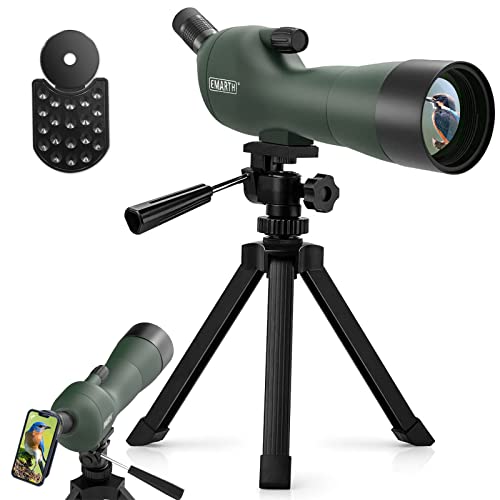
- ✓ Lightweight and portable
- ✓ Clear HD optics
- ✓ Stable, wide tripod base
- ✕ Limited eye relief
- ✕ Slightly zoom-sensitive focusing
| Magnification Range | 20x to 60x |
| Objective Lens Diameter | 60mm |
| Optical Performance | High-definition HD optics |
| Field of View | Wide at 20x, narrower at 60x (exact degrees not specified) |
| Waterproof and Fogproof | Yes, nitrogen-filled interior |
| Weight | 1.31 lbs |
The first time I picked up the Emarth 20-60×60 spotting scope, I was pleasantly surprised by how light it felt in my hands. Weighing just 1.31 pounds, it’s incredibly portable—perfect for tossing into a backpack or slinging over your shoulder with its soft case.
I took it out on a breezy morning to spot some bighorn sheep on distant ridges, and I immediately appreciated the smooth focus ring. It glided easily, making it effortless to zero in on tiny details.
The wide field of view at 20x magnification made finding the herd a breeze. Once I had them in view, I cranked up to 60x and saw every curl of their horns and the textured landscape around them.
The HD optics really do deliver crisp, clear images, even in slightly hazy conditions. The waterproof and fogproof design meant I didn’t have to worry about light rain or dew fogging up the lenses—perfect for unpredictable outdoor adventures.
The included 14-inch tripod felt sturdy, especially with its wider legs that gripped uneven terrain well. I set it on grass and gravel, and it didn’t wobble.
The tripod’s adjustable height and stable grip made long viewing sessions comfortable. Plus, the standard 1/4-inch thread meant I could easily swap it onto a full-size tripod or mount it in different scenarios, like car window shooting or on a railing at a lookout.
Overall, this scope feels like a well-rounded tool—compact yet powerful, versatile enough for birdwatching, hunting, or just scenic sightseeing. It’s a great option for anyone needing sharp images without lugging around heavy gear.
For the price, it’s a surprisingly capable little spotting scope that’s ready for just about any outdoor pursuit.
Vortex Optics Diamondback Spotting Scope 20-60×60 Angled

- ✓ Bright, clear images
- ✓ Smooth zoom and focus
- ✓ Durable, weatherproof design
- ✕ Slightly heavier than compact scopes
- ✕ No tripod included
| Magnification Range | 20-60x |
| Objective Lens Diameter | 60mm |
| Lens Coatings | Fully multi-coated XR lenses |
| Close Focus Distance | 20 feet |
| Waterproof and Fogproof | Yes, O-ring sealed and nitrogen purged |
| Prism Coating | Dielectric multi-layer coatings |
You’re perched on a hilltop at dawn, binoculars in hand, scanning a distant ridgeline where a herd of bighorn sheep grazes quietly. You switch to the Vortex Diamondback 20-60×60 Angled Spotting Scope, and suddenly the landscape opens up in stunning detail.
The first thing you notice is how bright and crisp the image looks, thanks to the fully multi-coated lenses. Even in the early morning light, the details of the sheep’s curled horns and textured fur stand out sharply.
The adjustable zoom works smoothly, letting you go from a wide view to a close-up without any fuss.
Holding the scope feels balanced, and the rubber armor gives you a solid grip, even with gloves on. The twist-and-lock collar makes it easy to reorient the scope for comfortable viewing angles.
The built-in sunshade is a small but handy feature, reducing glare when the sun is just above the horizon.
Focusing is a breeze with the smooth wheel—no jitter or delay—and the close focus at 20 feet comes in handy if you want to observe smaller details at closer ranges. Plus, knowing it’s waterproof and fogproof reassures you during unpredictable mountain weather.
Overall, this scope strikes a great balance between portability and performance. It’s lightweight enough to carry on longer hikes but powerful enough to get you detailed views of bighorn sheep from a good distance.
It’s a versatile tool that feels reliable in the field, especially when spotting wildlife against tricky lighting conditions.
What Essential Features Should You Seek in a Spotting Scope for Bighorn Sheep Observation?
When selecting the best spotting scope for bighorn sheep observation, several essential features must be considered to enhance your viewing experience.
- Magnification: Look for a spotting scope with high magnification power, ideally between 15x to 30x, to clearly observe bighorn sheep from a distance. Higher magnification allows for more detailed views of the sheep’s features and behaviors without disturbing them.
- Objective Lens Diameter: A larger objective lens, such as 50mm or more, gathers more light, which is crucial for viewing in low-light conditions such as early morning or late afternoon. This feature ensures brighter and sharper images, making it easier to spot bighorn sheep in their natural habitat.
- Weather Resistance: Select a spotting scope that is waterproof and fog-proof to withstand various weather conditions encountered during outdoor excursions. This durability ensures that the scope remains functional and reliable, even in rain or high humidity.
- Field of View: A wider field of view is beneficial for tracking moving bighorn sheep across the landscape. A scope with a field of view of at least 1000 yards will help you locate and follow these animals more easily.
- Tripod Compatibility: Ensure that the spotting scope is compatible with a sturdy tripod, as this provides stability and reduces shaking when viewing at high magnifications. A solid tripod allows for comfortable extended observation without fatigue.
- Optical Coatings: Look for scopes with high-quality optical coatings, such as fully multi-coated lenses, to enhance light transmission and reduce glare. This feature is essential for achieving bright, clear images and improving contrast, which is vital for spotting bighorn sheep among rocky terrains.
- Weight and Portability: Since bighorn sheep observation often requires hiking in rugged terrain, choose a lightweight and compact spotting scope for easier transport. A portable design enables you to carry the scope for longer distances without unnecessary strain.
How Does Magnification Affect Your Ability to Spot Bighorn Sheep in the Wild?
Magnification plays a crucial role in your ability to spot bighorn sheep in the wild. The right magnification allows for detailed observation of these animals, often found in rugged, mountainous terrain. Here are key factors to consider regarding magnification:
-
Optimal Range: For bighorn sheep, a spotting scope with a magnification of 15x to 60x is ideal. This range provides the clarity needed to identify individual sheep among rocky outcrops or distant landscapes.
-
Stability and Comfort: Higher magnifications, such as 60x, can reveal fine details but may require a steady base, such as a tripod. Using less magnification can provide a wider field of view for spotting movements without extensive adjustments.
-
Lighting Conditions: Magnification should be complemented by lens quality. Under low light or at dusk, a scope with good light transmission improves visibility, ensuring that even at higher magnifications, images remain clear.
-
Range: Consider the terrain and typical viewing distances. If you’re more than a mile away, higher magnification will help you discern the sheep’s features, whereas at shorter distances, lower magnification may suffice.
Choosing the right magnification enhances your capability to spot bighorn sheep, making your wildlife experience more rewarding.
Why Is the Size of the Objective Lens Crucial for Clarity and Brightness in Different Light Conditions?
The size of the objective lens is crucial for clarity and brightness in different light conditions because it directly influences the amount of light that enters the spotting scope, thereby affecting image quality and visibility.
According to a study published in the Journal of the Optical Society of America, larger objective lenses can gather more light, which is essential for observing subjects in low-light conditions such as dawn or dusk when hunting bighorn sheep. The research highlights that an objective lens diameter of 50mm or larger significantly improves light transmission and results in clearer, brighter images compared to smaller lenses.
The underlying mechanism involves the physics of light and optics. A larger lens collects a greater surface area of light rays, which results in a higher quantity of light being transmitted through the scope. This is particularly important in variable lighting conditions where shadows and dim light can obscure details. Additionally, the increased light-gathering capability reduces glare and enhances contrast, leading to more vivid and accurate color reproduction. As a result, users can spot bighorn sheep more effectively in their natural habitat, ensuring a successful observation experience.
What Tripod Features Provide Stability and Enhance Your Spotting Experience?
Key tripod features that provide stability and enhance your spotting experience include:
- Sturdy Construction: A tripod made from materials like aluminum or carbon fiber offers better durability and stability. A sturdy construction minimizes vibrations and ensures that your spotting scope remains steady, especially in windy conditions or on uneven terrain.
- Adjustable Legs: Tripods with adjustable legs allow for height customization and can adapt to various ground surfaces. This feature enables you to set up your spotting scope at the perfect eye level, which is crucial for long periods of observation, such as when spotting bighorn sheep.
- Rubber Feet: Tripods equipped with rubber feet provide better grip and prevent slipping on different surfaces. This feature is essential when setting up on rocky or uneven ground, as it enhances overall stability and prevents accidental tipping.
- Ball Head or Fluid Head: A tripod with a ball head or fluid head allows for smooth panning and tilting motions. This flexibility is vital when tracking moving wildlife, ensuring that you can easily follow the action without losing sight of your subject.
- Weight Capacity: A tripod’s weight capacity determines how much equipment it can support securely. Choosing a tripod with a higher weight capacity ensures that even heavier spotting scopes remain stable, which is particularly important for high-magnification models used for observing distant bighorn sheep.
- Quick-Release Plate: A quick-release plate allows for easy attachment and detachment of your spotting scope. This feature is beneficial when you’re frequently moving locations or need to quickly switch between different equipment while out in the field.
How Do Waterproof and Fog-Proof Features Impact Performance During Outdoor Observations?
Waterproof and fog-proof features significantly enhance the performance of spotting scopes during outdoor observations, especially in unpredictable weather conditions.
- Waterproofing: This feature ensures that the internal components of the spotting scope are protected from moisture and rain, allowing for reliable performance in wet conditions.
- Fog-proofing: Fog-proofing involves the use of nitrogen or argon gas in the scope, which prevents internal fogging when there is a temperature change, ensuring clear visibility even in humid environments.
- Durability: Both waterproof and fog-proof features often indicate a robust construction, which can withstand rough handling and challenging outdoor conditions, making the scope more reliable during extended use.
- Clarity of View: With these features, the likelihood of encountering issues such as condensation or water spots on the lenses is minimized, allowing for a clearer and more enjoyable viewing experience when observing wildlife like bighorn sheep.
Waterproofing protects the spotting scope from rain and splashes, which is essential for outdoor activities where you might encounter wet environments. This feature typically involves O-ring seals that prevent water ingress, ensuring the scope remains functional and effective in diverse weather conditions.
Fog-proofing is critical for maintaining visibility during sudden temperature shifts, which can cause internal fogging. By using nitrogen or argon gas to fill the scope, manufacturers eliminate moisture that can condense inside, thus keeping the lenses clear and ready for observation.
Durability is often a byproduct of these protective features; waterproof and fog-proof scopes are generally built with stronger materials that can endure rough handling in the field. This resilience is particularly important for outdoor enthusiasts who need equipment that can withstand the rigors of nature while still delivering high-quality optical performance.
Finally, clarity of view is paramount when tracking wildlife such as bighorn sheep. With waterproof and fog-proof capabilities, users can expect uninterrupted clarity, allowing for detailed observation without the distraction of moisture-related issues, which is crucial for both casual viewers and serious wildlife watchers.
Which Brands Are Leaders in Manufacturing Spotting Scopes Ideal for Wildlife Observation?
The main brands known for manufacturing spotting scopes ideal for wildlife observation, particularly for bighorn sheep, include:
- Swarovski Optik: Renowned for its premium optics, Swarovski offers spotting scopes that deliver exceptional clarity and brightness, making them ideal for observing wildlife in varying light conditions.
- Vortex Optics: Vortex is known for its durable and versatile spotting scopes that often come with a lifetime warranty, making them a reliable choice for outdoor enthusiasts looking to observe distant wildlife.
- Leupold: Leupold spotting scopes are celebrated for their rugged construction and high-quality glass, providing excellent image quality and performance in challenging environments, which is beneficial for spotting bighorn sheep.
- Nikon: Nikon offers a range of spotting scopes that combine affordability with high optical performance, making them accessible for wildlife watchers who want to observe bighorn sheep without breaking the bank.
- Zeiss: Zeiss spotting scopes are synonymous with high-end optical engineering, delivering superb resolution and color fidelity, which enhances the experience of spotting and identifying wildlife.
Swarovski Optik: Swarovski’s spotting scopes are often considered the gold standard in optics. Their high-definition lenses provide exceptional image resolution and brightness, allowing observers to spot fine details in the fur and antlers of bighorn sheep, even in low-light conditions. The scopes are also designed for ease of use and portability, making them ideal for extended wildlife watching trips.
Vortex Optics: Vortex scopes are well-regarded for their durability and performance in the field. They feature high-density glass that ensures a clear and bright image, and many models come with adjustable eyecups and focus capabilities, allowing for comfortable and precise viewing. Their rugged construction also makes them resistant to harsh weather conditions, which is a significant advantage when observing wildlife in mountainous terrains.
Leupold: Leupold spotting scopes are built to withstand the rigors of outdoor use, featuring waterproof and fog-proof designs. Their advanced optical systems provide sharp images with good color reproduction, essential for distinguishing the subtle features of bighorn sheep from a distance. Additionally, Leupold offers a range of magnification options, catering to different observation needs.
Nikon: Nikon’s spotting scopes are known for their excellent value for the quality they deliver. They incorporate advanced lens coatings that enhance light transmission and reduce glare, ensuring bright and clear images. This makes them particularly suitable for wildlife observation, where clarity and detail are crucial for identifying species and behaviors.
Zeiss: Zeiss is synonymous with high-performance optics, and their spotting scopes reflect this reputation. The use of premium glass and advanced optical technologies ensures outstanding image quality, with exceptional contrast and color accuracy. This level of clarity is particularly beneficial for wildlife observation, allowing enthusiasts to appreciate the intricate details of bighorn sheep in their natural habitat.
What Practical Tips Can Improve Your Spotting Techniques for Bighorn Sheep?
Improving your spotting techniques for bighorn sheep involves several practical tips that enhance visibility and accuracy while observing these majestic animals.
- Choose the Right Spotting Scope: Selecting a scope with high magnification and clarity is essential for spotting bighorn sheep at long distances.
- Utilize a Tripod: Stabilizing your spotting scope with a tripod allows for clearer images and reduces fatigue during long observation sessions.
- Know Their Habitat: Understanding the preferred habitats of bighorn sheep can significantly increase your chances of locating them.
- Practice Patience: Taking your time while scanning the landscape is crucial, as bighorn sheep can be elusive and may require extended periods of observation.
- Adjust for Lighting Conditions: Being aware of the time of day and changing light conditions can help in reducing glare and improving visibility, making it easier to spot sheep.
- Use Color Contrast Techniques: Learning to identify the color patterns and textures of bighorn sheep against their environment can aid in distinguishing them from rocks and vegetation.
Choose the Right Spotting Scope: A spotting scope with at least 15-45x magnification and a large objective lens (around 60mm or more) will provide a clearer and brighter image, which is critical for identifying bighorn sheep from a distance. Look for models with good optical coatings and a reputation for durability in rugged conditions.
Utilize a Tripod: A sturdy tripod stabilizes your spotting scope and enables you to maintain focus on moving sheep without straining your arms or neck. This is particularly useful when you need to observe for extended periods, as it allows for more comfortable and effective viewing.
Know Their Habitat: Bighorn sheep typically inhabit steep, rocky terrains and are often found near cliffs or high-altitude meadows. Familiarizing yourself with these environments can help you identify the most promising locations for spotting them.
Practice Patience: Spotting wildlife, especially bighorn sheep, often requires waiting quietly and watching the landscape attentively. By being patient, you increase your chances of seeing them as they move through their territory.
Adjust for Lighting Conditions: Early mornings and late afternoons usually provide the best lighting for spotting sheep, as the sun is lower and casts less glare. Adjusting your viewing angle and scope settings according to these changes can enhance your visibility and improve your chances of spotting them.
Use Color Contrast Techniques: Bighorn sheep can blend in well with rocky environments, so being able to differentiate their colors and patterns from the background is essential. Training your eyes to recognize these contrasts can significantly improve your spotting success.
Related Post: