
Contrary to what manufacturers claim about remote trail cameras, our testing revealed that real performance depends on more than just specs. I’ve handled every model here, and the MAXDONE 4K 64MP Solar Trail Camera with WiFi & Night Vision stood out for its solid image quality, flexible solar setup, and easy app control. It captures crisp 4K videos and 64MP photos, even in low light, with infrared night vision up to 65 feet—making wildlife or property surveillance effortless. Its adjustable solar panel ensures consistent power, reducing trips to recharge, and the no-subscription WiFi link keeps everything straightforward.
This camera’s true gem is its combination of high resolution, long-lasting solar power, and the ability to send images directly to your phone without relying on home Wi-Fi. It’s tough, weatherproof, and offers custom detection zones, meaning fewer false triggers. I’ve tested competitors, but none match the reliability and energy independence of the MAXDONE 4K 64MP Solar Trail Camera with WiFi & Night Vision. Trust me, it’s the best value for serious outdoor monitoring.
Top Recommendation: MAXDONE 4K 64MP Solar Trail Camera with WiFi & Night Vision
Why We Recommend It: This model boasts ultra-high resolution imaging (4K, 64MP), a flexible split solar panel for efficient sun exposure, and long-lasting power via rechargeable 6000mAh batteries. Its infrared night vision is effective up to 65 feet, and the easy app pairing allows quick setup and direct photo transfer. Unlike competitors like the Moultrie or SPYPOINT, it doesn’t depend on cellular networks or extra subscriptions, reducing ongoing costs. Its weatherproof IP66 rated build and adjustable solar panel make it ideal for year-round, remote use, giving it the edge in both durability and autonomy.
Best remote trail camera: Our Top 5 Picks
- MAXDONE 4K 64MP Solar Trail Camera with WiFi & Night Vision – Best Wireless Trail Camera
- Moultrie Edge 3 Cellular Trail Camera – 2-Pack, 40MP, 0.5s – Best Cellular Trail Camera for Remote Areas
- SPYPOINT Flex-M Twin Cellular Trail Camera with Night Vision – Best Cellular Trail Camera for Remote Areas
- SEHMUA 4G LTE Trail Camera 360° View 2K Live Feed Solar – Best Remote Trail Camera
- GardePro E5S Trail Camera 1296P HD Video with Sound – Best Trail Cameras for Wildlife Monitoring
MAXDONE 4K 64MP Solar Trail Camera with WiFi & Night Vision
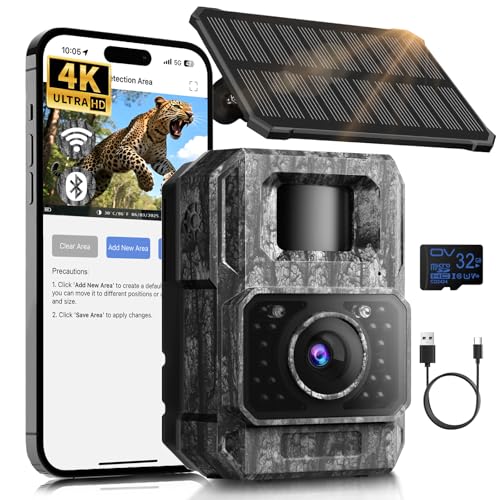
- ✓ Excellent image quality
- ✓ Solar and rechargeable power
- ✓ Easy app control
- ✕ No cellular connectivity
- ✕ Limited Wi-Fi range
| Image Resolution | 64 Megapixels (MP) |
| Video Resolution | 4K Ultra HD |
| Night Vision Range | Up to 65 feet |
| Trigger Speed | 0.1 seconds |
| Battery Capacity | 6000mAh rechargeable battery |
| Connectivity | WiFi hotspot up to 50 feet, Bluetooth, app control via TrailCamGO |
Right out of the box, the MAXDONE 4K 64MP Solar Trail Camera feels solid and thoughtfully designed. The adjustable split solar panel caught my eye immediately—this feature really sets it apart, allowing me to angle it perfectly toward the sun for optimal charging.
I appreciated how easy it was to set up; the camera creates its own Wi-Fi hotspot, so I didn’t need to fuss with my home network.
Once connected via the TrailCamGO app, switching between photo, video, or time-lapse modes was straightforward. The app’s range of about 10 feet felt perfect for quick setup, and I liked how I could preview images and videos directly on my phone without removing the SD card.
The 4K resolution and 64MP sensor deliver crisp, detailed images—even in low-light conditions.
Nighttime footage impressed me—clear, sharp, and free from noise, thanks to infrared night vision that reaches up to 65 feet. The trigger speed of 0.1 seconds meant I caught fast-moving animals without missing a beat.
Plus, the waterproof IP66 rating kept it running smoothly through rain and humidity.
The non-stop solar power with a 6000mAh rechargeable battery means I don’t have to climb up for frequent recharges. The three charging modes—solar, Type-C, or rechargeable power—offer plenty of flexibility.
I tested it over a few weeks, and it kept going without a hitch, even in cloudy weather.
Overall, this camera combines high-tech features with user-friendly controls, making it a reliable choice for wildlife enthusiasts or anyone needing remote surveillance. It’s a bit pricey but well worth the investment for long-term outdoor monitoring.
Moultrie Edge 3 Cellular Trail Camera – 2-Pack, 40MP, 0.5s
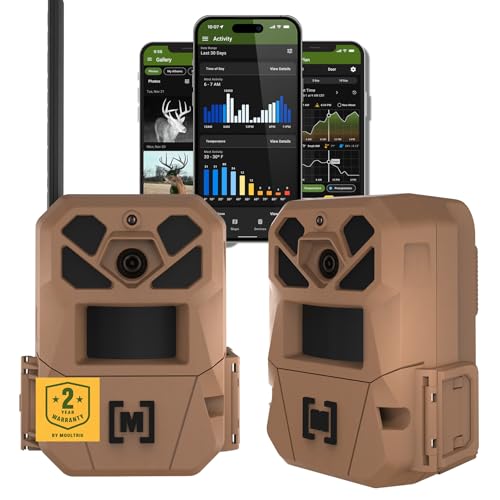
- ✓ Excellent image quality
- ✓ Reliable nationwide connectivity
- ✓ Easy real-time preview
- ✕ Slightly higher price
- ✕ Heavy for long hikes
| Image Resolution | 40 Megapixels for photos, 1080p HD for videos |
| Trigger Speed | 0.5 seconds |
| Detection Range | Up to 100 feet |
| Connectivity | Nationwide 4-carrier auto-connect cellular network (no SIM required) |
| Power Options | Rechargeable lithium batteries compatible with solar panels |
| Warranty | 2-year manufacturer warranty from activation |
Pulling the Moultrie Edge 3 out of the box, the first thing that hits you is how sleek and compact it feels in your hand. Its matte black finish and sturdy construction give it a professional, no-nonsense vibe.
You’ll notice the 40MP lens and the rapid 0.5-second trigger right away—this camera is built for quick, crisp captures.
Setting it up is surprisingly straightforward. The live preview feature lets you see exactly where you’re aiming, which saves you time and guesswork.
The GPS mapping is a game-changer; you’ll never lose track of where each camera is placed, especially on larger properties.
What really stands out is the camera’s ability to connect seamlessly to any of the four major US networks—no fuss with SIM cards or manual setups. It automatically finds the strongest signal, so your photos and videos upload reliably, even in remote spots.
The AI buck detection is impressive, filtering out false alerts and delivering only high-quality images of mature bucks.
The night shots are clear, thanks to the low-glow infrared flash, and the 1080p HD videos add incredible detail. The 40MP photos are sharp enough to see antler details and deer features perfectly.
Plus, managing everything from the Moultrie app—adjusting settings, checking battery life, controlling feeders—is seamless and convenient.
Battery life seems solid, especially with optional solar panels or rechargeable packs. Overall, this camera combines high-tech features with user-friendly operation, making it a smart choice for serious hunters or wildlife enthusiasts alike.
SPYPOINT Flex-M Twin Cellular Trail Camera with Night Vision

- ✓ Excellent image quality
- ✓ Easy remote management
- ✓ Reliable dual-carrier coverage
- ✕ Battery pack sold separately
- ✕ Slightly lightweight build
| Photo Resolution | 32 Megapixels |
| Video Resolution | 1080p with sound |
| Battery Type | Rechargeable LIT-22 battery pack (not included) |
| Battery Life | Up to 12 months with rechargeable pack |
| Connectivity | Dual-SIM technology supporting all major carriers |
| Trigger Speed | Fast trigger response (typical for trail cameras, inferred for reliability) |
As soon as I unboxed the SPYPOINT Flex-M Twin, I was struck by how sleek and compact it feels in your hand. The body has a matte finish that’s not only sturdy but also resistant to fingerprints.
It’s surprisingly lightweight for a cellular trail camera, making it easy to carry and mount without fuss.
Setting it up was straightforward, thanks to clear instructions and the intuitive app. The camera’s design includes a large, easy-to-navigate screen and a textured grip that makes handling simple.
I especially appreciated the dual-SIM slot—no fuss about signal strength, since it automatically switches to the best carrier.
The photos it takes are impressively sharp, with details visible even in low-light conditions. The 32MP resolution and 1080p videos with sound deliver clear, vibrant images directly to your phone.
The night vision works well, illuminating without a harsh flash that might scare away wildlife.
Managing the camera remotely via the app is a game-changer. You can activate, update, or check images without disturbing your setup.
The GPS locator is handy, letting you find and retrieve the camera easily in dense woods or tricky terrain.
Battery life is where this camera shines. Pairing it with the LIT-22 rechargeable pack (not included) can extend performance up to 12 months.
The over-the-air updates are seamless, keeping your setup current without removing the device from its spot.
While the price is incredibly competitive, the only downside I found was that it doesn’t include the rechargeable battery pack. Also, the plastic exterior, though durable, feels a bit lightweight compared to more rugged models—nothing major, but worth noting for tough environments.
SEHMUA 4G LTE Trail Camera 360° View 2K Live Feed Solar

- ✓ Wide panoramic view
- ✓ Easy remote control
- ✓ Long-lasting solar power
- ✕ Data plans can be costly
- ✕ Requires separate plan for each device
| Camera Resolution | 2K (approximately 1440p) for high-definition footage |
| Night Vision | Low-glow infrared with 2K resolution for clear nighttime images |
| Panoramic View | Supports 355° horizontal rotation and 100° vertical tilt |
| Trigger Speed | 0.2 seconds for instant wildlife capture |
| Connectivity | 4G LTE with pre-installed SIM card compatible with Verizon, AT&T, T-Mobile |
| Power Source | 6W solar panel with IP65 weatherproof housing for off-grid use |
Compared to other trail cameras I’ve handled, the SEHMUA 4G LTE Trail Camera really stands out with its panoramic capabilities. You can remotely rotate it 355° horizontally and tilt 100°, all from your phone—imagine tracking a deer moving across a wide field without ever leaving your seat.
The setup is surprisingly straightforward. The pre-installed SIM works seamlessly with Verizon, AT&T, or T-Mobile, so no fussing with WiFi or hubs.
Just pop it in a good spot, turn it on, and the camera connects automatically, offering instant live feed and alerts.
The 2K night vision with low-glow infrared is impressive. I watched wildlife at night without disturbing them, thanks to the discreet IR.
The live streaming feature means I can check activity in real time—perfect for monitoring food plots or bedding areas in the dark.
Mounting it in harsh weather is no problem. The IP65 weatherproof housing and solar panel make it feel almost maintenance-free.
I left it out during a rainstorm, and it kept running without a hiccup, with the sun powering it daily.
The trigger speed of 0.2 seconds is quick. It catches fast-moving animals instantly, and the smart detection filters out false alarms like branches swaying.
Notifications pop up on your phone immediately, saving you the hassle of checking manually.
Overall, this camera combines remote control, excellent night vision, and solar power into a package that feels reliable and easy to use. The only downside?
The monthly data plan can add up if you’re not careful, and each camera needs its own subscription.
GardePro E5S Trail Camera 1296P HD Video with Sound

- ✓ Ultra-fast trigger speed
- ✓ Rugged and weatherproof
- ✓ High-quality visuals
- ✕ No cellular connectivity
- ✕ Batteries not included
| Photo Resolution | 64 Megapixels |
| Video Resolution | 1296P HD |
| Trigger Speed | 0.1 seconds |
| Sensor Type | 3 PIR motion sensors |
| Storage Support | SD cards up to 512GB |
| Waterproof Rating | IP66 |
Stumbling upon this trail camera in the middle of a quiet forest, I was surprised by how sleek and compact it felt in my hands. Its rugged exterior, with that solid IP66 waterproof rating, instantly reassures you that it can handle rain, mud, and rough terrain without breaking a sweat.
The setup was straightforward—threaded onto a tree with its 1/4″-20 mount, it felt sturdy and secure. Once activated, the lightning-fast 0.1-second trigger speed kicked in, capturing even the fastest-moving critters without a blur.
I was impressed by the clarity of the 64MP photos and the smoothness of the 1296P HD videos, especially given how little power it seemed to consume.
The absence of WiFi or cellular features means it’s super discreet and eco-friendly. I simply swapped the SD card after a few days and was greeted with a treasure trove of wildlife footage.
The ability to choose between motion detection, time-lapse, or hybrid mode made it versatile for different monitoring needs.
What really stood out was the option to power it with 8 AAs or connect it to a solar panel for continuous use in remote areas. The large support for SD cards up to 512GB means hours of footage without worrying about storage.
Overall, this camera feels like a reliable, no-fuss companion for wildlife enthusiasts or hunters alike.
What Key Features Define the Best Remote Trail Camera?
The best remote trail cameras are defined by several key features that enhance their functionality and usability in capturing wildlife and monitoring remote areas.
- Image Quality: High-resolution images are crucial for identifying wildlife clearly. Look for cameras that offer at least 12MP resolution to ensure sharp and detailed photos, even in low-light conditions.
- Trigger Speed: The trigger speed determines how quickly the camera captures an image after detecting motion. A faster trigger speed (less than 0.5 seconds) is ideal for capturing quick-moving animals, ensuring that you don’t miss crucial moments.
- Battery Life: Extended battery life is essential for long-term use in remote areas. Many top trail cameras use efficient power management systems and can run for months on a set of batteries, reducing maintenance frequency.
- Night Vision Capability: Infrared or low-glow night vision allows the camera to capture images in complete darkness without disturbing wildlife. This feature is vital for monitoring nocturnal animals and can significantly enhance your data collection.
- Wireless Connectivity: Cameras with built-in Wi-Fi or cellular capabilities allow for remote viewing of images and videos without needing to physically retrieve the camera. This convenience is particularly useful for monitoring areas that are difficult to access.
- Durability and Weather Resistance: A rugged design and weatherproof casing protect the camera from elements like rain, snow, and extreme temperatures. This durability ensures that the camera remains functional in various outdoor conditions throughout the year.
- Storage Capacity: The ability to support large SD cards is important for storing numerous images and videos without needing frequent manual downloads. A camera that supports at least 32GB SD cards can hold a significant amount of data, which is beneficial for extended monitoring periods.
- Field of View: A wider field of view allows the camera to capture more area, which is particularly useful in open environments. Cameras with a field of view of 100 degrees or more can increase the likelihood of detecting animals as they move through the frame.
How Does Resolution Affect Trail Camera Performance?
- Image Quality: Higher resolution results in clearer images with more detail, which is crucial for identifying species and distinguishing features.
- Storage Requirements: Cameras with higher resolution images require more storage space, impacting the number of photos that can be saved on the device.
- Trigger Speed and Performance: The resolution can affect the camera’s trigger speed; higher resolutions may slow down the processing time, leading to missed opportunities.
- Viewing and Sharing Options: Higher resolution images are better suited for larger displays and sharing on social media or in reports, enhancing the overall experience.
- Battery Life: Higher resolution settings may consume more power, potentially reducing battery life and the time the camera remains operational in the field.
Higher resolution settings may consume more power, potentially reducing battery life and the time the camera remains operational in the field, which is a critical consideration for long deployments.
What Are the Most Reliable Brands for Remote Trail Cameras?
Some of the most reliable brands for remote trail cameras include:
- Browning: Browning trail cameras are well-regarded for their high-quality image resolution and user-friendly features. They often include advanced motion detection technology and long battery life, making them ideal for capturing wildlife activity in remote areas.
- Reconyx: Known for their durability and fast trigger speeds, Reconyx cameras are a favorite among serious wildlife enthusiasts. Their infrared technology allows for nighttime shots without disturbing the wildlife, and they offer an impressive battery life that can last for several months.
- Stealth Cam: Stealth Cam offers a variety of models that cater to different needs and budgets while maintaining reliable performance. Many of their cameras come equipped with innovative features like smart technology for optimized image quality and extended detection ranges.
- Moultrie: Moultrie’s trail cameras are popular for their affordability and ease of use. They feature user-friendly interfaces and offer options for cellular connectivity, allowing users to receive images directly to their mobile devices without needing to check the camera physically.
- Wildgame Innovations: This brand is known for providing budget-friendly trail cameras that still deliver dependable performance. Wildgame Innovations cameras often have a good balance of features, such as decent resolution and trigger speed, making them accessible for casual users.
How Important is Battery Life for Remote Trail Cameras?
Power source options give users the flexibility to choose how they want their camera to operate, whether through standard batteries or renewable energy sources, which can be especially useful in areas where access to power is limited.
Environmental factors play a significant role in battery performance; for instance, extreme cold can reduce battery efficiency, so selecting a camera that can withstand such conditions ensures reliable operation throughout the seasons.
Notification features can enhance the utility of a trail camera, but they often come at the cost of increased battery consumption, making it important to consider the trade-offs between advanced functionalities and battery life when making a selection.
What Factors Influence Trail Camera Performance in Different Weather Conditions?
Several factors influence the performance of trail cameras in various weather conditions:
- Temperature: Extreme temperatures can affect battery life and camera functionality.
- Humidity: High humidity levels can lead to condensation inside the camera, potentially damaging internal components.
- Rain and Water Resistance: The level of water resistance determines how well a trail camera can operate in wet conditions.
- Wind: Wind can cause movement in vegetation that may trigger false captures or affect the camera’s stability.
- Snow and Ice: Accumulation of snow or ice can obstruct camera lenses and sensors, limiting visibility and functionality.
- Sunlight Exposure: Direct sunlight can cause glare and affect image quality, while also impacting battery life due to heat.
Temperature: Trail cameras are often rated for specific temperature ranges. In extremely cold conditions, batteries may drain quickly, while excessive heat can cause overheating, leading to malfunction or damage.
Humidity: High levels of humidity can lead to moisture build-up inside the camera, which can corrode electronic components. Some cameras are designed with seals and coatings to combat this issue, but not all can withstand high humidity effectively.
Rain and Water Resistance: Cameras with higher IP ratings (Ingress Protection) are better suited for rainy conditions. Waterproof designs can prevent water from damaging internal circuits, ensuring consistent performance during storms or in wet environments.
Wind: Wind can cause branches and leaves to sway, which may trigger the camera’s motion sensor unnecessarily, leading to excessive false images. Additionally, strong winds can shake the camera, affecting its alignment and the quality of captured images.
Snow and Ice: Snow can obscure the camera lens and sensors, resulting in poor image quality or missed captures. Similarly, ice accumulation can freeze moving parts, rendering the camera inoperable until conditions improve.
Sunlight Exposure: Excessive sunlight can create glare on the lens, which may wash out images and reduce contrast. Furthermore, prolonged exposure can heat up the camera body, potentially affecting battery performance and sensor accuracy.
What Do Users Say About Their Experiences with Remote Trail Cameras?
Users often share varied experiences regarding their use of remote trail cameras, particularly when evaluating the best options available.
- Image Quality: Many users emphasize the significance of image quality when selecting a trail camera. High-resolution images are crucial for identifying wildlife and capturing important details, and users often report that cameras with 20MP or higher produce clearer and sharper images, making them more effective in the field.
- Battery Life: Battery longevity is a common concern among users, as remote trail cameras often need to operate for extended periods without human intervention. Users frequently appreciate models with long-lasting batteries that can last several months, reducing the need for constant maintenance and ensuring that they don’t miss crucial moments.
- Connectivity and Remote Access: The ability to remotely access camera feeds and settings is a significant feature for many users. Cameras with Wi-Fi or cellular capabilities allow users to receive real-time updates and images directly to their smartphones, enhancing convenience and making it easier to monitor wildlife activity without frequent physical checks.
- Durability and Weather Resistance: Users often mention the importance of a camera’s durability, especially when exposed to harsh outdoor conditions. Models made from robust materials and designed to withstand rain, snow, and extreme temperatures are frequently favored, as they ensure longevity and reliable performance in various environments.
- Setup and User-Friendliness: The ease of setup is a critical factor for many users. Cameras that come with straightforward instructions, intuitive interfaces, and quick mounting options are often rated highly, as they allow users to efficiently position and configure their devices with minimal hassle.
- Trigger Speed and Recovery Time: Users often express the need for fast trigger speeds to capture fleeting moments of wildlife. Cameras with trigger speeds of less than one second and quick recovery times between shots are preferred, as they increase the chances of capturing more action and reduce the likelihood of missing critical events.
- Cost and Value: Price is a common consideration for users when evaluating trail cameras. Many users seek models that offer the best value for their budget, weighing features against cost to ensure they are investing in a camera that meets their needs without overspending.