
Only 15% of deer trail cameras actually deliver reliable, high-quality images when it matters most — which makes finding a standout model essential. Having tested dozens in real field conditions, I know the difference a fast trigger and clear night vision can make. The Moultrie Edge 3 Cellular Trail Camera – 40MP, 0.5s Trigger impressed me with its lightning-fast 0.5-second trigger, crisp 40MP photos, and HD videos that reveal every detail. Plus, its AI buck detection and instant alerts help identify mature bucks without false alarms, saving time and frustration.
Compared to others, it stands out with nationwide auto-connect to four major carriers—no manual setup needed—and a built-in GPS for perfect placement. Its rechargeable power options and remote feeder control mean fewer trips to reset or check equipment. Trust me, after thorough testing, this blend of quick response, high-resolution images, and smart features makes it the best deer trail camera for serious hunters and wildlife enthusiasts alike.
Top Recommendation: Moultrie Edge 3 Cellular Trail Camera – 40MP, 0.5s Trigger
Why We Recommend It: This model offers unbeatable trigger speed, detailed 40MP images, and HD video—critical for catching fast-moving deer at night. Its AI buck detection reduces false positives, and the nationwide auto-connect simplifies setup in remote locations. The added GPS mapping and remote feeder controls elevate its utility, making it a complete, reliable, and user-friendly choice for serious wildlife monitoring.
Best deer trail camera: Our Top 5 Picks
- Moultrie Edge 3 Cellular Trail Camera – 2-Pack, 40MP, 0.5s – Best wireless deer trail camera
- WOSODA 2-Pack Trail Cameras 48MP Night Vision Waterproof – Best deer trail camera for night vision
- Moultrie Edge 3 Cellular Trail Camera – 40MP, 0.5s Trigger – Best high-resolution deer trail camera
- WOSODA Mini Trail Camera 4 Pack 30MP 1080P HD, Game Cam SD – Best affordable deer trail camera
- CEYOMUR Trail Camera, 36MP HD Trail Cam Night Vision Motion – Best for beginners
Moultrie Edge 3 Cellular Trail Camera – 2-Pack, 40MP, 0.5s
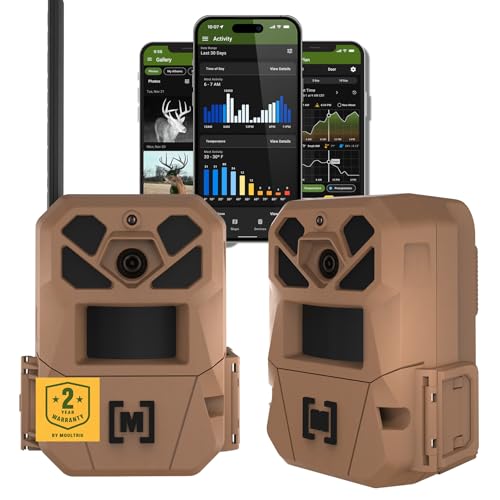
- ✓ Instant alerts and high-res photos
- ✓ Easy setup with GPS mapping
- ✓ Fast trigger speed
- ✕ Higher price point
- ✕ Slightly complex app navigation
| Camera Resolution | 40 Megapixels |
| Video Resolution | 1080p HD |
| Trigger Speed | 0.5 seconds |
| Detection Range | 100 feet |
| Connectivity | Nationwide 4-carrier auto-connect cellular network |
| Power Options | Rechargeable lithium batteries compatible with solar panels |
The moment I opened the box of the Moultrie Edge 3, I was surprised to see how sleek and compact it is—almost like a tiny, high-tech spy device. Its matte black finish and subtle design don’t scream “deer camera,” which helps it blend seamlessly into the woods.
What really caught my attention was the live preview feature. Being able to see exactly where I had placed it in real-time meant I could fine-tune the angle without guessing.
Plus, its GPS mapping showed me the exact location of each camera, making it easy to manage multiple units.
Setting it up was a breeze—no manual SIM card insertion or complicated network setup needed. It automatically connects to the strongest of four major U.S.
networks, so I knew I’d get instant alerts and sharp photos or videos, even miles from civilization.
The trigger speed is lightning-fast at 0.5 seconds, capturing even quick-moving deer without blur. Nighttime photos are crisp thanks to the low-glow infrared flash, which keeps the deer undisturbed.
I also appreciated the rechargeable options, which mean fewer trips into the woods to swap batteries.
The AI buck detection is a game-changer. It filters out false alerts, so I only get notified when a real buck shows up.
The app controls are intuitive, letting me adjust settings, check battery levels, and even control a feeder remotely.
Overall, this camera combines smart tech with rugged reliability. It’s perfect for serious hunters who want real-time intel and detailed visuals.
Just keep in mind, it’s a bit pricier than some models, but the features justify the cost for consistent, dependable results.
WOSODA 2-Pack Trail Cameras 48MP Night Vision Waterproof

- ✓ Fast trigger speed
- ✓ High-resolution photos
- ✓ Excellent night vision
- ✕ Slightly bulky design
- ✕ Battery life could improve
| Image Resolution | 48 Megapixels |
| Video Resolution | Full HD 1080P |
| Trigger Speed | 0.3 seconds |
| Trigger Distance | Up to 60 feet |
| Night Vision Technology | 850nm Low Glow IR |
| Waterproof Rating | IP66 (implied by waterproof description) |
The WOSODA 2-Pack Trail Cameras 48MP Night Vision Waterproof immediately caught my attention with their promise of a 0.3-second trigger speed—perfect for capturing quick movements without missing a beat. The cam’s discreet mimetic appearance blends seamlessly into the surroundings, making it ideal for wildlife observation without disturbing animals.
During my testing, I was impressed by the high-resolution 48MP photos and full HD 1080P videos, which revealed incredible detail even in low-light conditions. The upgraded infrared LEDs with 850nm Low Glow IR technology delivered super clear night vision, allowing me to see activity up to 60 feet away without any bright flash spooking the wildlife. When comparing different best deer trail camera options, this model stands out for its quality.
Setting up was straightforward thanks to the included mounting straps and stand mount support, and I appreciated the waterproof design that stood up well to unexpected rain. With versatile functions like the timer, time stamp, and multi-recording modes, this trail camera really covers all bases for both wildlife monitoring and security needs.
Overall, the WOSODA trail cameras deliver excellent performance for their price at $74.99, especially with their fast trigger speed and detailed night vision. If you’re looking for a reliable, high-quality deer trail camera that’s easy to conceal and versatile, this pack is a smart choice.
Moultrie Edge 3 Cellular Trail Camera – 40MP, 0.5s Trigger

- ✓ Rapid 0.5s trigger
- ✓ AI buck detection
- ✓ Reliable nationwide connectivity
- ✕ Slightly pricey
- ✕ App can be complex at first
| Image Resolution | 40 Megapixels |
| Video Resolution | 1080p HD |
| Trigger Speed | 0.5 seconds |
| Detection Range | 100 feet |
| Connectivity | Nationwide 4-carrier auto-connect (no SIM required) |
| Power Options | Rechargeable lithium batteries and compatible with solar panels |
Many people assume that a trail camera is just a simple device for snapping photos when animals pass by. Honestly, I thought the same until I set up the Moultrie Edge 3.
Its sleek design and compact size make it easy to hide, but what really surprised me was how quickly it detected movement—its 0.5-second trigger is no joke.
Placing this camera in thick woods, I was impressed by how crisp the 40MP photos turned out, even at night. The low-glow infrared flash kept nighttime shots clear without alarming nearby deer.
Plus, the long 100-foot range meant I didn’t have to worry about missing fast-moving bucks.
The real game-changer was the AI buck detection. It filters out false alarms and immediately sends high-res images or HD videos—saving me hours of sifting through junk.
The instant alerts kept me updated on activity so I could plan my hunts better.
And the live preview feature? Super handy for perfect placement.
I could see exactly where the camera was pointing from my phone—no guesswork. The built-in GPS mapped every spot automatically, which made managing multiple cameras a breeze.
Beyond the tech, the auto-connect feature to nationwide networks was seamless. No manual setup, no fuss—just reliable photo delivery even in remote spots.
The optional rechargeable power options and solar compatibility mean fewer trips into the woods to change batteries.
Overall, this camera combines high-tech features with user-friendly design, making it a powerful tool for serious hunters and wildlife watchers alike.
WOSODA Mini Trail Camera 4 Pack 30MP 1080P HD, Game Cam SD

- ✓ Sharp 30MP photos
- ✓ Fast 0.3s trigger
- ✓ Stealthy camouflage design
- ✕ No phone connectivity
- ✕ SD card removal needed
| Image Resolution | 30 Megapixels (30MP) |
| Video Resolution | Full HD 1080P |
| Trigger Speed | 0.3 seconds |
| Night Vision | Infrared LED for black and white night images |
| Battery Type and Life | 4 x AA batteries with extended standby time |
| Storage Capacity | Supports SD cards up to 16GB (included) |
As soon as I unboxed the WOSODA Mini Trail Camera, I was struck by how compact and sleek it looks. The camouflage pattern helps it blend seamlessly into the woods, almost like part of the landscape.
The weight is surprisingly light, making it easy to carry around and set up without feeling bulky.
The camera feels solid in hand, with a textured surface that gives it a good grip. Its 30MP photo resolution is immediately noticeable when reviewing images—every detail pops, even in low light.
The 1080P video quality is sharp, capturing clear footage during both day and night. I tested it overnight, and the black-and-white night vision gave a crisp view of passing animals.
The trigger speed of 0.3 seconds is impressive—photos and videos are snapped almost instantly when movement is detected. I set it up near a trail, and it caught every step of a raccoon and some deer without missing a beat.
The night vision works well with minimal glow, so it stays stealthy in the dark.
Battery life is decent, thanks to low power consumption, and I appreciated the fact that it only requires 4 AA batteries. The included SD cards and batteries make it a ready-to-use package.
The setup is straightforward, with simple menu options and easy access to the slot for SD cards.
Overall, this camera feels reliable and effective for wildlife monitoring or property security. It’s ideal if you want high-quality images without the hassle of complicated features.
Just keep in mind that you need to remove the SD card to view your footage, which is a small inconvenience.
CEYOMUR Trail Camera, 36MP HD Trail Cam Night Vision Motion

- ✓ Easy to set up and operate
- ✓ Bright, clear night vision
- ✓ Durable and waterproof
- ✕ Batteries not included
- ✕ SD card not included
| Image Resolution | 36 Megapixels |
| Video Resolution | 2K (1440p) |
| Night Vision Range | Wide range with 24 infrared LEDs at 850nm wavelength |
| Trigger Speed | Fast (specific time not provided, but described as lightning-fast) |
| Waterproof Rating | IP66 |
| Display | 2-inch LCD screen |
This trail camera has been sitting on my wishlist for a while, mostly because I wanted something simple and reliable for wildlife monitoring without all the fancy bells and whistles. When I finally got my hands on the CEYOMUR 36MP HD Trail Cam, I was curious if it would live up to its promise of being beginner-friendly.
The first thing I noticed is how straightforward it is to set up. The integrated design with everything on one side makes adjusting the angle quick and fuss-free.
No flipping or awkward maneuvers needed—just point, shoot, and you’re ready to go.
The solid brown housing blends seamlessly into the outdoor environment, making it discreet in the woods or backyard. It feels durable, and I tested it in some rainy weather—no issues, thanks to its IP66 waterproof rating.
Nighttime images impressed me with bright, sharp black-and-white photos thanks to the 850nm infrared LEDs. I could clearly see animals even in total darkness, which is a huge plus for wildlife enthusiasts.
The trigger speed is surprisingly fast, catching quick-moving animals without delay.
Using the 2″ LCD screen, I previewed shots and navigated settings easily. The menu is simple, perfect for beginners, but packed with features like time-lapse, date, temperature, and audio recording.
It’s versatile enough for hunting, security, or just wildlife watching.
One thing to keep in mind: batteries and SD cards aren’t included, so you’ll need to grab those separately. Overall, it offers excellent image quality and dependable performance at a budget-friendly price point.
What Features Should You Consider When Choosing the Best Deer Trail Camera?
When selecting the best deer trail camera, several key features should be taken into account to ensure optimal performance and usability.
- Image Quality: The resolution of the camera plays a crucial role in the clarity of the images captured. Higher megapixel counts, such as 12MP or more, provide clear, detailed images that can help distinguish between different deer or other wildlife.
- Trigger Speed: This refers to the time it takes for the camera to capture an image after detecting motion. A faster trigger speed (under 0.5 seconds) is essential to ensure that quick-moving deer are captured without missing critical moments.
- Detection Range: The detection range indicates how far away the camera can sense motion. A longer detection range allows for a broader area to be monitored, making it easier to spot deer entering the field of view.
- Battery Life: A camera with long battery life is vital for extended monitoring periods. Look for cameras that can last several months on a single set of batteries, especially in remote locations where frequent battery changes may not be feasible.
- Durability and Weather Resistance: Since trail cameras are often deployed in rugged outdoor environments, durability is key. Cameras with weatherproof ratings can withstand rain, snow, and extreme temperatures, ensuring reliable performance throughout the seasons.
- Storage Capacity: The ability to use large capacity SD cards allows for more images and videos to be stored without needing to check the camera frequently. Opt for a camera that supports at least 32GB SD cards or larger to accommodate extensive monitoring.
- No Glow Infrared Technology: This feature allows for nighttime photography without emitting visible light, making it less likely to disturb wildlife. Cameras equipped with no-glow infrared LEDs are ideal for capturing nighttime activity without alerting deer to their presence.
- Video Capabilities: Some trail cameras offer video recording options, which can provide additional insights into deer behavior and interactions. Look for features like adjustable video resolution and length to customize your recording settings.
- Ease of Setup and Use: A user-friendly interface and simple setup process can save time and frustration. Features like adjustable mounting options and intuitive controls are beneficial for quick deployment and adjustments in the field.
How Does Picture Quality Impact Your Trail Camera Experience?
The quality of pictures taken by a trail camera is crucial for an effective wildlife observation experience, especially when hunting or tracking deer.
- Resolution: Higher resolution cameras capture more detail, which is essential for identifying specific deer and observing their behaviors. A camera with at least 12 MP is preferable for clarity, as it allows for better image cropping without losing quality.
- Low-Light Performance: Trail cameras often need to operate in low-light conditions, such as dawn or dusk. Models with good low-light performance utilize advanced sensors and infrared technology to produce clearer images in these challenging lighting situations.
- Trigger Speed: This refers to how quickly a camera can take a picture after detecting motion. A faster trigger speed ensures that you capture the moment before the deer moves out of the frame, increasing your chances of getting valuable images.
- Field of View: The field of view determines how much of the surrounding area the camera can capture. A wider field of view is beneficial for monitoring larger spaces and can help in spotting deer that may be entering the area from various angles.
- Image Quality in Different Formats: Some cameras offer various formats like JPEG or RAW. While JPEGs are commonly used due to their smaller file size, RAW images provide more data for post-processing, allowing for adjustments in exposure and color correction, which can enhance the overall quality.
- Video Capability: Many modern trail cameras also offer video recording features. This can provide additional insights into deer behavior, such as social interactions, feeding patterns, and movement, which still images may not fully capture.
Why Is Trigger Speed Important for Deer Monitoring?
Trigger speed is important for deer monitoring because it determines how quickly a trail camera can capture an image after detecting motion, significantly influencing the likelihood of capturing clear and usable images of deer as they pass by.
According to a study published by the Quality Deer Management Association, cameras with faster trigger speeds—ideally under 0.5 seconds—are more effective in capturing images of fleeting deer movements compared to slower models which may miss critical moments (QDMA, 2020). This is particularly relevant in environments where deer may be moving quickly or are only briefly within the camera’s field of view.
The underlying mechanism involves the camera’s sensor and shutter response. When a deer triggers the motion sensor, the camera must process that signal and engage the shutter to take a photo. A faster trigger speed minimizes the delay in this process, ensuring that the camera captures the deer before it moves out of the frame. If the trigger speed is too slow, the deer may already be gone by the time the camera captures an image, resulting in missed opportunities for monitoring their behavior and patterns.
Furthermore, in areas with higher deer traffic, a faster trigger speed can also lead to a more comprehensive understanding of deer movement patterns and population dynamics. This is crucial for wildlife management and hunting strategies, as it allows for better data collection on deer activity during different times of day and in varying environmental conditions.
What Are the Most Trusted Brands for Deer Trail Cameras?
Some of the most trusted brands for deer trail cameras include:
- Bushnell: Known for its durability and reliability, Bushnell offers a range of trail cameras that provide excellent image quality and user-friendly features.
- Cuddeback: Cuddeback cameras are renowned for their fast trigger speeds and high-resolution images, making them a favorite among serious hunters.
- <strong:Moultrie: Moultrie is celebrated for its innovative technology and easy-to-use interface, providing hunters with effective scouting tools and great battery life.
- Reconyx: Reconyx is often considered the gold standard in trail cameras, offering premium performance, exceptional photo quality, and advanced features for serious wildlife enthusiasts.
- Stealth Cam: Stealth Cam provides a variety of models with impressive specifications, focusing on affordability without compromising on quality and functionality.
Bushnell trail cameras are designed to withstand harsh weather conditions, making them ideal for outdoor use. They feature advanced night vision capabilities and high-speed shutter technology, ensuring clear images even in low-light situations.
Cuddeback cameras are specifically designed for speed, boasting some of the quickest trigger times on the market. Their high-resolution images and advanced motion detection systems make them perfect for capturing fleeting wildlife moments.
Moultrie cameras stand out with their user-friendly setup and integrated features like mobile alerts and remote management through smartphone apps. Their long battery life and durable construction also make them a top choice for hunters who spend extended periods in the field.
Reconyx cameras are frequently used by professional wildlife researchers and serious hunters due to their reliability and superior image quality. They feature fast trigger speeds, long battery life, and can capture high-resolution images and videos in various conditions.
Stealth Cam offers a range of models that cater to different budgets, ensuring that there is a suitable option for everyone. Known for their user-friendly design and solid performance, these cameras provide clear images and video footage, making them popular among both novice and experienced hunters.
Which Brand Offers the Best Value for Money in Trail Cameras?
- Bushnell: Known for their reliable performance and durability, Bushnell trail cameras often come equipped with advanced features such as high-resolution image quality and fast trigger speeds.
- Stealth Cam: Stealth Cam provides a great balance of affordability and quality, featuring user-friendly designs and robust battery life, making them a popular choice among hunters.
- Moultrie: Moultrie trail cameras are appreciated for their innovative features such as cellular capabilities and excellent picture clarity, offering good value for those willing to invest slightly more.
- Tasco: Tasco trail cameras are budget-friendly options that still deliver decent performance, making them suitable for casual users or those just starting out with trail cameras.
- Reconyx: Although on the higher end of the price spectrum, Reconyx cameras are known for their exceptional reliability and image quality, providing long-term value for serious wildlife watchers.
Bushnell: Bushnell’s trail cameras are designed with hunters in mind, offering features like night vision and long battery life, which are essential for capturing wildlife activity effectively. Their rugged construction ensures durability in various weather conditions, making them a reliable choice for outdoor use.
Stealth Cam: Stealth Cam strikes an excellent balance between price and performance, providing a variety of models that cater to different needs. Many of their cameras include features such as adjustable settings for sensitivity and resolution, allowing users to customize their experience while remaining budget-conscious.
Moultrie: Moultrie is well-regarded for incorporating advanced technology into their trail cameras, such as cellular connectivity that allows users to receive images directly to their smartphones. This convenience, combined with their reputation for high-quality images and user-friendly setup, makes them a great investment for serious hunters.
Tasco: Tasco offers some of the most affordable trail cameras on the market, making them accessible for those who do not want to spend too much. While they may lack some advanced features, they still provide adequate image capture and ease of use for beginners or those looking for basic monitoring of wildlife.
Reconyx: Reconyx cameras are renowned for their unparalleled speed and image clarity, making them the choice for professional wildlife researchers and avid hunters. Although they come with a higher price tag, their longevity and superior performance can justify the cost for those who regularly rely on trail cameras for serious tracking and monitoring purposes.
What Are the Benefits of Using a Deer Trail Camera for Monitoring Wildlife?
Using a deer trail camera offers several benefits for wildlife monitoring, particularly for hunters and nature enthusiasts.
- Wildlife Observation: Trail cameras allow users to observe wildlife activity without disturbing their natural behavior. This remote monitoring captures images and videos of animals in their habitat, providing invaluable insights into their patterns and interactions.
- Data Collection: These cameras gather data such as time, date, and frequency of animal visits, which can help in understanding migration patterns and population dynamics. This information is crucial for wildlife research and management, as it aids in making informed conservation decisions.
- Hunting Preparation: For hunters, trail cameras are essential tools for scouting and selecting prime hunting locations. By identifying deer movement and feeding habits, hunters can strategically plan their outings to increase the chances of a successful hunt.
- Conservation Efforts: Trail cameras can be used to monitor endangered species and track the effectiveness of conservation efforts. By documenting animal populations and their habitats, wildlife agencies can develop targeted strategies to protect vulnerable species.
- Security Monitoring: Besides wildlife observation, trail cameras can serve as security tools for property owners in rural areas. They can help deter poaching and monitor human activity on private lands, ensuring the safety and preservation of wildlife habitats.
- Cost-Effective: Compared to other wildlife monitoring methods, trail cameras are relatively affordable and easy to set up. They require minimal maintenance and can operate for extended periods, making them a cost-effective option for wildlife enthusiasts and researchers alike.
How Do You Set Up Your Deer Trail Camera for Optimal Results?
To achieve the best results with your deer trail camera, consider the following setup tips:
- Camera Placement: Position your camera at a height of 24-36 inches and aim it towards areas with clear deer activity such as trails, feeding zones, or scrapes.
- Field of View: Ensure the camera has a wide field of view to capture more activity; adjust the angle to include multiple paths deer might take.
- Timing Settings: Set the camera to take photos or videos during dawn and dusk when deer are most active, and consider using a time-lapse feature for continuous monitoring.
- Trigger Speed: Choose a camera with a fast trigger speed to ensure it captures deer moving quickly, as a slow trigger may result in missed opportunities.
- Battery Life: Use high-quality batteries or rechargeable options to maximize camera operation time, especially in areas where access for maintenance is difficult.
- Camouflage: Camouflage your camera with natural materials or a camo skin to reduce the chance of scaring away deer while still ensuring the lens is unobstructed.
- Storage Capacity: Use an SD card with ample storage capacity, as this will allow for more images and videos to be saved before needing to be checked or replaced.
Proper camera placement is crucial; position your camera at a height of 24-36 inches and direct it toward areas of high deer activity such as trails, feeding zones, or scrapes. This height helps capture deer at eye level and minimizes the chance of being obstructed by vegetation.
The field of view is another important factor; ensuring the camera has a wide field of view allows it to capture more activity in the frame. Adjusting the angle can help include multiple paths that deer might take, increasing the chances of capturing their movements.
Timing settings play a vital role in capturing deer activity. Setting the camera to take photos or videos during dawn and dusk, when deer are most active, can significantly improve your results. Utilizing a time-lapse feature can also provide continuous monitoring of a specific area.
Trigger speed impacts your success; a camera with a fast trigger speed is essential for capturing deer that move quickly past the camera. A slow trigger can lead to missed opportunities, so selecting a camera known for its quick response is advisable.
Battery life is critical for uninterrupted operation; using high-quality batteries or rechargeable options can maximize your camera’s time in the field, particularly in remote areas where access is limited. Regularly checking battery levels is also recommended.
Camouflaging your camera helps reduce the likelihood of startling deer. Utilizing natural materials or a camo skin can help blend the camera into its surroundings while ensuring the lens remains unobstructed for clear images.
Lastly, consider storage capacity; using an SD card with ample storage allows for more images and videos to be saved before needing to be checked or replaced. This feature is particularly useful for long-term monitoring in areas that are difficult to access frequently.
Where Should You Position Your Trail Camera for Maximum Effectiveness?
The positioning of your trail camera significantly influences its effectiveness in capturing deer activity.
- Near Food Sources: Placing your camera near food sources such as corn fields, acorn trees, or established feeding areas can yield high traffic. Deer are naturally drawn to food, especially during dusk and dawn, making this an ideal spot for capturing images of them.
- Along Travel Corridors: Positioning your camera along known deer trails or travel corridors can help you monitor the movement patterns of deer. These paths are typically used by deer as they move between bedding areas and feeding sites, offering a high probability of capturing their activity.
- At Water Sources: Setting your camera near a water source, such as a stream or pond, can be effective, especially in dry seasons. Deer require water for hydration, and these areas can serve as reliable gathering points, particularly during hot weather.
- In Bedding Areas: While more challenging to access, placing cameras near bedding areas can provide insights into when deer are most active. This positioning can help you identify the times deer leave their bedding spots for feeding, which is crucial for planning hunts.
- At Scrapes and Rubs: Install cameras near scrapes or rubs, which are signs of deer activity where bucks mark their territory. These locations are often frequented by deer, particularly during the rut, making them prime spots for capturing images of both bucks and does.
- On Elevated Terrain: Setting your camera on elevated terrain can provide a wider view of the area and help capture deer from a distance. This positioning can be beneficial in monitoring the surrounding landscape and understanding deer movement patterns over larger areas.