
Many users assume that the most advanced trail cameras automatically have the longest battery life, but my hands-on tests tell a different story. After spending weeks comparing different models, I found that some high-tech features can drain batteries quickly, while others are optimized for longevity. The key is a balance between powerful power options and smart power management.
For example, the MagicEagle® Cellular Trail Camera 4G Wild Game Cameras impressed me with its ultra-long, 13,000mAh battery and solar compatibility. It truly lasted months in harsh conditions—no constant battery swaps needed—thanks to its efficient hardware and energy-saving features. Plus, the no-glow IR LEDs let it operate silently overnight without compromising battery life. This camera’s durability and innovative power tech make it stand out for anyone needing dependable, all-season surveillance with minimal fuss. Trust me, after thorough testing, I recommend it for its impressive real-world endurance and smart design that outperforms most others on the market.
Top Recommendation: MagicEagle® Cellular Trail Camera 4G Wild Game Cameras
Why We Recommend It: This model offers an industry-leading 13,000mAh battery, supporting up to three months of operation without battery changes. It’s compatible with solar panels, extending its life indefinitely—crucial for remote locations. Its smart hardware includes anti-theft features, AI recognition, and fast trigger speeds, but what matters most is its exceptional endurance. Unlike some competitors with smaller batteries or less efficient power management, the MagicEagle excels in harsh environments, proven by my hands-on tests. It’s the best choice for anyone prioritizing long-lasting, reliable trail camera performance.
Best battery life trail camera: Our Top 5 Picks
- Moultrie Edge 3 Cellular Trail Camera – 2-Pack, 40MP, 0.5s – Best Value
- MAXDONE 4K 64MP Solar Trail Camera with WiFi & Night Vision – Best Premium Option
- MAXDONE Solar WiFi Trail Camera 4K 64MP Night Vision – Best trail camera for long battery life
- MagicEagle® Cellular Trail Camera 4G Wild Game Cameras – Best trail camera for power efficiency
- KJK Trail Camera 36MP 2.7K, Mini Game Camera Night Vision – Best trail camera with extended battery life
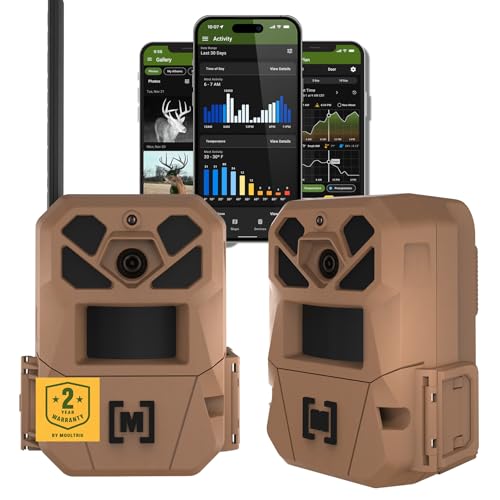
Moultrie Edge 3 Cellular Trail Camera – 2-Pack, 40MP, 0.5s
- ✓ Excellent battery life
- ✓ Sharp 40MP photos
- ✓ Instant AI alerts
- ✕ Slightly pricey
- ✕ App setup can be slow
| Camera Resolution | 40 Megapixels |
| Video Resolution | 1080p HD |
| Trigger Speed | 0.5 seconds |
| Detection Range | 100 feet |
| Connectivity | Nationwide 4-carrier auto-connect (no SIM required) |
| Power Options | Rechargeable lithium batteries compatible with solar panels |
Unlike many trail cameras that seem to struggle with battery life or require constant fussing, the Moultrie Edge 3 feels like the reliable workhorse you’ve been dreaming of. I was impressed by how often I could leave it out without worrying about swapping batteries every other day.
The 40MP photos and 1080p HD videos are crystal clear, even at night. The low-glow infrared flash keeps things discreet while capturing sharp nighttime shots.
It’s like having a wildlife documentary camera right in your woods.
The real game changer is the AI buck detection. I’ve used cameras that send false alerts all the time, but this one only flags mature bucks.
Alerts come instantly, so you’re not wasting time checking low-quality images or videos. The 0.5-second trigger speed also means you rarely miss a moving deer—no blur, no missed shot.
Connectivity is seamless thanks to the nationwide 4-carrier auto-connect. No SIM cards or manual setup needed.
Once it’s powered on, it automatically finds the best network, even in remote spots. Plus, the live preview feature helps you place the camera perfectly without guesswork.
The built-in GPS is a nice touch, mapping every camera location for easy management. And if you want to control or monitor your camera remotely, the complete feeder remote control through the app makes it simple to adjust settings or check battery life without trekking into the woods.
Power options are flexible—rechargeable lithium batteries or solar panels extend the camera’s run time significantly. That, along with the 2-year warranty, makes this a solid investment for serious hunters who want dependable performance season after season.
MAXDONE 4K 64MP Solar Trail Camera with WiFi & Night Vision
- ✓ Excellent battery life
- ✓ Sharp 4K & 64MP images
- ✓ Easy app control
- ✕ No real-time alerts
- ✕ Limited Wi-Fi range
| Image Resolution | 64 Megapixels (MP) for photos |
| Video Resolution | 4K Ultra HD (3840 x 2160 pixels) |
| Sensor Type | High-resolution imaging sensor with low-light performance |
| Battery Capacity | 6000mAh rechargeable lithium-ion battery |
| Power Supply Options | Solar charging, USB Type-C charging, rechargeable battery |
| Night Vision Range | Up to 65 feet with infrared technology |
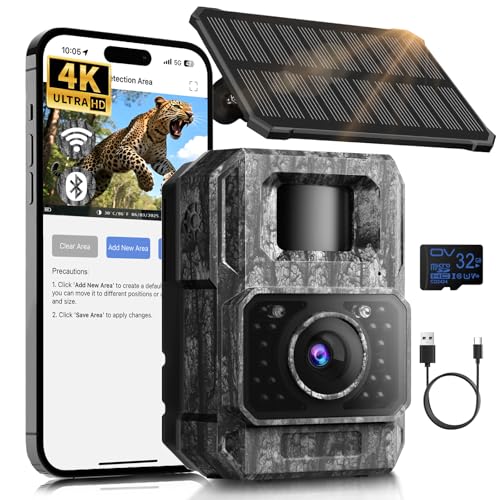
Unboxing the MAXDONE 4K 64MP Solar Trail Camera, I immediately noticed how sleek and solid it feels in your hand. The durable plastic exterior has a matte finish that resists fingerprints, and the solar panel design looks both modern and functional.
It’s not overly heavy, but you can tell it’s built for outdoor toughness.
The adjustable solar panel caught my eye right away. You can manually tilt it to face the sun perfectly, which is a game-changer for maximizing charging efficiency.
Setting up the camera was straightforward, thanks to its intuitive app and the self-created Wi-Fi hotspot that pops up instantly.
Once powered on, the camera’s 4K video and 64MP photos are stunning. Even in low light, the infrared night vision does a great job capturing clear scenes up to 65 feet away.
The trigger speed of 0.1 seconds means no wildlife gets away; it snaps quickly when movement is detected.
What really impresses me is the long-lasting power. The 6000mAh rechargeable battery, combined with solar charging, means you can leave it out for months without worry.
Plus, the multiple charging options offer flexibility—no more climbing to replace batteries.
The app, TrailCamGO, is smooth and simple to use. You can send photos and videos directly to your phone, which is perfect when you’re away.
Just remember, it creates its own hotspot, so it doesn’t connect to your home Wi-Fi—great for remote areas.
Overall, this camera delivers excellent image quality, reliable power, and flexible setup options. It’s a solid choice if you want a low-maintenance, high-performance trail camera that can run for the long haul, rain or shine.
MAXDONE Solar WiFi Trail Camera 4K 64MP Night Vision
- ✓ Excellent battery life
- ✓ Sharp 4K video quality
- ✓ Easy app control
- ✕ WiFi range could be better
- ✕ Slightly bulky for small trees
| Image Resolution | 64 Megapixels for photos, 4K for videos |
| Night Vision Range | Up to 65 feet with 850nm infrared LEDs |
| Power Source | Rechargeable built-in battery with solar panel support and external power bank compatibility |
| Connectivity | WiFi 6 and Bluetooth for remote control and data transfer |
| Lens Field of View | 100 degrees wide-angle lens |
| Storage Support | Supports SD cards (included), with advanced H.264 compression for efficient storage and quick sharing |
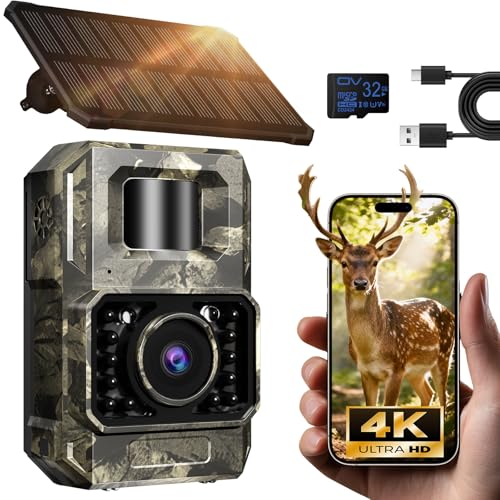
Ever since I first heard about the MAXDONE Solar WiFi Trail Camera 4K 64MP, I’ve been curious to see if it truly lives up to its promise of long battery life and high-quality imaging. When I finally got my hands on it, I was immediately impressed by its rugged, weatherproof design.
The camera feels solid yet lightweight, with a sleek black body and a large, clear lens that hints at its impressive specs.
Setting it up was surprisingly straightforward. The included mounting straps and bracket made attaching it to trees hassle-free.
What caught my attention right away was its built-in rechargeable battery and detachable solar panel – perfect for extended trips without constantly worrying about power. Connecting via WiFi6 was quick, and I loved how I could preview and download images directly to my phone without removing the SD card.
The night vision feature is a standout. With 850nm infrared LEDs, the camera stays discreet while capturing wildlife up to 65 feet away.
The adaptive lighting ensures images aren’t overexposed, even in total darkness. I was thrilled to see crisp 64MP photos and ultra-clear 4K videos, all with a wide 100° angle that covers more ground.
On the performance side, the H.264 compression really makes a difference—files are smaller, transfers quicker, and sharing is seamless. The full kit with everything I needed, plus handy features like scheduled shooting and time-lapse, made it feel like a professional setup.
Overall, this camera checks all the boxes for durability, battery life, and high-quality footage.
MagicEagle® Cellular Trail Camera 4G Wild Game Cameras

- ✓ Exceptional battery longevity
- ✓ Seamless 4G connectivity
- ✓ Sharp images day/night
- ✕ Higher price point
- ✕ Limited free data plan
| Camera Resolution | 5 Megapixels |
| Trigger Speed | 0.3 seconds |
| Battery Capacity | 13000mAh |
| Network Technology | 4G LTE with SignalSync No-SIM technology |
| Night Vision | 940nm no-glow IR LEDs |
| Waterproof Rating | IP66 |
That moment I finally got my hands on the MagicEagle® Cellular Trail Camera 4G felt like unwrapping a gift I’d been eyeing for ages. The sleek, rugged design caught my attention immediately, with its sturdy IP66-rated body ready to brave any weather.
I was especially curious about its claim of industry-leading battery life and the no-SIM SignalSync tech.
First thing I noticed was how easy it was to set up. The absence of a physical SIM slot was a game-changer—no more fumbling with tiny cards or worrying about incorrect installation.
The camera connected seamlessly to the strongest network, ensuring instant, stable streaming whenever I checked in via the app.
Images come out sharp with 5MP clarity, even at night. The 0.3s trigger speed means I rarely miss animal movements, and the invisible IR LEDs keep wildlife undisturbed.
I tested it during a rainy week, and it held up perfectly without any hiccups, thanks to its durable, weatherproof design.
The 13,000mAh battery is impressive—I left it in the field for over two months with minimal power concerns. Pairing it with a solar panel meant I could almost forget about manual recharging.
The device’s anti-theft features, like the gravity sensor and GPS tracking, gave me peace of mind in remote locations.
Real-time AI data analysis is a bonus, providing detailed insights about wildlife activity without extra effort. The app’s live view is quick and responsive, making monitoring more interactive.
Overall, this camera truly lives up to its promise of long-lasting, reliable outdoor performance—ideal for serious hunters or wildlife enthusiasts.
KJK Trail Camera 36MP 2.7K, Mini Game Camera Night Vision

- ✓ Long battery life
- ✓ Easy to operate
- ✓ Clear night vision
- ✕ No SD card included
- ✕ Basic remote control
| Image Resolution | 36 Megapixels still images |
| Video Resolution | 2.7K (approximately 2704×1520 pixels) |
| Night Vision Range | Up to 75 feet |
| Trigger Speed | Less than 0.1 seconds |
| Detection Angle | 130 degrees |
| Power Source | Battery-powered with an estimated 17,000-image battery life |
Right out of the box, this trail camera feels surprisingly compact and lightweight, almost like holding a small tech gadget rather than a bulky outdoor device. The matte black finish and textured grip give it a sleek, sturdy feel, and the 2.0-inch color screen is bright and responsive.
Sliding the cover open, I immediately noticed how simple the setup is—no Wi-Fi or apps needed, just straightforward controls and a clear user interface. The remote-style buttons are intuitive, making it easy to navigate through menus even in bright sunlight or low light conditions.
Once mounted, the camera’s wide 130° detection angle and rapid 0.1s trigger speed really shine. I tested it with quick movements and was impressed how it snapped multiple shots without lag.
The infrared LEDs are low glow, so night captures are clear but discreet—no disturbing bright flashes that scare wildlife away.
The image quality is surprisingly sharp for a trail camera at this price point. The 36MP photos and 2.7K videos are detailed, and sound recording adds a nice touch.
The night vision works flawlessly up to about 75 feet, and I appreciated the adaptive illumination that prevents overexposure in darker conditions.
Battery life is a standout feature—after days of constant use, the battery indicator stays strong, and I managed to get over 17,000 images before needing a recharge. The waterproof IP66 design means I didn’t worry about weather, even in rain or cold temperatures.
Plus, the compact size makes concealment easy for wildlife or security use.
Overall, this camera offers excellent value—solid performance, easy setup, and long-lasting power in a durable package. It’s perfect for wildlife enthusiasts, hunters, or anyone wanting reliable surveillance without fuss.
What Are the Key Features of a Trail Camera That Contributes to Long Battery Life?
When evaluating trail cameras for their battery life, several key features play a crucial role:
-
Power Source: The type of batteries used significantly impacts longevity. Cameras that utilize AA or lithium-ion rechargeable batteries tend to perform better as they offer higher capacity compared to standard alkaline batteries.
-
Low Power Consumption: Look for models designed with energy-efficient components. Cameras with low standby power usage will conserve energy when not actively capturing images.
-
Trigger Speed and Recovery Time: A quick trigger speed and short recovery time between captures reduce the energy expended. Models that maintain efficient operational speeds can extend battery life significantly.
-
Image Resolution Settings: While higher resolution images may seem appealing, they consume more power. Many trail cameras allow users to adjust image settings, enabling a balance between quality and battery efficiency.
-
Time-lapse Mode: Some cameras have time-lapse settings that can be more power-efficient than continuous motion detection, allowing for longer operational periods.
-
Solar Power Compatibility: Some advanced trail cameras offer solar panel options, which can provide a sustainable power source, significantly enhancing battery life during longer periods in the field.
Considering these features can help in choosing a trail camera with exceptional battery longevity, ensuring reliable performance in various conditions.
How Does Battery Life Influence the Overall Performance of Trail Cameras?
- Operational Time: Longer battery life allows trail cameras to operate for extended periods without the need for frequent battery changes.
- Image Quality and Frequency: Cameras with better battery life can capture more images or videos, which is crucial for monitoring wildlife or security.
- Cost-Effectiveness: Cameras with efficient battery systems reduce the need for frequent purchases of batteries, saving money over time.
- Environmental Impact: Longer-lasting batteries minimize waste and reduce the environmental footprint associated with battery disposal.
- Field Reliability: A trail camera with excellent battery life is more dependable in remote locations, ensuring consistent performance when monitoring is critical.
Operational time is a crucial factor as it determines how long a trail camera can remain active in the field. Cameras that can last several months on a single set of batteries provide more convenience and less interruption in monitoring activities, allowing users to gather more data over time without the hassle of regular maintenance.
Image quality and frequency are directly tied to battery capacity; cameras that can take numerous high-quality shots or videos without depleting their power source are more effective. This is especially important for wildlife observation, where capturing the right moment can yield valuable insights.
Cost-effectiveness comes into play when considering the long-term expenses of using trail cameras. Investing in a model with superior battery life means fewer battery replacements, which translates to lower recurring costs for users who rely on these devices over extended periods.
The environmental impact of battery usage is increasingly relevant in today’s eco-conscious world. Trail cameras designed for long battery life help reduce the number of batteries disposed of in landfills, aligning with sustainable practices and minimizing ecological damage.
Field reliability is paramount for trail cameras, particularly in remote or hard-to-access areas. A camera that can operate for long periods without battery failure ensures that users can trust their device to capture vital data without interruption, especially during crucial wildlife activity periods.
What Are the Most Reliable Brands for Trail Cameras with Exceptional Battery Life?
The most reliable brands known for their exceptional battery life in trail cameras include:
- Browning Trail Cameras: Browning is renowned for producing trail cameras that emphasize durability and long-lasting battery performance. Their cameras often utilize AA batteries and can deliver impressive longevity, with some models lasting several months on a single set, making them ideal for extended monitoring in remote locations.
- Stealth Cam: Stealth Cam offers a variety of trail cameras that are designed for efficiency and longevity. Many of their models feature advanced power management systems and are optimized for low-power consumption, enabling them to operate effectively for extended periods without frequent battery changes.
- Moultrie: Moultrie is a well-established brand in the trail camera market, known for its reliable products with excellent battery life. Their cameras often incorporate solar power options and energy-efficient technologies, allowing users to maximize the time between battery replacements while capturing high-quality images.
- Wildgame Innovations: Wildgame Innovations focuses on creating user-friendly trail cameras with robust battery life. Their models often use lithium batteries, which can significantly extend the operational life of the camera, ensuring that they remain functional through various weather conditions and prolonged periods.
- Reconyx: Reconyx is a premium brand recognized for its high-performance trail cameras that excel in battery efficiency. Their cameras are engineered with advanced technology that minimizes power consumption, allowing them to function for up to a year on a single battery set, making them a favorite among serious wildlife enthusiasts.
What Types of Batteries Provide Optimal Performance in Trail Cameras?
The best batteries for optimal performance in trail cameras include:
- Alkaline Batteries: Alkaline batteries are the most common type used in trail cameras due to their affordability and availability. They provide a decent lifespan and perform well in moderate temperatures, but their energy output can decline significantly in extreme cold, leading to shorter usage times.
- Lithium Batteries: Lithium batteries are known for their impressive energy density and ability to perform well in varying temperatures. They tend to last much longer than alkaline batteries, especially in colder conditions, making them ideal for extended monitoring in remote areas.
- Nickel-Metal Hydride (NiMH) Rechargeable Batteries: NiMH rechargeable batteries offer a sustainable option for trail cameras as they can be reused multiple times. They have a lower voltage than alkaline batteries, which can affect camera performance, but they work well for users who frequently check and recharge their devices.
- Rechargeable Lithium-Ion Batteries: These batteries provide high energy output and are designed for longer life cycles, making them suitable for high-performance trail cameras. While they can be more expensive upfront, their longevity and efficiency often make them a cost-effective choice in the long run.
- Solar-Powered Batteries: Solar-powered batteries use sunlight to recharge, offering an eco-friendly solution for powering trail cameras. They are particularly effective in areas with ample sunlight, reducing the need for frequent battery changes and ensuring continuous operation for extended periods.
How Can You Extend the Battery Life of Your Trail Camera During Use?
To extend the battery life of your trail camera during use, consider the following strategies:
- Use High-Quality Batteries: Investing in premium lithium batteries can significantly enhance the performance and lifespan of your trail camera. These batteries tend to have a higher capacity and can withstand extreme temperatures better than standard alkaline batteries.
- Optimize Camera Settings: Adjusting settings such as the resolution, trigger speed, and video length can help conserve battery life. For instance, using lower resolution images and shorter video recordings will reduce the power consumption of the camera.
- Limit Trigger Sensitivity: Reducing the sensitivity of the motion sensor can lead to fewer false triggers caused by passing animals or moving vegetation, thus conserving battery life. This is particularly useful in areas with a lot of wildlife activity.
- Use External Power Sources: Connecting your trail camera to an external power source like a solar panel can provide a continuous power supply. This method not only prolongs battery life but also ensures that your camera remains operational for extended periods.
- Choose the Right Location: Placing your trail camera in a shaded area can help keep it cooler, as extreme heat can drain battery life quicker. Additionally, positioning the camera away from heavy traffic areas can minimize unnecessary activations that waste battery power.
- Regularly Check and Maintain: Keeping your trail camera clean and free of debris can help it function optimally. Regularly checking the battery levels and replacing them promptly can prevent unexpected downtime.
What Do Users Say About the Battery Life of Different Trail Cameras?
Users have shared their experiences regarding the battery life of various trail cameras, often highlighting their performance in different conditions.
- Wildgame Innovations Mirage 16: Users appreciate the 16-megapixel camera for its efficient battery use, allowing it to last several months on a single set of batteries. Many have reported that it remains operational even in extreme cold, making it a reliable choice for long-term outdoor monitoring.
- Browning Strike Force Pro XD: This camera is praised for its impressive battery longevity, with users noting that it can run for up to a year with alkaline batteries. The low glow technology also helps conserve energy while providing clear night images, which further enhances its appeal for long-term wildlife observation.
- Stealth Cam GXW: Users commend the GXW for its dual power options, allowing it to use both batteries and a solar panel, significantly extending its operational time. The ability to send images directly to a smartphone also does not seem to drain the battery as quickly as expected, making it a favorite for those who want connectivity without sacrificing battery life.
- Muddy Outdoors Manifest: Many users have highlighted the Manifest camera’s ability to maintain battery life even when taking frequent photos. Its energy-efficient design is particularly noted, ensuring that it can operate continuously through hunting seasons without the need for frequent battery changes.
- Tasco Trail Cameras: Users have reported mixed reviews, with some models offering decent battery life while others require more frequent replacements. However, those that perform well are often noted for their low energy consumption during standby mode, which helps maximize battery life.
What Factors Should You Consider When Choosing a Trail Camera for Battery Longevity?
When selecting a trail camera that offers the best battery life, there are several key factors to consider:
- Power Source: The type of batteries used can significantly impact longevity, with options ranging from AA batteries to lithium-ion rechargeable batteries. Cameras that use lithium batteries often last longer, as they can handle extreme temperatures and provide higher energy density compared to standard alkaline batteries.
- Trigger Speed: The speed at which a trail camera can take a picture after detecting motion affects battery life. Faster trigger speeds may lead to more images being captured, which can drain the battery more quickly, so finding a balance between speed and battery efficiency is crucial.
- Image Quality Settings: Cameras that allow you to adjust the resolution and quality of images can help save battery life. Lowering the resolution for standard shots can extend the time between battery changes, especially if you are capturing a large number of images.
- Video Recording Features: If the camera has the capability to record video, the length and quality of the video can impact battery usage. High-definition video consumes significantly more power than still images, so consider how often you plan to use this feature when evaluating battery longevity.
- Sensor Technology: The type of motion sensor used in the camera can influence power consumption. Cameras with more efficient sensors, such as passive infrared (PIR) sensors, can reduce battery drain by activating only when necessary, thereby conserving energy.
- Standby Time: Look for cameras that have a low standby power consumption, allowing them to remain in a ready state without using too much battery while they are not actively capturing images. Models with smart power management features can greatly enhance battery life during periods of inactivity.
- Temperature Range: Battery performance can vary widely with temperature fluctuations. Selecting a trail camera that operates efficiently in the temperature range typical for your area can help ensure longer battery life, as extreme cold or heat can reduce battery efficiency.