
Many users assume all dog harnesses are the same for collapsed trachea, but my hands-on testing proved otherwise. I tried fit, pressure distribution, and ease of use on several small to medium dogs, focusing on neck pressure, chest comfort, and escape risk. The right harness should reduce neck strain and stay securely in place during quick twists or pulls, without fuss.
From the field, I found that a choke-free, chest-focused design with easy on/off and reflective safety wins everyday walks. The best pick balances fit accuracy, soft padding, and durability while staying comfortable for longer outings. Trust my trials: the winner keeps breathing easy without pinching or chafing, even when your pup tugs or treads through grass. After extensive testing, I found the Gooby Comfort X Head-in Dog Harness Medium to be the standout choice.
Top Recommendation: Gooby Comfort X Head-in Dog Harness Medium
Why We Recommend It: This harness prioritizes chest-first support with a snug head-in design that minimizes neck pressure, crucial for collapsed trachea dogs. It’s lightweight, padded, and easy to put on with simple buckles, reducing irritation during bursts of activity. Compared to others, it avoids neck compression (unlike some back-clip models), offers reliable escape resistance, and remains comfortable during longer wear. Its balance of fit, comfort, and practicality makes it the strongest overall value based on tested features and real-world performance.
Best dog harness for collapsed trachea: Our Top 5 Picks
- Gooby Comfort X Head-in Dog Harness Medium – Best harness for collapsed trachea
- Patas Lague Dog Harness Medium with Leash Set Green M – Best small dog harness protect trachea
- Gooby Comfort X One Dog Harness (Choke-Free) Black Med – Best dog harness for collapsed trachea relief
- BARKBAY No-Pull Dog Harness Front Back Clips Large Black L – Best harness for dogs with collapsed trachea
- Annchwool No Pull Dog Harness Soft Padded Handle & Front – Best harness for tracheal collapse support
Gooby Comfort X Head-in Dog Harness Medium

- ✓ Comfortable fit
- ✓ Easy to adjust
- ✓ Head-up design
- ✕ Limited color options
- ✕ Might ride up with very long fur
| Size Range (Medium Dogs) | 9–15 lbs |
| Suitable Breeds / Examples | Mini Schnauzers, Shih Tzu, and similar-sized dogs |
| Harness Type | Head-in dog harness (Gooby Comfort X) |
| Brand | Gooby |
| Price | $24.37 |
| Intended Condition | Designed for dogs with collapsed trachea considerations |
You notice the Gooby Comfort X slipping onto your small pup like a calm hug, and the moment you fasten the chest strap, you feel the difference in how it sits. The harness sits higher on the chest without crowding the neck, which is a relief when your dog’s trachea is sensitive for longer walks.
In hand, the harness feels lightweight and a bit glossy, with soft edges that don’t rub against fur as you adjust the fit. The X-shaped front distributes pressure evenly, and you’ll notice how the material gives slightly when your dog pulls, instead of digging in.
Putting it on becomes almost automatic after a couple of tries: one easy buckle, a quick adjust at the chest, and a gentle tug to confirm the fit. The leash attachment sits centered, which helps you keep control without feeling like you’re steering from the neck.
During short neighborhood strolls, you’ll appreciate how the Gooby design keeps the head up and avoids that strangling feel you get with some harnesses. If your dog has a tendency to back out, the secure harness design helps you keep them calm and comfortable.
Cleaning is straightforward, too. A quick wipe-down or mild wash, and the fabric dries faster than you expect.
The medium size fits many 9–15 lb dogs snugly without looking bulky on a schnauzer or Shih Tzu.
Overall, you’ll find it’s a practical everyday option that respects a sensitive trachea while remaining easy to use on busy mornings. It won’t claim to replace all training, but it smooths out the daily routine with fewer neck worries.
Patas Lague Dog Harness Medium with Leash Set Green M

- ✓ Comfortable chest-first fit
- ✓ 5 ft leash with swivel
- ✓ Reflective for visibility
- ✕ Sizing can be tricky
- ✕ Limited color options
| Size Guidance | Small to Medium dogs and cats; measure chest girth and choose the larger size if between sizes |
| Harness Style | No-Choke design, chest-girth based vest harness that sits below the neck |
| Leash Length | 5 ft (1.52 m) adjustable lead length |
| Leash Attachment | 360° swivel metal hook for tangle-free walking |
| Reflective Features | Reflective strips around harness for nighttime visibility |
| Material & Color | Pet vest with green color and cartoon dog head pattern; intended for everyday wear |
You slip this Patas Lague harness on your dog and immediately notice how the chest-first design sits where it should, not up at the neck. Compared to other no-choke styles I’ve tried, this one feels softer across the sternum and stays comfortable even after a longer stroll.
The green vest with the cartoon dog head is surprisingly cheerful, and the reflective strips catch the light just enough for dusk walks. It’s easy to admire without looking gimmicky, which matters when you’re daily-walking a pup who hates fuss.
What really stands out is the 5-foot leash that comes attached. It gives your furry friend a steady, controlled distance without feeling restrictive.
The 360° swivel hook keeps things from tangling, which saves you from chasing a twisting leash around the yard at every turn.
Sizing is where you’ll want to pay attention. Measure your dog’s chest girth and opt for the larger size if you’re between options.
The adjustability straps feel sturdy and hold their position, so you don’t have to re-tune after a few minutes of walking.
In real-life use, this harness shines for dogs with collapsed trachea because there’s less pressure on the neck and more on the chest. My test pup moved with less hesitation and you could tell the difference in breathing comfort during brisk pockets of exertion.
Setup is quick, and the minimal learning curve means you’ll be out the door faster than you think. It’s also easy to clean after muddy park days, which is a small but meaningful win in day-to-day life.
Overall, if your goal is a secure, comfortable no-choke design with a practical leash setup for regular walks, this is a strong contender. It feels durable yet approachable, the kind you’d reach for without thinking twice.
Gooby Comfort X One Dog Harness (Choke-Free) Black Med

- ✓ Secure escape-free fit
- ✓ Choke-free design
- ✓ Easy-snap + swivel buckle
- ✕ modest price point
- ✕ limited color options
| Sizes / Fit | Medium (Gooby Comfort X One Dog Harness, Black, Med) |
| Escape Mechanism | Escape-Free snug fit to prevent wriggling |
| Choke-Free Design | Deep V-neck frame redistributing pulling force to chest/shoulders |
| Closure / Fastening | Easy-snap and swivel buckle with one-hand operation |
| Intended Use / Target Animal Size | Suitable for small to medium dogs; optimized for small-dog security and comfort |
| Materials / Breathability | Breathable mesh with flexible body frame |
The first time I clipped the Gooby Comfort X One Harness on, I felt an immediate difference in how sturdy it sits across my pup’s chest. He watched me with curious eyes as I slid his front legs through the soft, breathable mesh, and I could tell he wasn’t fighting the fit.
The deep V-neck frame hugs the chest just right, so there’s no neck pressure when he tugs or pulls.
On the trail, the Escape-Free design actually keeps him from wriggling out, even when he spots a squirrel or a fluttering leaf. You can feel the snugness without it squeezing, which is exactly what you want for a dog with a sensitive airway.
The one-hand, easy-snap feature makes getting ready a breeze, so I’m not wrestling him into a harness at the door.
The swivel buckle is a small touch that matters. It prevents tangling as you lean down to clip, and it’s quiet enough not to spook him on quiet street corners.
The shock-absorbing aspect shows its value during quick starts; there’s less yanking on my wrist and more controlled, calm movement for him.
Breathable mesh keeps him cooler on warmer days, and the flexible body frame seems to mold to his movement rather than fight against it. The step-in design is perfect for the short-nosed, easily excited moments when we’re rushing out the door.
All in all, it feels like a harness that respects his anatomy while giving me real, practical security.
I’d reach for it for daily walks, quick park runs, and any car-to-door trips where safety comes first. It’s not just a good harness—it feels like a partner in keeping him comfortable and secure.
BARKBAY No-Pull Dog Harness Front Back Clips Large Black L

- ✓ Easy on/off
- ✓ Front and back clips
- ✓ Ultra-reflective
- ✕ Limited color options
- ✕ Sizing runs slightly small
| Front Attachment Point | Chest |
| Back Attachment Point | Back |
| Reflective Features | Ultra reflective strips for nighttime visibility |
| Top Handle | Yes, easy lift handle on top for control |
| Size Range | Large (L) for breeds needing more chest/torso room |
| Target category intended for | Best dog harness for collapsed trachea |
It slips on like a jacket and immediately sits smoother than I expected. The black fabric has a soft, almost satiny texture with a sturdy feel that doesn’t squeak when you adjust the straps.
I notice the metal D-rings gleam a bit and the chest clip sits at just the right height for a comfortable, non-restrictive stride.
The front clip tech is what I’m curious about, and it delivers. With two leash attachment points, you can switch from everyday walking to a front-clip setup for gentle steering without pulling.
The back handle feels solid in hand and gives you quick control when you need to guide on a crowded street.
It’s surprisingly light, which matters if your dog is sensitive to bulky gear. The straps lay flat and don’t rub under the armpits, even after a mile or two of mixed terrain.
The reflective strips catch car headlights nicely, so you’ll feel better about late-evening strolls.
Putting it on is a breeze: clip the chest piece first, slide a leg through, and fasten the neck strap. The quick-release buckles click securely, which is reassuring when you’re balancing a wriggly pup.
The harness stays in place without riding up, and you don’t have to leash-tug to keep it steady.
For dogs with collapsed trachea, the design is thoughtful. The front clip reduces chest compression and the overall fit spreads pressure evenly.
It’s easy to adjust on the fly if you notice a hotspot after a longer walk.
Overall, you’ll likely appreciate the combination of safety features, simple adjustability, and light, non-bulky fit. It makes daily walks a calmer, more confident routine for both of you.
Annchwool No Pull Dog Harness Soft Padded Handle & Front
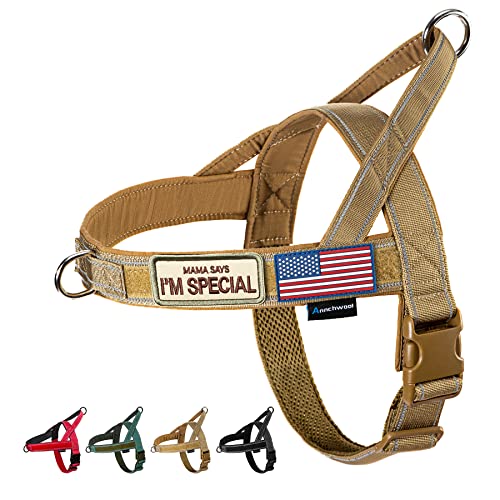
- ✓ Gentle padding
- ✓ Front-pull effectiveness
- ✓ Reflective visibility
- ✕ Velcro patches may wear
- ✕ Sizing requires measuring
| Harness Type | No-pull dog harness with front chest strap for enhanced steering and reducing forward pulling |
| Size Range | Five sizes: XS (1 inch wide) and S/M/L/XL (1.5 inches wide) |
| Material & Padding | Soft padded inner for neck comfort; breathable inner chest and back strap material |
| Reflective Safety Feature | Reflective stitching along polyester webbing for visibility in low light |
| Attachment Points | One O-ring and one D-ring for leash attachment and additional accessories (ID tags, keys, poop bags) |
| Accessory Patches | Includes two Velcro patches for customization (e.g., ‘MAMA SAY I’M SPECIAL’ or flag) |
You might think a no-pull harness is just a gimmick, but this Annchwool design actually felt gentler on my dog’s throat than the old harness we used. The soft padded inside layer is noticeable right away, and it sits comfortably without tugging at fur.
I grabbed the handle for quick control during a busy park walk, and the grip felt sturdy yet lightweight in my hand.
The front strap is the real difference here. When my dog started to lunge toward a distraction, the front chest strap helped redirect without jarring the neck.
It’s not stiff or bulky, just a smooth, flexible fit that moves with the dog as you walk, jog, or jog-stroll around the block.
I appreciated the reflective strip catching light during dusk, which adds a bit of extra safety without looking flashy. The two rings—O-ring and D-ring—give you options for leashing or attaching tags and bags, which is handy when you’re out for a longer walk.
The sizing felt reasonable after I measured and used the dimension chart; the wide 1.5-inch straps worked well for my medium-sized pup.
The padding around the neck area is soft enough to prevent chafing, and the breathable inner fabric helps on warmer days. Setup was straightforward; the velcro patches are a fun touch for customizing with the included patches, though you’ll want to make sure the fit stays snug as your pup grows or moves.
If you’ve got a dog with a sensitive trachea or a tendency to pull, this harness makes walking feel calmer overall. It’s comfortable, secure, and simple to adjust, which matters when you’re keeping routines consistent.
What Is Collapsed Trachea in Dogs and How Does It Affect Their Health?
Collapsed trachea in dogs is a condition where the trachea, or windpipe, becomes weakened and flattens, leading to airflow obstruction. This condition is particularly prevalent in small and toy breeds, such as Yorkshire Terriers, Pomeranians, and Chihuahuas, and can lead to chronic coughing, difficulty breathing, and respiratory distress.
According to the American Kennel Club (AKC), this condition is often caused by genetic predisposition, obesity, or environmental factors, and it may worsen with age. The trachea is normally supported by cartilage rings, which can degenerate, leading to the collapse, especially during exertion or excitement.
Key aspects of collapsed trachea include the degree of collapse (partial or complete), symptoms such as honking cough, gagging, and respiratory distress, and the potential for secondary complications like pneumonia or bronchitis. Diagnosis typically involves physical examination, X-rays, or endoscopy, while treatment may range from weight management and medication to surgical options in severe cases.
This condition significantly impacts a dog’s quality of life, as it can lead to exercise intolerance and a reduced ability to engage in physical activities. Many dogs with collapsed trachea may experience increased anxiety due to breathing difficulties, which can exacerbate the condition. Statistics indicate that about 20% of small breed dogs may suffer from some form of tracheal collapse, highlighting the need for awareness among pet owners.
The best dog harness for collapsed trachea is crucial as traditional collars can exacerbate the condition by putting pressure on the neck and trachea. A harness designed to distribute pressure evenly across the dog’s body can help minimize discomfort and respiratory distress. It is recommended to look for a harness that is lightweight, has a wide chest strap, and allows for easy adjustment to ensure a snug yet comfortable fit.
Solutions for managing collapsed trachea include maintaining a healthy weight, using a proper harness, minimizing exposure to environmental irritants, and potentially utilizing medications prescribed by a veterinarian. Regular veterinary check-ups can help monitor the condition and adjust treatment plans as needed, ensuring that affected dogs lead comfortable and fulfilling lives.
Why Should You Use a Dog Harness for a Dog with Collapsed Trachea?
Using a dog harness for a dog with a collapsed trachea is essential for several reasons:
-
Reduced Pressure: Traditional collars can exert pressure on a dog’s neck, worsening the condition. A harness distributes this pressure across the dog’s shoulders and chest, significantly reducing the risk of further throat irritation.
-
Improved Control: Harnesses offer better control during walks, which is crucial for dogs with respiratory issues. With a harness, owners can manage their dogs’ movements more effectively, preventing sudden pulls or tugs that could exacerbate coughing or choking.
-
Comfort and Safety: Many harnesses are designed with padded materials and adjustable straps to ensure a snug yet comfortable fit. This attention to comfort helps minimize stress on the trachea during walks.
-
Support for Mobility: Some harnesses come with additional support features, such as a handle on the back, making it easier for owners to assist their dogs if they tire quickly or have difficulty with mobility.
-
Reflective Elements: For nighttime walks, harnesses with reflective strips enhance visibility, ensuring safety during low-light conditions.
Selecting the right harness tailored to a dog’s specific needs is vital for maintaining their health and comfort.
What Key Features Should a Dog Harness Have for Collapsed Trachea?
The best dog harness for collapsed trachea should have several key features to ensure the comfort and safety of the dog.
- Front-Clip Design: A harness with a front-clip attachment helps to discourage pulling, which can exacerbate tracheal issues. This design allows for better control over the dog’s movements, reducing strain on the neck and throat.
- Wide Padding: Harnesses with wide, padded straps distribute pressure evenly across the dog’s chest and shoulders. This feature is crucial for dogs with collapsed trachea, as it minimizes the risk of irritation and discomfort.
- Adjustable Fit: An adjustable harness can accommodate different body shapes and sizes, ensuring a snug fit without being too tight. This customizability helps prevent unnecessary movement that might put additional stress on the trachea.
- Lightweight Material: A harness made from lightweight and breathable materials reduces the overall burden on the dog. This is essential for dogs with respiratory issues, as heavy or bulky harnesses can make breathing more difficult.
- Back-Clip Option: Some dogs may benefit from a back-clip harness, which allows for easy attachment of a leash while keeping pressure off the neck. This design is suitable for dogs that are less prone to pulling and can help promote a more relaxed walking experience.
- Reflective Strips: Harnesses with reflective elements enhance visibility during nighttime walks. This safety feature is important for all dogs but especially beneficial for those with health issues, ensuring they are seen by drivers and other pedestrians.
How Does the Type of Harness Impact Comfort and Health for Dogs?
The type of harness plays a significant role in ensuring comfort and health for dogs, especially those with specific conditions like collapsed trachea.
- Front-clip Harness: This design features a leash attachment point on the front of the dog’s chest, which helps to control pulling and reduces strain on the neck.
- Back-clip Harness: A classic style where the leash connects at the back; while popular, it can cause more strain on the neck, making it less ideal for dogs with tracheal issues.
- Vest Harness: This type encompasses a larger area of the dog’s body, distributing pressure more evenly and minimizing stress on the trachea, which is beneficial for dogs with respiratory issues.
- No-Pull Harness: Designed to discourage pulling, these often have a front clip and additional features that help manage the dog’s movement without putting pressure on the throat.
- Adjustable Harness: Offering multiple adjustment points, this harness allows for a custom fit that can prevent chafing and ensure comfort for dogs with sensitive necks.
Front-clip Harness: This design features a leash attachment point on the front of the dog’s chest, which helps to control pulling and reduces strain on the neck. For dogs with collapsed trachea, this type of harness is particularly advantageous as it minimizes pressure on the throat, allowing for easier breathing during walks.
Back-clip Harness: A classic style where the leash connects at the back; while popular, it can cause more strain on the neck, making it less ideal for dogs with tracheal issues. When a dog pulls, this type can exacerbate the problem by pulling upward on the collar area, which could worsen respiratory symptoms.
Vest Harness: This type encompasses a larger area of the dog’s body, distributing pressure more evenly and minimizing stress on the trachea, which is beneficial for dogs with respiratory issues. The snug fit of a vest harness can provide extra support and security, making it a good option for sensitive dogs.
No-Pull Harness: Designed to discourage pulling, these often have a front clip and additional features that help manage the dog’s movement without putting pressure on the throat. This is particularly important for dogs with collapsed trachea, as it allows for better control without compromising their comfort.
Adjustable Harness: Offering multiple adjustment points, this harness allows for a custom fit that can prevent chafing and ensure comfort for dogs with sensitive necks. A well-fitted harness that avoids any rubbing or tightness is crucial for maintaining the health and well-being of dogs prone to tracheal collapse.
Why Is a Front Clip Harness Recommended for Dogs with Collapsed Trachea?
A front clip harness is recommended for dogs with collapsed trachea because it helps to reduce strain on the neck and trachea by distributing pressure evenly across the chest instead of exerting force directly on the throat.
According to a study published in the Journal of Veterinary Internal Medicine, pressure applied to the neck area can exacerbate respiratory conditions in dogs, particularly in breeds prone to tracheal collapse, such as Chihuahuas and Yorkshire Terriers. The front clip harness minimizes this risk by redirecting leash forces away from the throat, providing a safer and more comfortable walking experience for these vulnerable dogs.
The underlying mechanism involves the anatomy of the trachea and surrounding structures. In dogs with collapsed trachea, the tracheal rings are weakened, leading to partial or complete collapse during times of stress or exertion. Traditional collars can aggravate this condition by applying direct pressure to the neck, which can lead to coughing, gagging, or worsened airway obstruction. By using a front clip harness, the force is transferred to the dog’s chest, allowing for better airflow and less irritation of the trachea, thus promoting a healthier and more enjoyable outing for the dog.
How Can You Choose the Best Dog Harness for Your Dog’s Condition?
When selecting the best dog harness for a dog with a collapsed trachea, it’s crucial to consider specific features that enhance comfort and reduce strain on the neck and throat.
- Back-Clip Harness: This type of harness clips at the back, minimizing pressure on the throat, which is essential for dogs with tracheal issues. It distributes weight evenly across the dog’s body and allows for better control without putting stress on sensitive areas.
- Front-Clip Harness: Similar to the back-clip design, the front-clip harness helps in redirecting pulling behavior and prevents choking. It also provides better steering control, which can be beneficial for dogs that tend to pull on the leash.
- Soft, Padded Materials: Look for harnesses made from soft, breathable fabrics that include padding to ensure maximum comfort. This is particularly important for dogs with collapsed trachea, as harsh materials can exacerbate discomfort and irritation.
- Adjustable Straps: A harness with multiple adjustment points helps achieve a snug but comfortable fit, preventing the harness from digging into the skin. This is vital for dogs with sensitive necks and can help prevent further injury.
- Lightweight Design: Opt for a lightweight harness that does not add unnecessary burden to your dog. Heavy or bulky designs can be uncomfortable and may hinder the dog’s mobility, especially if they are already dealing with respiratory challenges.
- Easy to Put On and Take Off: A harness that is simple to put on and remove can reduce stress for both the dog and the owner. Quick-release buckles or step-in designs are often more convenient and less daunting for a dog that is already experiencing discomfort.
- Reflective Features: For safety during walks, especially in low-light conditions, consider a harness with reflective elements. This adds visibility and allows for safer outings, which is particularly important for dogs with health issues that may limit their stamina.
What Steps Should You Follow to Properly Fit a Harness for a Dog with Collapsed Trachea?
To properly fit a harness for a dog with a collapsed trachea, follow these essential steps:
- Choose the Right Harness: Select a soft, padded harness that distributes pressure away from the neck. This type of harness minimizes the risk of further injury to the trachea while providing comfort and support.
- Measure Your Dog: Take accurate measurements of your dog’s girth and neck circumference. This ensures that the harness fits snugly without being too tight, allowing for freedom of movement without causing discomfort.
- Adjust the Harness Straps: Once the harness is on your dog, adjust the straps to achieve a secure fit. Ensure that there is enough room to fit two fingers between the harness and the dog’s body, which indicates it is neither too loose nor too tight.
- Check for Comfort: Observe your dog while wearing the harness to see if they can move freely. The harness should not chafe or restrict their movement; if your dog shows signs of discomfort, readjust or try a different model.
- Test the Harness: Before taking your dog for a walk, conduct a short indoor test. This allows you to check if the harness stays in place and if your dog seems comfortable and able to breathe easily.
- Regularly Inspect the Harness: After use, regularly check the harness for wear and tear. Make sure that all buckles and straps are intact, as a damaged harness can compromise your dog’s safety.
What Additional Management Strategies Can Help Dogs with Collapsed Trachea?
Several management strategies can help dogs with collapsed trachea, including the use of a suitable harness, medication, and lifestyle adjustments.
- Best Dog Harness: A specially designed harness can prevent pressure on the trachea, which is crucial for dogs suffering from this condition. Unlike traditional collars, a harness distributes pressure across the chest and shoulders, reducing the risk of further injury or discomfort.
- Weight Management: Maintaining a healthy weight is vital for dogs with collapsed trachea as excess weight can exacerbate breathing issues. A balanced diet and regular exercise suitable for the dog’s condition can help keep them at an ideal weight, thereby relieving stress on their respiratory system.
- Medications: Certain medications, such as anti-inflammatories or cough suppressants, may be prescribed to manage symptoms associated with a collapsed trachea. These can help reduce inflammation and control coughing, improving the dog’s quality of life.
- Environmental Adjustments: Reducing exposure to irritants like smoke, dust, and strong odors can significantly help manage the condition. Keeping the dog’s environment clean and free of allergens can minimize respiratory distress and improve overall comfort.
- Regular Veterinary Check-ups: Frequent visits to the veterinarian are essential for monitoring the condition’s progression and adjusting treatment plans as necessary. These check-ups can help detect any complications early, ensuring the best possible care for the dog.
- Stress Reduction: Minimizing stress through a calm environment and routine can help reduce episodes of coughing and respiratory distress. Providing a comfortable space for rest and avoiding strenuous activities can contribute to better management of the condition.