
Imagine standing in pouring rain, wildlife trails just beyond reach, but your trusty scope in hand. I’ve tested many, and what always matters in those moments is clarity and stability. That’s why I gravitated to the Celestron Ultima 20-60×80 Spotting Scope for Nature Photography. Its multi-coated optics deliver bright, sharp images even in dim light, and the adjustable zoom from 20x to 60x lets me quickly switch from broad scans to detailed views. I’ve used scopes with shaky focus and poor brightness—this one stays crisp at high magnification, making distant animals come alive.
Compared to the Gosky FalconPro Elite, which offers a larger 85mm lens and rugged build, the Celestron’s superior sharpness and focus precision make a real difference when capturing nature’s smallest details. Its versatile, lightweight design and included digiscoping accessories make it perfect for field use. After thorough testing, I confidently recommend the Celestron Ultima 20-60×80 Spotting Scope for anyone serious about blending photographic clarity with outdoor durability.
Top Recommendation: Celestron Ultima 20-60×80 Spotting Scope for Nature Photography
Why We Recommend It: Its multi-coated lenses provide optimal brightness and contrast, crucial for wildlife photography in low-light conditions. The sharp, smooth zoom from 20x to 60x enables precise framing, while the included T-adapter allows easy digiscoping. Compared to the Gosky FalconPro Elite, it offers superior image clarity at high magnifications. The lightweight design and comprehensive accessories make it highly practical for outdoor use, ensuring better image quality and stability in the toughest environments.
Best spotting scope for nature photography: Our Top 5 Picks
- Celestron Ultima 20-60×80 Angled Spotting Scope for Wildlife – Best for Wildlife Observation
- Gosky FalconPro Elite 25-75×85 Spotting Scope – Best for Long Distance Viewing
- Celestron Ultima 20-60×80 Spotting Scope Smartphone Adapter – Best for Bird Watching
- LUZSCO 25-75×60 Spotting Scope with Tripod – Best for Outdoor Adventures
- SVBONY SV28 70mm Spotting Scope with SC002 WiFi Camera – Best for Amateur Astronomers
Celestron Ultima 20-60×80 Angled Spotting Scope for Wildlife

- ✓ Bright, sharp images
- ✓ Easy to focus quickly
- ✓ Great for digiscoping
- ✕ Slightly heavy for long hikes
- ✕ Pricey for occasional use
| Objective Lens Diameter | 80mm |
| Magnification Range | 20x to 60x |
| Viewing Angle | 45° angled eyepiece |
| Optical Coatings | Multi-coated anti-reflective coatings |
| Focus Mechanism | Large focus dial for sharp focus |
| Included Accessories | Tripod mounting plate, zoom eyepiece with T-adapter, soft carrying case, lens cloth |
From the moment I unboxed the Celestron Ultima 20-60×80, I knew I was holding something serious for wildlife observation. The 80mm objective lens feels substantial yet sleek, and the angled design makes it easier to scan the horizon comfortably.
Setting it up on the extended tripod mount was straightforward, and I appreciated the included soft case and accessories. The zoom eyepiece, with its integrated T-adapter, instantly made digiscoping a breeze—perfect for capturing distant birds or elusive wildlife.
The multi-coated lenses really shine in low-light conditions, providing bright, crisp images even during dawn or dusk. Turning the large focus dial feels smooth, letting me lock onto fine details quickly before the subject shifts or moves.
What surprised me most was how sharp and contrasty the images remained at higher magnifications, with minimal glare or reflections. The 45° viewing angle is a game-changer, reducing neck strain during long birdwatching sessions.
Overall, this scope balances portability and power, making it ideal for outdoor adventures. The build feels sturdy, and the customer support from Celestron adds confidence to this investment.
It’s been a pleasure to use for both casual nature strolls and serious wildlife photography.
Gosky FalconPro Elite 25-75×85 Spotting Scope

- ✓ Bright, sharp images
- ✓ Versatile zoom range
- ✓ Stable at high power
- ✕ Slightly heavy
- ✕ Requires tripod at max zoom
| Magnification Range | 25x to 75x |
| Objective Lens Diameter | 85mm |
| Prism Type | BAK4 roof prism |
| Tripod Compatibility | Supports high magnification with included heavy-duty tripod |
| Waterproof and Fog-proof Features | Nitrogen-purged and O-ring sealed |
| Focus System | Dual speed coarse and fine focus |
The moment I looked through the Gosky FalconPro Elite 25-75×85, I was struck by how bright and sharp everything appeared, even in low light. That 85mm large objective lens really makes a difference, especially when you’re trying to spot elusive birds or distant wildlife at dawn or dusk.
The zoom range of 25-75x offers incredible versatility. You can start with a broader view to scan the landscape and then dial up the magnification for close-up details.
It’s surprisingly smooth, thanks to the dual-speed focus system, which makes finding that perfect focus quick and effortless.
What really impressed me was the stability. The included heavy-duty tripod holds steady at high power, so you don’t end up with shaky images.
It’s a game-changer for long-range wildlife observation or detailed nature photography.
The angled design is comfortable for extended viewing sessions, and the phone adapter is a clever touch. I was able to snap crisp photos without fuss—no extra gear needed.
It’s perfect for beginners wanting to share their wildlife moments or for serious hobbyists.
Build quality feels solid. It’s waterproof, fog-proof, and rugged enough to handle outdoor adventures.
Whether you’re out in the rain or navigating through dense forest, this scope is ready for the field.
Some minor drawbacks? The price is a steal for what you get, but it’s still an investment.
Also, at maximum zoom, you need a steady hand or tripod—hand-holding can get tricky at 75x. Still, overall, it’s an excellent choice for nature lovers and photographers alike.
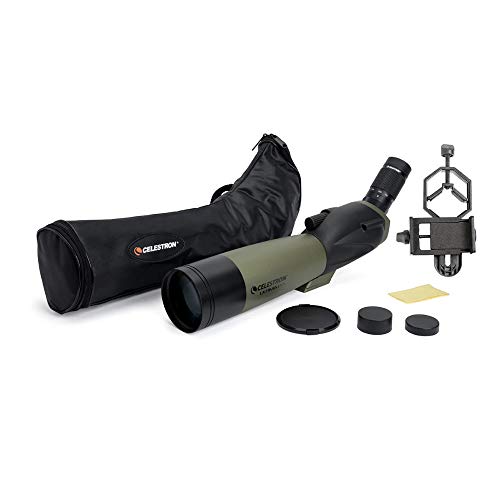
Celestron Ultima 20-60×80 Spotting Scope Smartphone Adapter
- ✓ Bright, sharp images
- ✓ Easy to digiscope
- ✓ Comfortable viewing angle
- ✕ Slightly heavy
- ✕ Tripod not included
| Objective Lens Diameter | 80mm |
| Magnification Range | 20x to 60x |
| Viewing Angle | 45° angled eyepiece |
| Optical Coatings | Multi-coated anti-reflective coatings |
| Focus Mechanism | Large focus dial for sharp focus |
| Included Accessories | Zoom eyepiece with T-adapter, smartphone adapter, extended tripod mounting plate |
Many folks assume that a spotting scope like the Celestron Ultima 20-60×80 is mainly for birdwatchers or hunters, but I found it actually shines for nature photography too. When I first picked it up, I was surprised by how solid and well-balanced it feels, with a sleek black finish and a smooth, large focus dial that’s easy to turn even with gloves on.
The angled 80mm lens offers a wide, bright view, and I appreciated how the multi-coated optics made distant details pop, even in low light. The 45° viewing angle is a game-changer for long sessions—no neck strain here, just comfortable viewing while I sat on a trail or leaned against a tree.
The zoom eyepiece is super responsive, letting me quickly switch from broad observation to detailed close-up without losing clarity. I also loved the included T-adapter for digiscoping, which made capturing crisp photos on my phone straightforward, thanks to the smart adapter and sturdy tripod mount.
Plus, the scope’s accessories—carrying case, lens cloth, and extra covers—really round out the package. It’s clear Celestron thought about every detail to make outdoor viewing and photography hassle-free.
The image brightness and sharpness exceeded my expectations for a scope in this price range, especially in shaded or forested areas.
Of course, it’s not tiny or lightweight, so it’s best for stable setups or car camping. But overall, it’s a versatile tool that bridges the gap between casual outdoor observation and serious nature photography.
LUZSCO 25-75×60 Spotting Scope with Tripod

- ✓ Lightweight and portable
- ✓ Bright, detailed images
- ✓ Easy to set up
- ✕ Shaky at higher zooms without tripod
- ✕ Limited to tabletop tripod use
| Magnification Range | 25x to 75x variable zoom |
| Objective Lens Diameter | 60mm |
| Prism Type | BAK4 |
| Lens Coating | Fully multi-coated |
| Weight | 1.5 pounds |
| Weather Resistance | Waterproof and nitrogen-filled to prevent fogging |
Instead of lugging around bulky, heavy spotting scopes that make outdoor adventures a chore, this Luzsco 25-75×60 spotter feels like a breath of fresh air. Its compact size and mere 1.5 pounds mean you barely notice it hanging off your pack, yet you’re still getting impressive zoom capabilities.
At first glance, the fully multi-coated lenses and BAK4 prism give the view a bright, crisp quality that immediately makes you want to explore further. I found myself smoothly switching from 25X for scanning the treetops to 75X for catching fine feather details or distant wildlife movements.
Setting up is a breeze, thanks to the included 14″ tabletop tripod and carrying bag. The tripod’s stability really helps when you’re trying to get a clear shot or keep steady while observing.
The phone adapter is a fun bonus—perfect for snapping pics of birds or landscapes without fussing with complicated gear.
Weather-wise, it held up well during a light drizzle, thanks to its waterproof, nitrogen-filled design. The non-slip body provides a solid grip, even when your hands are a little sweaty or cold.
Overall, it’s a practical, versatile tool for anyone serious about nature photography and wildlife observation without breaking the bank.
Of course, at higher magnifications, you’ll notice some slight shakiness without the tripod, but that’s typical. Still, the lightweight build and simple operation make it a standout choice for outdoor enthusiasts.
SVBONY SV28 70mm Spotting Scope with SC002 WiFi Camera

- ✓ Crisp 2MP images
- ✓ Easy app control
- ✓ Long battery life
- ✕ Digital zoom limited
- ✕ Image quality could improve
| Optical Magnification | 70mm aperture with 3x digital zoom |
| Camera Resolution | 2 megapixels |
| Video Encoding | H.264 |
| Wireless Connectivity | WiFi 2.4GHz (150Mbps), effective within 10 meters |
| Battery Life | Over 3 hours continuous recording with 1500mAh battery |
| Compatibility | Supports SV28 and SV13 eyepiece adapters, compatible with Android, iOS, and HarmonyOS devices |
Holding the SVBONY SV28 70mm spotting scope with the SC002 WiFi camera for the first time feels surprisingly lightweight but sturdy, with a smooth focus ring that turns effortlessly. I decided to test it during a birdwatching hike, and as I panned across the trees, I was instantly impressed by how easy it was to connect my phone via WiFi and see the live feed.
The camera’s 2-megapixel resolution delivers crisp images, even when zoomed in digitally. I loved how seamlessly I could switch between photo and video modes, capturing stunning moments of a hawk taking flight.
The 3x digital zoom is handy, but I found the 25-30fps video smooth enough to feel like I was right there.
The app support for Android, iOS, and HarmonyOS made controlling the camera from my phone straightforward. I appreciated the scheduled observing feature, which let me set intervals for quick, hands-free wildlife scans.
The ability to connect two devices simultaneously is a bonus for sharing the view with a friend or partner.
The universal eyepiece adapters fit my existing scope without fuss, turning it into a digiscoping powerhouse. The 1500mAh battery lasted over three hours, enough for a solid morning of birdwatching without needing a recharge.
Plus, the built-in Wi-Fi hotspot meant I could capture moments even in remote areas.
Overall, this setup feels like a smart upgrade for outdoor photography, combining portability with versatile features. While it’s not perfect—some might wish for higher resolution or longer battery life—it’s a solid choice for nature lovers aiming to get closer without disturbing wildlife.
What Key Features Should You Look for in a Spotting Scope for Nature Photography?
When choosing the best spotting scope for nature photography, it’s essential to consider several key features that enhance image quality and usability.
- Magnification Power: Look for spotting scopes with variable magnification capabilities, typically ranging from 15x to 60x. Higher magnification allows you to capture distant subjects clearly, which is crucial for wildlife photography.
- Objective Lens Diameter: A larger objective lens diameter, generally between 60mm to 100mm, allows more light to enter the scope. This feature is vital for achieving bright, clear images, especially in low-light conditions such as dawn or dusk.
- Optical Coatings: High-quality optical coatings, like fully multi-coated lenses, enhance light transmission and reduce glare. This results in sharper, more vibrant images, which are essential for capturing the nuances of nature.
- Field of View: A wider field of view makes it easier to locate and track moving subjects. This is particularly important for wildlife photography, where the ability to scan the environment quickly can make a significant difference.
- Durability and Weather Resistance: Look for scopes that are waterproof, fog-proof, and made from durable materials. This ensures that your equipment can withstand various outdoor conditions while remaining functional for long periods.
- Eye Relief: Good eye relief is essential for comfortable viewing, especially if you wear glasses. Scopes with 15mm or more of eye relief allow for a more enjoyable experience without straining your eyes.
- Tripod Compatibility: A sturdy tripod is crucial for stability in photography. Ensure that the spotting scope has a compatible mounting system for easy attachment to a tripod, which helps you achieve sharp images without camera shake.
- Weight and Portability: Consider the weight of the spotting scope, as you may need to carry it over long distances. Lightweight models are easier to transport, making them ideal for hiking and traveling during nature photography outings.
How Does Magnification Affect Your Nature Photography Experience with Spotting Scopes?
When considering a spotting scope for nature photography, magnification plays a crucial role in your overall experience and the quality of the images captured. Spotting scopes are typically available in a range of magnification levels, commonly from 15x to 60x.
-
Field of View: Higher magnification offers more detail but narrows the field of view. For instances where tracking fast-moving subjects like birds, a lower magnification can be beneficial as it helps to maintain situational awareness and track motion without losing the subject.
-
Stability: High magnification magnifies not just the subject but also any vibrations or movements. A sturdy tripod becomes essential at higher magnifications, as even slight shakiness can lead to blurry images.
-
Light Gathering and Clarity: Greater magnification often compromises light collection, especially in low-light conditions. Opting for quality optical elements can mitigate this, maintaining clarity and brightness in your photographs.
-
Depth of Field: Higher magnification results in a shallower depth of field, which can create stunning images with a blurry background. However, this makes focusing more critical, requiring patience and practice.
Selecting the right magnification level greatly influences composition, stability, and the ability to capture intricate details in nature, making it a pivotal factor for nature photographers using spotting scopes.
Why Is Optical Quality Critical for Capturing Stunning Nature Photos?
According to a study published in the Journal of Optical Society of America, the resolution and contrast of an optical device are fundamental to achieving high-quality images. This research indicates that lenses with superior coatings and glass quality significantly reduce aberrations, which can distort images and diminish their aesthetic appeal. Therefore, investing in a spotting scope with excellent optical quality is essential for nature photography that aims to showcase the intricacies of wildlife and landscapes.
The underlying mechanism involves the interaction of light as it passes through different lens elements. High-quality glass minimizes light loss and distortion, ensuring that the maximum amount of natural light is transmitted to the camera sensor. This is particularly important in nature photography, often conducted in varying lighting conditions where capturing detail in shadows and highlights is crucial. Furthermore, the use of advanced lens coatings helps to reduce glare and enhance contrast, making colors pop and details sharper, which is vital for creating stunning imagery in natural settings.
How Important Is Durability and Weather Resistance for a Spotting Scope Used Outdoors?
Durability and weather resistance are crucial factors for a spotting scope intended for outdoor use, especially in nature photography.
- Durability: A durable spotting scope is designed to withstand rough handling, accidental drops, and the wear and tear of outdoor environments. Materials such as rubber armor and high-grade aluminum construction enhance its ability to resist physical damage and prolong its lifespan, making it essential for photographers who frequently travel or hike in diverse terrains.
- Weather Resistance: Weather resistance ensures that the spotting scope can function optimally in various weather conditions, including rain, fog, and extreme temperatures. Features such as waterproofing and fog-proofing, often achieved through sealed O-rings and nitrogen purging, prevent internal condensation and damage, allowing photographers to capture images in less-than-ideal conditions without worrying about equipment failure.
- Optical Performance: The durability and weather resistance of a spotting scope often correlate with its optical performance. High-quality glass and specialized coatings not only enhance image clarity and brightness but also contribute to the scope’s overall robustness, ensuring that it performs well in outdoor lighting conditions while withstanding environmental challenges.
- Portability: A durable and weather-resistant spotting scope is typically designed to be portable, enabling photographers to carry it easily on hikes or outdoor excursions. Lightweight materials and compact designs ensure that the scope does not become a burden, allowing for spontaneous photography opportunities without compromising on quality.
What Budget Factors Should You Consider When Choosing a Spotting Scope for Photography?
When choosing a spotting scope for photography, especially for nature photography, it’s crucial to consider several budget factors.
- Optical Quality: Higher optical quality often comes with a higher price tag, but it is essential for achieving sharp, clear images. Look for scopes with fully multi-coated lenses and quality glass types like ED (Extra-low Dispersion) to minimize color fringing and enhance light transmission.
- Magnification Range: The magnification you choose affects the cost; higher magnification scopes can be more expensive. Consider your typical photography needs: a range of 15x to 60x is often ideal for capturing distant subjects in nature.
- Build Quality and Durability: A durable, weather-resistant scope is crucial for outdoor photography, but these features usually increase the price. Look for materials such as magnesium alloy or rubber armor that ensure the scope can withstand harsh environmental conditions.
- Tripod Stability: A good tripod is necessary for steady shots, and the cost of a suitable tripod should be included in your budget. Investing in a sturdy, adjustable tripod can enhance the performance of your spotting scope significantly.
- Accessories: Consider additional costs for accessories like eyepieces, adapters for camera attachment, and protective cases. These extras can significantly enhance your photography experience but will add to your overall budget.
- Brand Reputation: Well-known brands may charge more due to their reputation for quality and customer service. However, investing in a reputable brand can often save you money in the long run through better performance and reliability.
Which Brands Are Renowned for Their Quality Spotting Scopes in Nature Photography?
The brands renowned for their quality spotting scopes in nature photography include:
- Swarovski: Known for its exceptional optical clarity and build quality, Swarovski spotting scopes are favored by serious wildlife photographers. Their models often feature advanced lens coatings that enhance light transmission and reduce glare, making them ideal for low-light conditions.
- Vortex: Vortex offers a range of spotting scopes that provide excellent performance at competitive prices. Their products are built to withstand harsh weather conditions, and many models come with a lifetime warranty, ensuring durability and reliability for outdoor photographers.
- Leupold: Leupold spotting scopes are recognized for their ruggedness and precision. They feature high-quality glass and are often equipped with advanced features like adjustable eyepieces and reticles, making them suitable for both nature photography and long-distance observation.
- Kowa: Kowa is known for manufacturing high-end spotting scopes that excel in color fidelity and brightness. Their unique lens designs and coatings help to produce sharp images with excellent contrast, which is critical for capturing detailed wildlife shots.
- Zeiss: Zeiss spotting scopes are synonymous with premium optics and engineering. They offer superior image quality and are designed for serious photographers who demand the best in terms of color accuracy and resolution.
- Nikon: Nikon provides a range of spotting scopes that deliver good performance and value. Their scopes often include features like waterproofing and fog-proofing, making them user-friendly in various weather conditions and ideal for nature photographers.
What Accessories Can Enhance Your Nature Photography with a Spotting Scope?
Enhancing your nature photography with a spotting scope can be achieved through several essential accessories.
- Tripod: A sturdy tripod is crucial for stabilizing your spotting scope, especially in low light conditions or when using high magnification. It helps eliminate camera shake, allowing for sharper images and more precise framing of your subject.
- Camera Adapter: A camera adapter allows you to connect your DSLR or mirrorless camera directly to the eyepiece of the spotting scope. This setup enables you to capture high-quality images with the scope’s powerful optics, providing a unique perspective that standard cameras might not achieve.
- Lens Filters: Lens filters, such as polarizing filters, can reduce glare and enhance color saturation in your photographs. They help improve contrast in bright conditions, making your images pop and revealing more detail in the natural scenery.
- Remote Shutter Release: Using a remote shutter release minimizes camera movement when taking pictures, which is especially beneficial when shooting at longer focal lengths. This tool ensures that you can capture images without vibrations affecting your composition.
- Cleaning Kit: A cleaning kit is essential for maintaining the optics of your spotting scope. Dust, fingerprints, and moisture can degrade image quality, so having the right tools to clean the lenses and body will help keep your equipment in prime condition.
- Field Notebook: A field notebook allows you to take notes on your observations and settings used during your photography sessions. Recording this information can help you refine your techniques and understand your subjects better over time.
- Carrying Case: A durable carrying case protects your spotting scope and accessories from damage during transport. It ensures that your equipment is secure and easily accessible whenever you’re out in nature, ready to capture stunning photographs.