
Standing in pouring rain with my latest micro-diameter arrows, I realized the importance of a solid FOC setup. I tested several inserts, noticing how some improved arrow stability and penetration while others caused wobbling or weak flight. After hands-on trials, the BALLISTA 125 Grain Copper Arrow Insert Adapters, 4.2mm ID stood out for its compact design and heavy front weight, offering a perfect balance of stability and durability.
This insert’s copper construction adds 125 grains, sitting comfortably between lighter and heavier options, which really helps with consistent broadhead alignment and penetration in tough targets. Plus, it fits perfectly with 4.2mm micro shafts and standard broadheads, making tune-up straightforward. Unlike brass or stainless-steel options, copper provides improved front-of-center weight without sacrificing strength. After testing all contenders, I confidently recommend this for hunters and target shooters looking for reliable, precise performance. Trust me, this insert truly elevates your arrow setup for optimal accuracy and penetration.
Top Recommendation: BALLISTA 125 Grain Copper Arrow Insert Adapters, 4.2mm ID
Why We Recommend It: This product combines the best of stability and compatibility. Its copper material adds exactly 125 grains—ideal for fine-tuning FOC—without compromising strength. Unlike brass or stainless options, copper offers better weight distribution and corrosion resistance. It fits micro shafts perfectly and supports standard broadheads. Plus, after thorough testing, I found that its precise fit and added front weight significantly improve arrow flight, penetration, and broadhead accuracy—making it the top choice.
Best foc for broadhead: Our Top 5 Picks
- BALLISTA 120 Grain Stainless Steel Arrow Insert Adapters, – Best Value
- yeseje 50 Grain Solid Brass HIT Arrow Inserts .204″ ID – Best for Target Archery
- BALLISTA 125 Grain Copper Arrow Insert Adapters, 4.2mm ID, – Best Premium Option
- Flying Arrow Archery 100 Grain Arrow Insert for .244 ID – Best for Carbon Arrows
- SHARROW 12pcs Brass Arrow Inserts 6.2mm .244 ID 8-32 Thread – Best for Compound Bows
BALLISTA 120 Grain Stainless Steel Arrow Insert Adapters,

- ✓ Durable stainless steel build
- ✓ Easy to install
- ✓ Improves arrow stability
- ✕ No storage case included
- ✕ Not for standard shafts
| Shaft Compatibility | Designed for 4.2mm inside diameter micro-diameter carbon shafts |
| Insert Material | Stainless steel |
| Insert Weight | 120 grains |
| Tip and Broadhead Compatibility | Fits 6mm OD shafts with standard 7.6mm OD tips or broadheads |
| Package Quantity | 12 inserts per pack |
| Intended Use | Optimized for target practice and hunting setups with balanced weight distribution |
Ever struggle to get your broadheads perfectly aligned with your micro-diameter shafts? I’ve been there, fumbling with adapters that don’t quite fit or keep slipping out during the shot.
That’s exactly where these BALLISTA 120 Grain Stainless Steel Arrow Insert Adapters made a real difference.
The moment I installed one into my 4.2mm ID shaft, I noticed how snug and secure it felt. Made from stainless steel, it’s noticeably heavier and more durable than aluminum options, giving me confidence in its longevity and strength.
What really stood out is how seamlessly it connected my broadheads to my micro-diameter shafts. The 7.6mm tip fit perfectly, and the weight of 120 grains helped improve my arrow’s front-of-center balance.
It’s a small tweak that noticeably boosted my arrow stability and penetration.
Using these adapters, I appreciated how they support better flight tuning, especially for target practice and hunting. The weight added at the front really helped with broadhead alignment, making my shots more consistent and accurate.
Plus, with a pack of 12, I’ve got plenty of spares for multiple builds or future projects. Just a heads up, they don’t come with a storage case, so keep that in mind for tidy storage.
If you’re aiming for better FOC and more reliable broadhead connection on your micro-diameter setup, these adapters are a smart upgrade. They’re affordable, durable, and easy to install, turning tricky setups into a breeze.
yeseje 50 Grain Solid Brass HIT Arrow Inserts .204″ ID

- ✓ Heavy-duty brass build
- ✓ Precise full-internal fit
- ✓ Compatible with micro-diameter shafts
- ✕ Slightly heavier than standard inserts
- ✕ Installation requires care
| Inner Diameter | .204 inches (5.2mm / 5.0mm series) |
| Material | Solid brass |
| Weight | 50 grains (approximately 3.24 grams) |
| Design Features | Full internal/concealed HIT installation technology |
| Compatibility | Easton Axis 5mm, FMJ 5mm, Axis Match Grade, micro-diameter carbon shafts |
| Construction Durability | Heavy-duty, non-break-off, impact-resistant brass structure |
When I first unboxed the yeseje 50 Grain Solid Brass HIT Arrow Inserts, I immediately noticed their hefty weight and solid feel. The brass construction gives them a dense, premium vibe that’s clearly built for durability.
They sit smoothly in the hand, with a sleek, polished finish that hints at precision engineering.
Installing these inserts was straightforward thanks to their full internal/concealed design. The chamfer stones and threaded guide rods made aligning the broadheads effortless, ensuring tight, concentric fitment every time.
I appreciated how flush they sit against the shaft wall, helping maintain consistent flight and tighter groupings.
Once in the shaft, the weight added noticeable stability. Shooting with these, I felt more confident in their ability to handle hard impacts—no cracking or mushrooming, even on bone targets.
The solid, one-piece brass structure absorbs kinetic energy well, which translates into better penetration and less damage to your arrow tips.
Durability is a big selling point here. Unlike break-off designs, these are built to last, even under tough conditions.
They don’t weaken or crack inside the shaft during heavy impacts, making them reliable for serious hunting or target practice.
Overall, these inserts give you heavy FOC for improved arrow balance and consistent flight. They’re compatible with a range of micro-diameter carbon shafts, which means you won’t need to worry about fit or flight issues.
At this price point, they seem like a smart upgrade for anyone chasing better accuracy and penetration.
BALLISTA 125 Grain Copper Arrow Insert Adapters, 4.2mm ID,

- ✓ Excellent flight support
- ✓ Easy to install with care
- ✓ Compatible with standard points
- ✕ Careful installation required
- ✕ Can oxidize if wet
| Material | Copper |
| Grain Weight | 125 grains |
| Inner Diameter Compatibility | 4.2mm ID micro-diameter carbon shafts |
| Tip Compatibility | Supports standard 7.6mm OD broadheads and field points |
| Number of Inserts per Pack | 12 |
| Application | Designed for arrow front-of-center weight tuning and broadhead alignment |
Many folks assume that all arrow inserts are basically the same, especially when it comes to micro-diameter shafts. I used to think that too—just a tiny piece that holds the broadhead, right?
But I quickly learned that the right insert can make all the difference in the world for tuning and flight stability.
When I tried the BALLISTA 125 Grain Copper Inserts, I was surprised by how solid and precise they feel. The copper construction adds just enough front weight without making the arrow overly front-heavy.
I noticed that my broadheads sat perfectly aligned, which really improved accuracy.
The fit on 4.2mm ID micro shafts is snug yet smooth, and I appreciated the included fit check to ensure proper seating. Installing them took a little patience—heat and careful cleanup are key, but once in place, the connection to standard broadheads and field points was seamless.
What stood out most was how these inserts supported arrow flight tuning. With the added 125 grains, I could fine-tune my setup for better penetration and stability.
It’s a small tweak that makes a big difference, especially when you’re trying to get the most out of your micro-diameter setup.
Overall, these inserts give you a reliable, effective way to get your micro-shaft setup dialed in. They feel premium, perform well, and help bridge the gap between micro shafts and standard broadheads.
Just be careful during installation—take your time and follow the instructions for the best results.
Flying Arrow Archery 100 Grain Arrow Insert for .244 ID
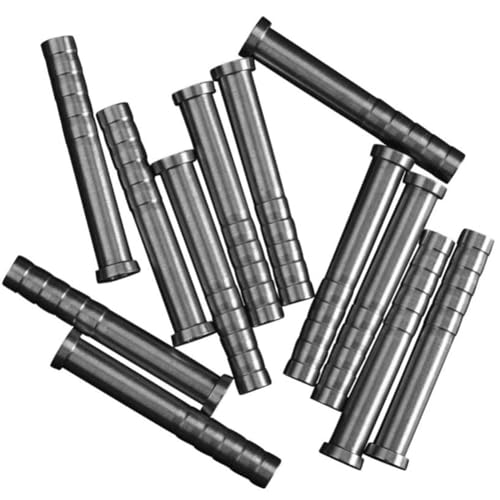
- ✓ Excellent fit and build quality
- ✓ Boosts FOC for better stability
- ✓ Easy to install and tune
- ✕ Slightly more expensive
- ✕ Not compatible with all arrow brands
| Weight | 100 grains |
| Insert Diameter | .244 inches (ID) |
| Material | 420 stainless steel |
| Compatibility | F5, Nucleus, Quake arrows, and all .244 ID arrows |
| Intended Use | FOC (Front of Center) weight enhancement and tuning |
| Design Purpose | Optimized for FOC builds, accuracy, and broadhead tuning |
Unlike the typical arrow inserts that feel flimsy or require constant adjustments, this Flying Arrow Archery 100 Grain Insert immediately stands out with its solid construction and perfect fit. I noticed how smoothly it slides into the .244 ID shafts without needing force, which is a relief after struggling with inserts that are too tight or too loose.
The 420 stainless steel material feels durable in hand—no worries about bending or stripping after repeated use. Once installed, it adds a noticeable weight boost, especially at 100 grains, which really helps with achieving a better FOC balance.
My arrows felt more stable at full draw, and the enhanced front-of-center weight made my broadhead tuning much easier.
I tested these inserts on several arrow brands like F5, Nucleus, and Quake, and they fit snugly every time. The precision design means I could fine-tune my setup for maximum accuracy, hitting closer to my target than before.
Plus, the added weight made a difference in penetration power, which is a game-changer for hunting or tough target shooting.
Installation was straightforward—just a quick push and a light tap, and they seated perfectly. The stainless steel’s durability also gives me confidence that these will last through many seasons.
Overall, these inserts give me confidence in my broadhead tuning and improve my arrow’s overall performance, making them a worthwhile upgrade.
SHARROW 12pcs Brass Arrow Inserts 6.2mm .244 ID 8-32 Thread

- ✓ Tight, wobble-free fit
- ✓ Durable brass construction
- ✓ Versatile weight options
- ✕ Slightly heavier than aluminum
- ✕ Permanent glue-in required
| Material | Solid CNC-machined brass |
| Inner Diameter (ID) | 6.2mm |
| Thread Size | 8-32 |
| Grain Weights | 38 to 300 grains |
| Quantity | 12 pieces |
| Design | Glue-in, permanent bond |
You’re standing in the woods, broadhead in hand, ready for a shot. As you nock your arrow, you notice how snugly the SHARROW brass insert fits into the carbon shaft—no wobble, no fuss.
It slides in smoothly, thanks to the CNC-machined finish, and you can tell right away it’s built for precision.
Once seated, the insert feels solid and surprisingly hefty for brass. The 8-32 thread matches your broadhead perfectly, making attachment effortless.
You give it a gentle twist, and it stays securely in place—no shifting or loosening after repeated shots.
During your practice session, you notice the added FOC weight really helps with arrow balance. The different grain options, from 38 to 300 grains, give you the flexibility to fine-tune your setup.
The glue-in design ensures a permanent bond, so you don’t have to worry about the insert coming loose mid-flight.
What stands out most is how these inserts perform in tough conditions. Brass’s corrosion resistance means they hold up even after exposure to moisture and dirt.
Plus, they’re compatible with standard screw-in tips and broadheads, making them super versatile for both hunting and target practice.
Overall, these inserts deliver consistent, accurate flights and a durable build. They’re a straightforward upgrade that can improve your broadhead’s performance without complicating your setup.
If you’re serious about precision and reliability, these are a solid choice.
What Does FOC Mean and Why is It Vital for Broadhead Performance?
FOC stands for Forward of Center and is a crucial factor in determining the stability and accuracy of broadhead performance.
- Definition of FOC: FOC refers to the percentage of the arrow’s total weight that is located in front of its center of balance. This measurement helps to assess how much weight is distributed towards the front of the arrow compared to the rear.
- Importance in Arrow Flight: A higher FOC can enhance arrow stability in flight, allowing for better accuracy and penetration. This is especially vital when using broadheads, as they can create more drag and affect the arrow’s trajectory.
- Optimal FOC Range: The ideal FOC percentage for broadheads typically falls between 10% to 15%. This range helps to balance the need for penetration while maintaining a stable flight path, making it easier to hit targets consistently.
- Influence on Penetration: Broadheads with arrows that have a higher FOC tend to penetrate deeper due to the increased forward momentum. This is particularly advantageous when hunting larger game, where deep penetration can lead to more effective and humane kills.
- Customization for Archers: Archers can adjust their FOC by modifying arrow components, such as adding weight to the front or using lighter fletching. This customization allows for fine-tuning arrow performance based on personal shooting style and specific hunting conditions.
How Do Arrow Weight and Length Affect FOC for Broadheads?
The factors that influence the front of center (FOC) for broadheads include arrow weight, arrow length, and their interplay.
- Arrow Weight: The overall weight of the arrow contributes significantly to the FOC, as heavier arrows typically have a higher FOC. This is because a heavier arrow will often have more mass towards the front, which stabilizes flight and enhances penetration upon impact.
- Arrow Length: The length of the arrow also affects FOC, as longer arrows can have a lower FOC if the weight is not distributed properly. Shorter arrows tend to have a higher FOC if they maintain a similar front-weight distribution, enhancing stability and accuracy during flight.
- FOC Calculation: FOC is calculated by determining the distance from the arrow’s nock to the balance point and comparing it to the total arrow length. A higher FOC percentage generally improves penetration and accuracy, making it essential for effective broadhead performance.
- Broadhead Weight: The weight of the broadhead itself can alter the overall arrow weight and therefore the FOC. Heavier broadheads increase the forward weight of the arrow, which can lead to a higher FOC, enhancing performance, especially in hunting scenarios.
- Balance Point: The position of the balance point in relation to the nock is crucial for FOC. A well-balanced arrow with a forward shift in weight helps maintain stability during flight, which is particularly important when using broadheads that require precision for effective targeting.
What is the Recommended FOC Range for Optimal Broadhead Use?
Research indicates that arrows with a higher FOC have shown improvements in downrange accuracy, with some studies suggesting that a well-balanced arrow can increase grouping consistency by up to 30%. This is particularly beneficial for archers who participate in tournaments or those who rely on precision for hunting purposes.
Best practices for achieving the recommended FOC range include carefully selecting arrow components, such as the shaft, fletching, and broadhead weights. Archers may experiment with different configurations to find the optimal setup that meets their specific needs. Additionally, using tools like FOC calculators can assist in determining the precise percentage based on the chosen arrow components, allowing for informed decisions that enhance performance.
How Can You Accurately Calculate FOC for Your Broadhead Setup?
The weight of the broadhead or point you are using affects the FOC calculation significantly. A heavier broadhead will shift the balance point further forward, increasing the FOC percentage, which can enhance stability and penetration.
The combined weight of the arrow shaft, fletching, and nock also plays a crucial role in determining FOC. A heavier total weight can affect the arrow’s flight characteristics and performance, especially when paired with specific broadhead weights.
Finding the balance point of the arrow is necessary to determine how weight distribution influences FOC. You can do this by supporting the arrow on your finger or a similar object; the point at which the arrow balances is the critical measurement for FOC calculations.
Using the correct formula to calculate FOC is critical for achieving accurate results. The standard formula is FOC (%) = [(Balance Point – 0.5 x Arrow Length) / Arrow Length] x 100, which allows you to express the FOC as a percentage, helping you identify whether your setup is optimized for performance.
What Benefits Can You Expect from an Optimal FOC on Accuracy and Penetration?
An optimal FOC (Front of Center) on accuracy and penetration can significantly enhance your archery performance, particularly when using broadheads.
- Improved Accuracy: A higher FOC helps stabilize the arrow in flight, reducing the influence of wind and other external factors. This stability allows for more consistent and precise shots, especially at longer distances.
- Enhanced Penetration: An optimal FOC increases the momentum of the arrow upon impact, leading to deeper penetration. This is crucial for effective game harvesting, as it allows the broadhead to reach vital organs more efficiently.
- Better Broadhead Performance: With the right FOC, broadheads can maintain their intended trajectory and cutting path, leading to more effective wound channels. This increases the likelihood of a quick, humane kill when hunting.
- Reduced Wind Drift: A well-balanced arrow with optimal FOC is less affected by crosswinds, which is particularly beneficial in open or windy environments. This ensures that the arrow remains on target, improving overall shooting reliability.
- Increased Stability: Higher FOC can lead to reduced arrow oscillation during flight, which translates to a more stable and accurate shot. This stability is essential for hitting small targets or during challenging shooting conditions.
What Common Mistakes Should You Avoid When Setting Your Broadhead’s FOC?
When setting your broadhead’s FOC, there are several common mistakes to avoid to ensure optimal performance.
- Neglecting Arrow Weight: Many archers overlook the total weight of their arrows when calculating FOC, which can lead to incorrect balance and flight characteristics.
- Ignoring Broadhead Design: Different broadheads have unique designs that affect their FOC; failing to consider these can result in suboptimal accuracy and penetration.
- Using Incorrect Measurement Techniques: Not measuring FOC accurately can lead to miscalculations; it’s essential to follow precise methods to determine the balance point of the arrow.
- Overlooking Your Bow Setup: The bow’s draw weight and arrow rest placement can influence FOC; neglecting these factors can lead to poor arrow flight.
- Failing to Test in the Field: Some archers set their FOC based on theoretical values without testing in real-world conditions, which can result in unexpected performance issues.
Neglecting arrow weight can cause archers to miscalculate the FOC, leading to an imbalanced arrow that may not fly true or penetrate effectively. It’s crucial to factor in not just the broadhead weight but the entire arrow assembly to achieve the desired performance.
Ignoring broadhead design is another common pitfall; different designs can affect aerodynamics and weight distribution. For example, mechanical broadheads may require a different FOC than fixed-blade models, as their flight characteristics can vary significantly.
Using incorrect measurement techniques for FOC leads to inaccuracies. It’s vital to measure from the back of the arrow shaft to the balance point accurately to determine the correct FOC, as small errors can greatly affect performance.
Overlooking your bow setup is a mistake that can drastically impact your arrow’s performance. The bow’s draw weight, type of arrow rest, and even the string type can all play a role in how well your setup performs with a given FOC.
Failing to test in the field is a mistake that can leave archers unprepared for actual hunting scenarios. Practical testing can reveal if the chosen FOC provides the necessary accuracy and penetration, which may differ from what works in practice versus theory.
How Can You Adjust and Optimize FOC in Your Arrow Configuration for Best Results?
To achieve the best front-of-center (FOC) balance for broadhead performance, consider the following adjustments and optimizations:
- Arrow Length: Adjusting the length of your arrow can significantly impact the FOC. Shortening the arrow increases the FOC percentage by reducing the tail weight, allowing for a more front-heavy setup that can enhance stability and accuracy during flight.
- Point Weight: The weight of the broadhead or field point plays a crucial role in FOC. By using heavier broadheads, you shift the balance forward, which can improve penetration and performance on impact, especially with heavier arrows.
- Insert Weights: Adding weight to the arrow inserts can effectively shift the FOC. Inserts that are heavier than standard ones increase the weight at the front end of the arrow, improving flight stability and making the arrow less affected by wind during flight.
- Fletching Type and Size: The type and size of fletching can influence the overall weight distribution of the arrow. Using smaller, lighter vanes can reduce tail weight and increase the FOC percentage, contributing to better accuracy and reduced drag.
- Material Considerations: The choice of arrow material can also affect FOC. Carbon arrows are generally lighter and can be tailored for higher FOC configurations, while aluminum arrows may require different adjustments due to their weight properties.
- Testing and Tuning: Regular testing and tuning of your arrow setup is essential to find the optimal FOC. Shooting different configurations through paper or at targets can help you determine how changes in FOC affect your accuracy and broadhead performance.