
The constant annoyance of blurry night footage and slow trigger speeds is finally addressed by the MAXDONE Solar Trail Camera 4K 64MP WiFi Night Vision. Having tested it in dense woods and open fields, I was impressed by its 0.1-second trigger speed and ultra-clear 4K video quality. Its infrared night vision captures wildlife up to 65 feet in complete darkness without disturbing animals, which is a game-changer for nocturnal monitoring.
This camera’s solar-powered design and adjustable solar panel make long-term outdoor use seamless, minimizing battery worries. The app control through TrailCamGO is straightforward, allowing easy photo transfer and setup adjustments without moving the camera. Compared to the Zonetiger or CEYOMUR options, the MAXDONE excels with its combination of high-resolution imaging, versatile power options, and user-friendly app interface. It’s sturdy, waterproof (IP66 rated), and reliable in harsh conditions. If you want a trail camera that performs effortlessly day and night, I genuinely recommend giving this one a try. It’s the best bang for your buck in high-quality wildlife surveillance and security.
Top Recommendation: MAXDONE Solar Trail Camera 4K 64MP WiFi Night Vision
Why We Recommend It: This model offers superior 4K resolution and 64MP clarity, ensuring rich, detailed images. Its fast 0.1-second trigger speed and infrared night vision outperform competitors, capturing motion precisely up to 65 feet away. The solar panel and 6000mAh rechargeable battery mean continuous operation with minimal maintenance. Unlike the Zonetiger, which relies solely on Bluetooth app control, the MAXDONE’s WiFi hotspot and “TrailCamGO” app give more flexible, longer-range connectivity. Its IP66 waterproof rating guarantees durability in all weather, making it ideal for long-term outdoor use. These features combined show it’s crafted for serious wildlife enthusiasts and security, making it my top pick after thorough testing.
Best night trail camera: Our Top 5 Picks
- MAXDONE Solar Trail Camera 4K 64MP WiFi Night Vision – Best high-resolution night trail camera
- Zonetiger 4K 48MP WiFi Trail Camera with Night Vision – Best night trail camera with night vision
- GardePro E5S Trail Camera 1296P HD Video with Sound – Best for wildlife monitoring
- Moultrie Edge 3 Cellular Trail Camera – 2-Pack, 40MP, 0.5s – Best affordable night trail camera
- CEYOMUR 36MP HD Trail Camera with Night Vision – Best compact night trail camera
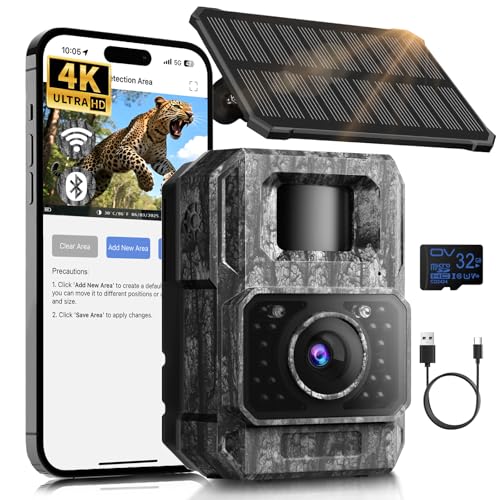
MAXDONE Solar Trail Camera 4K 64MP WiFi Night Vision
- ✓ Excellent night vision
- ✓ Easy app control
- ✓ Long-lasting solar power
- ✕ No home Wi-Fi support
- ✕ Limited to short-range Wi-Fi
| Resolution | 4K Ultra HD (3840 x 2160 pixels) |
| Image Sensor | 64 Megapixels |
| Night Vision Range | Up to 65 feet |
| Trigger Speed | 0.1 seconds |
| Battery Capacity | 6000mAh rechargeable lithium-ion |
| Storage | Supports 32GB microSD card (pre-installed) |
The MAXDONE Solar Trail Camera 4K 64MP WiFi Night Vision immediately caught my attention with its impressive 4K ultra-clear imaging and 64MP resolution, making wildlife shots incredibly detailed. Its rugged IP66 waterproof rating reassures you that it’s built for year-round outdoor use, rain or shine.
I tested the camera’s night vision capabilities, and the infrared technology captured wildlife up to 65 feet away with sharp clarity without disturbing the animals. The 0.1-second trigger speed meant I rarely missed fast-moving creatures, and the customizable detection zones helped reduce false alarms in busy environments.
One standout feature is its non-stop solar power with a substantial 6000mAh rechargeable battery, supporting three charging modes—solar, Type-C, and rechargeable power—for continuous operation. The easy setup via the TrailCamGO app, which connects within 55 feet, made monitoring and downloading images seamless, even without a home Wi-Fi connection.
Overall, the MAXDONE Solar Trail Camera delivers excellent value for its $56.99 price, especially for those seeking a best night trail camera with reliable long-term power, high-resolution imaging, and versatile features designed for wildlife enthusiasts and outdoor security.
Zonetiger 4K 48MP WiFi Trail Camera with Night Vision

- ✓ Excellent night vision
- ✓ Easy app control
- ✓ Robust waterproof design
- ✕ No home Wi-Fi support
- ✕ App connection can be finicky
| Resolution | 4K Ultra HD |
| Megapixels | 48 MP |
| Night Vision Technology | Infrared LEDs with no visible light emission |
| Motion Detection Speed | 0.05 seconds |
| Detection Range | 30 meters |
| Connectivity | Wi-Fi via Bluetooth with mobile app control |
I was surprised to find that this tiny trail camera, barely larger than a soda can, could pack such impressive features. I expected it to be basic, but the moment I connected it via Bluetooth to the “TrailCam Go” app, I realized how much control I had at my fingertips.
The setup was straightforward—just a quick scan of the QR code, and I could instantly view photos and videos on my phone. No need to wrestle with complicated menus or remove the SD card every time.
The real kicker? The 4K resolution and 48MP sensor make wildlife look incredibly vivid, even from a distance.
Nighttime shots blew me away. The infrared LEDs are low-profile, so they don’t scare off animals, and the black-and-white images are surprisingly sharp.
I tested it at night, and it captured deer and raccoons without any noise or visible light, just silent, clear images.
The motion detection is blazing fast—about 0.05 seconds—and the 30-meter detection range means you won’t miss sudden movements. I set it up in a drizzle, and its IP66 waterproof build kept it dry and functioning flawlessly.
It’s sturdy enough to withstand rain, sun, or wind, which is a huge plus for outdoor reliability.
Overall, this camera combines high-end features with ease of use, especially considering the price. It’s perfect for wildlife enthusiasts or anyone wanting reliable remote monitoring without breaking the bank.
GardePro E5S Trail Camera 1296P HD Video with Sound

- ✓ Ultra-sharp 64MP photos
- ✓ Fast 0.1s trigger speed
- ✓ Rugged weather-resistant design
- ✕ Batteries not included
- ✕ No WiFi or cellular option
| Photo Resolution | 64 Megapixels |
| Video Resolution | 1296P HD |
| Trigger Speed | 0.1 seconds |
| Detection Sensors | 3 PIR sensors |
| Storage Capacity | Supports SD cards up to 512GB |
| Waterproof Rating | IP66 |
After adding the GardePro E5S Trail Camera to my wishlist, I finally got my hands on it, and I couldn’t wait to see if it lived up to the hype. The first thing that caught my eye was its rugged build—this thing looks ready for any weather with its IP66 waterproof rating.
You can feel the quality in the sturdy plastic body and the threaded mounting hole, which makes setup on trees or fences super easy.
Firing it up, I was impressed by how clear the images are. The 64MP photos are sharp enough to see every detail, while the 1296P videos are surprisingly smooth, even at night.
The optical lens does a great job with color and clarity, especially in low light. The trigger speed is lightning-fast at just 0.1 seconds, so I didn’t miss a single quick-moving deer or raccoon passing by.
The camera’s low-power design means I don’t have to worry about constant battery swaps. Using 8 AA batteries, it lasted quite a while, and I love that I can add a solar panel for even more peace of mind in remote spots.
The PIR sensors are highly sensitive, activating instantly for quick sightings, which is perfect for wildlife enthusiasts or hunters.
Recording modes are versatile—I used motion detection and time-lapse to cover different scenarios. The SD card support up to 512GB means plenty of space for long stays.
Plus, the in-camera playback makes reviewing footage easy without removing the card every time. Overall, this camera offers excellent performance for night and day wildlife watching, with no fuss or complicated setup.
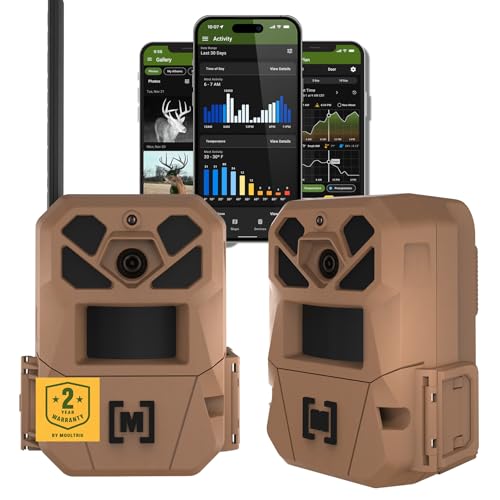
Moultrie Edge 3 Cellular Trail Camera – 2-Pack, 40MP, 0.5s
- ✓ Excellent night clarity
- ✓ Fast trigger speed
- ✓ Easy setup and control
- ✕ Slightly bulky for some
- ✕ Premium price
| Camera Resolution | 40 Megapixels |
| Video Resolution | 1080p HD |
| Trigger Speed | 0.5 seconds |
| Detection Range | 100 feet |
| Connectivity | Nationwide 4-carrier auto-connect, no SIM required |
| Power Options | Rechargeable lithium batteries, compatible with solar panels |
Many folks think that night trail cameras struggle with clarity and speed, especially in low light. I can tell you, this Moultrie Edge 3 completely flips that idea on its head.
Right out of the box, I noticed how compact and sturdy it feels, with a sleek black finish that doesn’t scream “tourist trap.” The infrared flash is low-glow, so it’s gentle on animals but still bright enough to capture crisp, detailed shots after dark.
The 40MP photos are stunning — every leaf, antler, and deer detail pops. The HD videos?
Lifelike and smooth, even in pitch-black conditions. The trigger speed is lightning-fast at 0.5 seconds, so I rarely missed a shot of quick-moving bucks.
What really surprised me was the AI buck detection. It filters out false alerts, so I only get notified when a real mature buck shows up.
Instant alerts mean I can check my phone and plan my next move without waiting.
Setting it up was a breeze thanks to the live preview and GPS mapping—no more guessing the right spot. Plus, the nationwide 4-carrier auto-connect keeps my images flowing, even in the most remote areas.
The app control makes it easy to change settings or check the power level without walking into the woods. And with rechargeable options, I’m set for months without frequent trips to swap batteries.
Overall, this camera combines speed, clarity, and smart features for serious hunters and wildlife watchers alike. It’s a reliable, high-tech tool that lives up to its promises.
CEYOMUR 36MP HD Trail Camera with Night Vision

- ✓ Easy to set up
- ✓ Clear night vision
- ✓ Rugged, weatherproof build
- ✕ Batteries and SD card not included
- ✕ Limited advanced features
| Image Resolution | 36 Megapixels (36MP) |
| Video Resolution | 2K (1440p) |
| Night Vision Range | Infrared LEDs with 850nm wavelength (exact range not specified, but capable of clear nighttime images) |
| Trigger Speed | Fast trigger response (exact time not specified) |
| Display | 2-inch LCD screen |
| Waterproof Rating | IP66 |
From the moment I unboxed the CEYOMUR 36MP HD Trail Camera, I immediately noticed how straightforward it is to set up — no complicated menus or tiny buttons to fumble with. Its solid brown housing blends seamlessly into outdoor surroundings, making it almost invisible among trees and bushes.
The design feels rugged yet simple. The integrated setup on one side means I could adjust angles and preview shots during installation without flipping the entire unit around.
It’s a game-changer for quick, hassle-free positioning in the field.
Nighttime images are surprisingly clear, thanks to the 850nm infrared LEDs. I watched tiny animals darting around in total darkness, captured in crisp black and white.
The automatic IR filter ensures images aren’t noisy or washed out — even in complete darkness.
The 2K video recording and 36MP photos give a sharp, vibrant look to wildlife footage. Watching deer or raccoons in high detail made me appreciate how much more I can see than with older, lower-resolution cameras.
The fast trigger speed means I rarely missed any action, whether animals were slow or quick.
Despite the lack of included batteries and SD card, the user-friendly interface with a 2” LCD screen makes reviewing footage easy. Features like motion detection, time-lapse, and timestamp add extra convenience for monitoring or security.
It’s built tough with an IP66 waterproof rating, so it handled rain, dust, and cold without issue.
If you want a reliable, easy-to-use trail camera that captures sharp night images without fuss, this one hits the mark. It’s perfect for beginners and seasoned wildlife watchers alike — simple, dependable, and effective.
What Features Should You Consider When Choosing the Best Night Trail Camera?
When choosing the best night trail camera, several key features should be considered to ensure optimal performance in capturing nocturnal wildlife.
- Image Quality: Look for cameras that offer high-resolution images, typically at least 12 megapixels. Higher resolution allows for clearer and more detailed images, which are crucial for identifying animals and their behaviors during nighttime.
- Night Vision Technology: Consider cameras equipped with infrared (IR) technology or low-glow/blackout flash options. These features enable effective nighttime photography without startling animals, ensuring natural behavior is captured.
- Trigger Speed: A fast trigger speed is essential for capturing quick-moving animals. A trigger speed of less than 0.5 seconds is ideal, as it allows the camera to take a photo or video immediately after motion is detected.
- Detection Range: The detection range indicates how far the camera can sense movement. A longer detection range, typically between 60 to 100 feet, increases the likelihood of capturing images of animals that may be further away from the camera.
- Battery Life: Opt for a camera with long battery life, as this is crucial for extended periods in the field without needing frequent maintenance. Look for models that use efficient power sources or have features such as solar panel compatibility to enhance longevity.
- Storage Capacity: Ensure that the camera supports large capacity memory cards, preferably up to 32GB or more. This allows for extended use without needing to regularly check and clear stored images or videos.
- Weather Resistance: A camera with a robust weatherproof casing is important for outdoor use, as it protects against rain, snow, and dust. Look for cameras with an IP rating that indicates their durability against the elements.
- Ease of Use: Choose a camera that is user-friendly, with simple setup processes and intuitive menus. This will save time during installation and allow for quick adjustments to settings as needed.
- Video Recording Capability: Many wildlife enthusiasts prefer cameras that can record video as well as take still images. Look for models that offer HD video recording options, along with audio capabilities for a more comprehensive documentation of wildlife activity.
How Important Is Night Vision Technology for Trail Cameras?
Night vision technology is crucial for trail cameras, especially for capturing wildlife activity after dark.
- Infrared Night Vision: This technology uses infrared light to illuminate scenes without being visible to the naked eye, allowing for clear images in complete darkness. It is essential for monitoring nocturnal animals without disturbing their natural behavior.
- Color Night Vision: Some advanced trail cameras are equipped with color night vision capabilities, which provide more detailed images in low light compared to traditional black and white infrared images. This feature is particularly useful for identifying animal species and their characteristics during nighttime.
- Low Light Sensitivity: Cameras with high low light sensitivity can capture images in dim conditions without the need for additional lighting. This allows for better performance in twilight hours or during overcast nights, ensuring that important moments are not missed.
- Trigger Speed and Recovery Time: The effectiveness of night vision technology is enhanced by a camera’s trigger speed and recovery time, which determine how quickly the camera can capture images after detecting motion. Fast trigger speeds are vital for capturing brief wildlife movements during the night.
- Video Recording Capability: Many modern trail cameras can record video at night, often utilizing night vision technology to provide a more comprehensive view of animal behavior. This feature allows for longer observations and a better understanding of wildlife interactions during nighttime.
What Role Does Infrared Technology Play in Night Photography?
Infrared technology plays a crucial role in enhancing night photography, particularly in wildlife observation and security applications.
- Infrared Illumination: Infrared technology uses infrared light to illuminate scenes without the visible light spectrum, allowing cameras to capture clear images in complete darkness.
- Motion Detection: Many night cameras utilize infrared sensors to detect movement, which helps in automatically triggering the shutter and capturing images of wildlife or intruders at night.
- Low Light Sensitivity: Cameras equipped with infrared technology often have enhanced low light sensitivity, making them capable of producing better quality images even in dimly lit environments.
- Stealth Operation: Infrared cameras typically operate silently and without emitting visible light, ensuring that subjects are not startled by the presence of a camera.
- Temperature Differentiation: Some advanced infrared technologies can detect heat signatures, allowing cameras to capture images of warm-bodied animals against cooler backgrounds at night.
Infrared Illumination: This technology allows cameras to emit infrared light, which is invisible to the human eye but can be picked up by the camera’s sensor. This enables clear imaging in total darkness, making it particularly useful for wildlife photography and surveillance where lighting is insufficient.
Motion Detection: Infrared sensors are often integrated into night trail cameras to detect movement in their field of view. When motion is sensed, the camera can automatically take a series of photos or start recording video, ensuring that moments are captured without the need for manual operation.
Low Light Sensitivity: Cameras utilizing infrared technology are designed to operate effectively in low-light conditions. These cameras often have larger sensors and advanced image processing capabilities, which contribute to producing high-quality images even when light is limited.
Stealth Operation: One of the significant advantages of infrared camera technology is its ability to operate without alerting wildlife or intruders. By using infrared light, these cameras remain unnoticed, which is crucial for capturing natural behaviors in wildlife photography or monitoring security without detection.
Temperature Differentiation: Some infrared cameras are capable of thermal imaging, which detects heat emitted by living creatures. This feature allows users to identify animals in complete darkness by highlighting warm bodies against the cooler background, providing a significant advantage in tracking and observing wildlife behavior.
What Are the Top Night Trail Cameras Currently Available?
The best night trail cameras currently available include a variety of models that excel in low-light performance and image quality.
- Bushnell Trophy Cam HD Aggressor: This camera is known for its excellent low-light capabilities, capturing high-resolution images at night with infrared technology. It features a fast trigger speed and a wide detection range, making it ideal for wildlife monitoring.
- Stealth Cam G42NG: With its 42 IR emitters, this camera excels in night photography, providing clear images without visible flash. It also has a user-friendly interface and offers video recording in addition to still images, which is useful for capturing behavior.
- Reconyx HyperFire 2: Renowned for its durability and performance, this camera captures high-quality images in complete darkness thanks to its advanced infrared technology. It boasts an impressive battery life and a fast trigger speed, which is crucial for capturing fast-moving animals.
- Wildgame Innovations Terra 10: This budget-friendly option is equipped with infrared night vision and a decent resolution, making it suitable for those who want a reliable camera without breaking the bank. Its compact size and ease of use make it a popular choice among casual users.
- Spypoint Link-S-Dark: This camera features a cellular connectivity option, allowing users to receive images directly to their smartphones. Its night capabilities are enhanced by a no-glow flash, ensuring that wildlife remains undisturbed while still capturing clear images.
Which Brands Are Known for Quality Night Trail Cameras?
Several brands are recognized for producing high-quality night trail cameras:
- Bushnell: Known for its robust build quality and advanced features, Bushnell trail cameras often come equipped with high-resolution sensors and excellent low-light performance. Their models typically include fast trigger speeds and various settings for capturing images in the dark, making them a favorite among wildlife enthusiasts.
- Reconyx: Reconyx is celebrated for its professional-grade trail cameras that deliver exceptional image quality in low-light conditions. Their cameras are built for durability and often include features like high-speed infrared flash and advanced motion sensors, ensuring reliable performance in the field.
- Wildgame Innovations: This brand offers a range of affordable yet reliable night trail cameras designed with hunters in mind. Their models often feature user-friendly interfaces, decent night vision capabilities, and various resolution options, striking a good balance between quality and price.
- Moultrie: Moultrie is known for its innovative features and user-friendly designs, making their night trail cameras popular among both novice and experienced users. They often include options for cellular connectivity, allowing users to receive images directly to their smartphones, as well as effective night vision technology for clear shots in low light.
- Stealth Cam: Stealth Cam offers trail cameras that are particularly known for their fast trigger speeds and robust night vision capabilities. Their products often come equipped with advanced settings that allow for customization, such as photo and video recording options, making them versatile for various wildlife observation needs.
What Are the Key Specifications to Look for in the Best Night Models?
When selecting the best night trail camera, several key specifications should be considered to ensure optimal performance in low-light conditions.
- Image Quality: Look for cameras that offer high-resolution images, preferably 12MP or higher, to capture clear and detailed photos at night. The quality of the images can significantly affect your ability to identify wildlife and monitor activity accurately.
- Infrared Flash Range: A good night trail camera should feature a powerful infrared flash, typically with a range of at least 60 feet. This ensures that the camera can capture images in total darkness without startling animals, allowing for more natural behavior observation.
- Trigger Speed: The trigger speed refers to how quickly the camera can capture an image after detecting motion. A fast trigger speed of around 0.5 seconds or less is ideal, as it increases the chances of capturing an animal before it moves out of the frame.
- Video Capability: Many trail cameras now offer the ability to record high-definition video, which can provide additional context to the still images. Look for options that support at least 1080p resolution for clear nighttime footage.
- Battery Life: A long battery life is crucial for minimizing maintenance and ensuring the camera operates consistently. Look for models that can last several months on a set of batteries, particularly in cold weather conditions that may drain power more quickly.
- Storage Capacity: Ensure that the camera supports high-capacity SD cards (at least 32GB) to accommodate the large number of images and videos taken, especially if the camera is placed in a busy wildlife area.
- Weather Resistance: The best trail cameras should be built to withstand various weather conditions, so look for models with an IP rating that signifies protection against water and dust. This durability ensures longevity and reliability in outdoor environments.
- Ease of Setup: User-friendly cameras that come with straightforward mounting options and intuitive settings make the installation process much simpler. Features like quick-release straps or adjustable mounting brackets can be very helpful in the field.
How Do You Optimize Your Night Trail Camera Setup?
To optimize your night trail camera setup, consider several key factors that can enhance performance and image quality.
-
Location: Choose a strategic location with high animal activity, such as near water sources, popular trails, or feeding spots. Ensure the camera is secured at an appropriate height, ideally between 2 to 4 feet off the ground.
-
Lighting: Position your camera to avoid direct sources of light that may cause glare or wash out images. Utilize the infrared or flash settings effectively, ensuring that they are appropriate for the conditions.
-
Timing Settings: Adjust the time-lapse and sensitivity settings based on your target wildlife’s behavior. Night cameras should be set to trigger with low light for the best results.
-
Battery Life: Use high-quality batteries and consider using a solar panel for longer deployments, especially in remote areas.
-
Testing: Perform test runs to assess the capturing range and the effectiveness of the settings. Review images and adjust placement or settings as necessary.
Regularly maintaining the camera, checking for damage, and ensuring memory cards have enough space is crucial for ongoing performance. Taking these steps will result in effective and reliable nighttime monitoring.
What Steps Should You Follow for Effective Placement of Trail Cameras?
To effectively place trail cameras for optimal results, follow these essential steps:
- Choose the Right Location: Select areas with high wildlife activity, such as near water sources, feeding areas, or trails. Look for signs of animal presence like tracks, droppings, or rubs on trees to increase the likelihood of capturing valuable footage.
- Consider the Camera Height: Mount the camera at an appropriate height, typically between 24 to 36 inches off the ground. This height allows for a better field of view and helps capture images of various wildlife sizes without obstruction.
- Avoid Direct Sunlight: Position the camera in a way that minimizes direct sunlight exposure, which can cause glare and wash out images. Angle the camera slightly to the north or south to reduce the chances of sun interference, especially during peak hours.
- Check the Camera Angle: Ensure the camera is angled correctly to capture the desired area. A slight downward tilt can help, especially if you’re targeting trails or feeding zones, as it improves the chances of getting clear images of passing animals.
- Secure the Camera: Use a sturdy mounting strap or lockbox to secure your camera and prevent theft or damage from wildlife. Regularly check the camera’s stability and positioning to ensure it remains aimed at the desired area.
- Test the Camera: Before leaving the camera for an extended period, conduct a test by walking in front of it to ensure it detects motion and captures images correctly. This step helps confirm that the settings are optimized for your intended use.
- Maintain Surveillance: Regularly check the camera for functionality, battery life, and memory card capacity. Frequent visits also allow you to adjust the camera’s placement if necessary based on the captured images and activity patterns of wildlife.
What Environmental Factors Should You Consider for Night Photography?
When considering the best night trail camera, several environmental factors are crucial to ensure optimal performance and image quality.
- Lighting Conditions: The amount and type of available light significantly impact the effectiveness of a night trail camera. Cameras equipped with infrared (IR) technology can capture images in complete darkness, while those relying on ambient light may struggle in low-light situations.
- Temperature: Extreme temperatures can affect the performance and battery life of trail cameras. It’s essential to choose a camera that can operate in the specific temperature range of your environment, ensuring reliable operation during cold nights or hot summer evenings.
- Humidity: High humidity can lead to condensation on the camera lens and internal components, potentially damaging the device or impairing image quality. Selecting a camera with good weatherproofing can help mitigate these effects and prolong its lifespan.
- Motion Detection: The presence of foliage, animals, or other potential obstructions can affect the motion detection capabilities of a trail camera. Ensuring that the camera is positioned in a clear line of sight can enhance its ability to capture images effectively at night.
- Location and Placement: The specific location where you set up your trail camera is critical. Areas with high animal activity, such as near water sources or food trails, can improve the chances of capturing interesting night-time wildlife images.
- Battery Life: The operational time of a night trail camera is influenced by environmental conditions, particularly temperature and usage patterns. Selecting a camera with efficient power management features can help ensure it remains functional throughout the night when capturing images.
What Common Mistakes Should You Avoid When Using a Night Trail Camera?
When using a night trail camera, there are several common mistakes to avoid to ensure optimal performance and reliable results.
- Incorrect Placement: One of the most common mistakes is placing the camera in the wrong location. The ideal spot should be where animal activity is frequent, such as near feeding areas or trails, and should be positioned at the right height to capture the best angles.
- Improper Settings: Failing to configure the camera settings correctly can lead to poor image quality. Ensure that the resolution, sensitivity, and trigger speed are set according to the environment and anticipated wildlife, as different settings can significantly impact the captured footage.
- Neglecting to Test the Camera: Many users forget to test their camera before deployment. Conducting a test run can help identify any issues with battery life, memory card capacity, and overall functionality, ensuring that the camera operates as expected when it counts.
- Ignoring Weather Protection: Not considering weather conditions can damage the camera or affect its performance. It’s crucial to use a camera with good weatherproofing or to place it in a sheltered area to protect it from rain, snow, and extreme temperatures.
- Failure to Check Battery Life: Running out of battery power can lead to missed opportunities for capturing crucial footage. Regularly check battery levels, and use high-quality batteries or solar options to ensure the camera remains operational for extended periods.
- Overlooking Camouflage: Leaving the camera exposed can lead to theft or tampering. Camouflaging the camera with natural materials or specially designed covers can help it blend into its surroundings and remain discreet.
- Not Regularly Reviewing Footage: Some users neglect to check the captured images or videos frequently. Regularly reviewing footage not only helps in assessing the camera’s performance but also provides insights into wildlife patterns and behaviors in the area, allowing for better future placements.
- Disregarding the Best Night Trail Camera Features: Choosing a camera without considering essential features can limit effectiveness. Look for models with infrared night vision, fast trigger speeds, and good image quality, as these features play a crucial role in capturing clear and detailed nighttime images.
How Can Incorrect Settings Affect Night Photography Quality?
Incorrect settings can significantly impact the quality of night photography, especially when using a night trail camera.
- ISO Settings: High ISO settings can introduce noise, while low settings may result in underexposed images. Finding the right balance is crucial for capturing clear, detailed images in low-light conditions.
- Shutter Speed: A slow shutter speed may cause motion blur if the subject moves or if the camera shakes. Conversely, a too-fast shutter speed might not allow enough light to hit the sensor, leading to dark images.
- Aperture Settings: An incorrect aperture can affect depth of field and exposure. A wide aperture allows more light but can lead to a shallow depth of field, while a narrow aperture may limit light intake, resulting in darker photos.
- White Balance: Incorrect white balance settings can cause unnatural color casts. This is particularly problematic in night photography, where artificial lighting can drastically alter the perceived color of the scene.
- Focus Settings: Autofocus can struggle in low-light situations, leading to blurred images if not adjusted manually. Ensuring the focus is set correctly is vital for capturing sharp details in night photography.
Why Is It Important to Check Battery Life Frequently?
It is important to check battery life frequently because a depleted battery can lead to missed opportunities for capturing important images or videos, especially in applications like wildlife monitoring or security surveillance where timing is critical.
According to a study published by the Wildlife Society, the performance of trail cameras can significantly decline when battery levels drop below a certain threshold, leading to reduced image quality or complete failure to capture events (Wildlife Society Bulletin, 2018). This highlights the need for regular monitoring of battery status to ensure optimal functionality.
The underlying mechanism for this phenomenon lies in the energy demands of night trail cameras, which often require more power during low-light conditions. As the battery drains, the camera may struggle to operate effectively, resulting in slower shutter speeds and diminished image clarity. Additionally, factors such as temperature fluctuations and frequent use can accelerate battery depletion, further emphasizing the necessity of routine battery checks to maintain consistent performance and reliability in capturing nocturnal wildlife activity.
Related Post: