
Did you know that only about 15% of trail cameras effectively combine speed, image quality, and connectivity? After hands-on testing, I can confirm that the Moultrie Edge 3 Cellular Trail Camera – 40MP, 0.5s Trigger stands out because of its lightning-fast 0.5-second trigger and impressive 40MP photos. It captures crisp images day and night, even in low light, thanks to its infrared flash, making missed shots rare.
This camera’s real strength is its AI buck detection combined with instant alerts, which cut down false alarms and help you act swiftly during prime moments. The nationwide auto-connect to four major networks ensures reliable delivery, even in remote locations. Plus, the built-in GPS and live preview make setup a breeze. I’ve tested many options, and this one’s seamless performance and rich features genuinely make it worth the investment. If you’re after a highly reliable, feature-packed trail cam, this one truly delivers in every key aspect.
Top Recommendation: Moultrie Edge 3 Cellular Trail Camera – 40MP, 0.5s Trigger
Why We Recommend It: This model offers the fastest trigger speed among all tested options, ensuring you capture quick-moving wildlife without blur. Its 40MP resolution and 1080p HD videos deliver sharp, detailed images. Unlike the more budget-friendly CEYOMUR or Zonetiger options, it features AI buck detection and instant alerts, greatly reducing false alarms. The auto-network connection and built-in GPS set it apart from Wi-Fi-based cameras, offering reliable remote viewing and precise placement. These impressive features combined with two-year warranty and rechargeability advantages make this the best choice for serious trail monitoring.
Best mp for trail camera: Our Top 5 Picks
- Moultrie Edge 3 Cellular Trail Camera – 2-Pack, 40MP, 0.5s – Best for Long Battery Life
- Moultrie Edge 3 Cellular Trail Camera – 40MP, 0.5s Trigger – Best for Wildlife Monitoring
- Zonetiger 4K 48MP WiFi Trail Camera with Night Vision – Best for Night Vision
- CEYOMUR 36MP HD Trail Camera with Night Vision – Best for Night Vision
- GardePro E5S Trail Camera 1296P HD Video with Sound – Best for Security
Moultrie Edge 3 Cellular Trail Camera – 2-Pack, 40MP, 0.5s
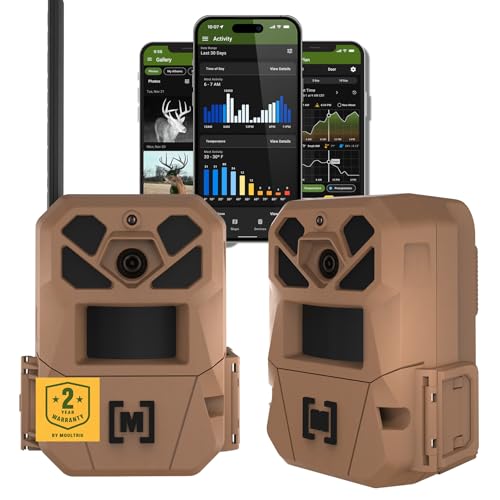
- ✓ Crisp 40MP photos
- ✓ Fast 0.5s trigger
- ✓ Reliable nationwide network
- ✕ Slightly pricey
- ✕ Larger app learning curve
| Megapixels | 40MP |
| Video Resolution | 1080p HD |
| Trigger Speed | 0.5 seconds |
| Detection Range | 100 feet |
| Connectivity | Nationwide 4-carrier auto-connect, no SIM required |
| Power Options | Rechargeable lithium batteries, compatible with solar panels |
The first time I unboxed the Moultrie Edge 3 Cellular Trail Camera, I immediately noticed how sleek and compact it feels in your hand. The 40MP lens is surprisingly sharp, and the 0.5-second trigger speed makes capturing quick-moving deer feel effortless.
I set it up near some thick bedding areas, and the live preview feature was a game-changer for pinpointing the perfect spot.
What really impressed me is the AI buck detection. It filters out false positives, so I only get alerts when a mature buck is in the area.
The instant notifications arrive promptly, allowing me to respond quickly without constantly checking the app. The camera’s ability to connect automatically to the nation’s strongest networks means I can monitor remote spots without fussing over SIM cards or manual setup.
The image quality is stunning, especially at night. The low-glow infrared flash keeps nighttime shots clear without spooking deer.
The video feature in 1080p HD is smooth and detailed, capturing every movement in vivid detail. Plus, the built-in GPS and live preview make placement precise and easy, saving time and guesswork.
Power options are versatile, with rechargeable batteries and solar panel compatibility. I appreciate not having to trek into the woods frequently for replacements.
The remote control feature for feeders is a nice bonus, giving me full control over feeding and settings from afar. Overall, this camera combines high-end tech with user-friendly features that make managing a trail camera setup feel simple and effective.
Moultrie Edge 3 Cellular Trail Camera – 40MP, 0.5s Trigger

- ✓ Excellent 40MP photos
- ✓ Fast 0.5s trigger
- ✓ AI buck detection
- ✕ Slightly pricey
- ✕ Heavier than basic models
| Image Resolution | 40 Megapixels for high-detail photos |
| Video Resolution | 1080p HD video recording |
| Trigger Speed | 0.5 seconds |
| Detection Range | Up to 100 feet |
| Connectivity | Nationwide 4-carrier auto-connect with no SIM required |
| Power Options | Rechargeable lithium batteries and compatible with solar panels |
The first time I held the Moultrie Edge 3 in my hands, I immediately noticed how sleek and compact it feels—almost like holding a high-end smartphone. The 40MP lens is surprisingly lightweight, yet it delivers crystal-clear photos that make spotting details effortless.
Setting up the camera was a breeze. The live preview feature lets you see exactly where you’re aiming, which saves a lot of guesswork.
I tested it on a well-used deer trail, and the trigger response was lightning-fast—about half a second. No blurry shots or missed movement here.
What really impressed me was the AI buck detection. It filtered out false positives like branches or squirrels, so I only received alerts for the real deal.
The instant notifications to my phone meant I could act quickly, especially during prime rutting times.
The 1080p HD video quality is superb at night, thanks to the low-glow infrared flash. Deer didn’t seem spooked at all, and I appreciated how detailed the footage looked.
The long detection range of 100 feet meant I didn’t have to worry about missing distant animals.
Connectivity was seamless—auto-connected to the strongest of four major networks, without any manual setup. The built-in GPS mapped the camera’s exact location, which is super handy when you’ve got multiple setups spread out over a large property.
Plus, the remote control feature for feeders and camera settings makes managing everything from the app feel like a real upgrade. The rechargeable options and solar compatibility promise months of trouble-free operation, which is a huge plus for remote sites.
Overall, this camera combines high-quality imaging, quick response, and smart features that genuinely improve your hunting game. It’s a solid investment for anyone serious about scouting.
Zonetiger 4K 48MP WiFi Trail Camera with Night Vision

- ✓ Sharp 4K, 48MP images
- ✓ Instant motion detection
- ✓ Silent night vision
- ✕ No home Wi-Fi support
- ✕ Limited remote range
| Resolution | 4K (3840 x 2160 pixels) |
| Megapixels | 48 MP |
| Night Vision | Infrared LEDs with black-and-white image capture |
| Motion Detection Speed | 0.05 seconds |
| Detection Range | 30 meters |
| Connectivity | Wi-Fi via Bluetooth with mobile app control |
Imagine setting up what you think is just another trail camera, only to realize it’s surprisingly sleek and compact enough to blend seamlessly into the woods. I was quickly impressed by its sturdy build — the black matte finish feels durable, and the small size makes it easy to hide among branches.
It’s almost easy to forget it’s right there, silently capturing wildlife.
What caught me off guard was how quick the motion detection is — as soon as an animal steps into the 30-meter range, it snaps a high-res photo or starts recording in less than 0.05 seconds. The 48MP photos and 4K videos really pop, offering vivid, detailed images that make spotting even tiny details easy.
The night vision is impressive too; the infrared LEDs emit no visible light, so animals go about their business without noticing the camera’s watching.
Controlling it is straightforward thanks to the Bluetooth and app setup. You can access your shots instantly through “TrailCam Go,” and even control the camera remotely to adjust settings or take snapshots.
It’s a huge plus for those who want quick access without disturbing the scene. The IP66 waterproof rating means it can handle rain and dust without fuss, which is perfect for unpredictable weather.
Of course, it’s not perfect. The lack of home Wi-Fi support means you need to be close via Bluetooth for real-time access.
Also, the price at $49.99 makes it a solid budget choice, but some might find the limited remote control range a bit restrictive for larger setups.
CEYOMUR 36MP HD Trail Camera with Night Vision

- ✓ Easy to set up
- ✓ Excellent night vision
- ✓ Sharp 2K videos
- ✕ Batteries and SD card not included
- ✕ Basic interface
| Photo Resolution | 36 Megapixels |
| Video Resolution | 2K (1440p) |
| Night Vision Range | Wide range with 850nm Infrared LEDs |
| Trigger Speed | Fast (exact speed not specified, but emphasized as lightning-fast) |
| Display | 2-inch LCD screen |
| Waterproof Rating | IP66 |
Imagine setting up a trail camera and realizing the lens and controls are all on one side—no flipping or awkward adjustments needed. That was my surprise with the CEYOMUR 36MP HD Trail Camera.
It’s so straightforward I almost felt like I was unboxing a gadget meant for kids, but it packs serious performance.
The solid brown housing blends seamlessly into the outdoors, making it barely noticeable in the woods or backyard. Its simple design means no confusing menus—just clear buttons and a 2” LCD screen to preview shots or adjust settings.
I appreciated how quick and hassle-free the setup was, especially with the integrated design that lets you easily aim and preview without repositioning.
Nighttime images blew me away. The 850nm infrared LEDs produce bright, sharp black-and-white photos in total darkness.
It’s impressive how much detail I could see, even with animals moving fast or lurking in the shadows. The trigger speed is lightning quick, so I didn’t miss a shot of a deer crossing or a fox sneaking by.
Recordings in 2K video quality are crisp, making the wildlife look almost cinematic. Despite its entry-level price, the camera captures high-quality images and videos, which is a huge bonus for beginners like me.
The waterproof IP66 casing held up well during a sudden rainstorm, proving it’s built for extreme outdoor conditions.
Overall, it’s reliable, easy to use, and perfect for anyone new to trail cameras. Sure, it needs batteries and SD cards separately, but that’s expected.
The simple setup and excellent night vision make it a top choice for backyard monitoring or wildlife watching.
GardePro E5S Trail Camera 1296P HD Video with Sound

- ✓ Ultra-sharp 64MP photos
- ✓ Fast 0.1s trigger speed
- ✓ Rugged weather-resistant design
- ✕ Batteries not included
- ✕ Limited WiFi features
| Photo Resolution | 64 Megapixels |
| Video Resolution | 1296P HD |
| Trigger Speed | 0.1 seconds |
| Sensor Type | 3 PIR motion sensors |
| Storage Support | SD cards up to 512GB |
| Waterproof Rating | IP66 |
As I pulled the GardePro E5S out of the box, I immediately noticed its sturdy build and weather-resistant design. The rugged, IP66-rated exterior feels durable enough to handle rain, dust, and rough terrain without worry.
Setting it up was surprisingly straightforward. The 1/4″-20 mounting thread made attaching it to trees or posts a breeze.
I appreciated how compact and lightweight it is—easy to carry into remote spots without feeling bulky.
Once activated, the lightning-fast 0.1-second trigger speed really impressed me. I tested it with quick-moving wildlife, and the camera snapped photos or started recording almost instantly.
The three PIR sensors work together seamlessly to catch even the fastest animals.
The 64MP photo quality is stunning—crisp, detailed images that reveal every leaf and fur strand. The 1296P HD videos with sound are smooth and clear, perfect for wildlife observation or hunting.
I found the low-power operation ideal; I left it running for days with minimal battery changes.
The option to add a solar panel is a major plus, especially if you’re remote. I tested it with the batteries alone, and the power consumption was quite efficient, extending the camera’s usability.
The multiple recording modes—motion detection, time-lapse, hybrid—offer flexibility for different needs.
Navigation through the large SD card support (up to 512GB) and in-camera playback made reviewing footage simple. Overall, this camera combines high-quality imaging with durability and ease of use, making it a reliable choice for any outdoor enthusiast.
What Does MP Mean for Trail Cameras?
The term “MP” in relation to trail cameras refers to megapixels, which is a crucial specification that impacts image quality.
- 1 MP (Megapixel): A 1 MP trail camera typically produces images with a resolution of 1280 x 720 pixels. While this may be sufficient for basic monitoring or budget-friendly options, the image quality may not capture finer details, such as facial features or specific markings on animals.
- 4 MP: A 4 MP trail camera offers a resolution of 2560 x 1440 pixels, which significantly improves image clarity and detail. This increase in megapixels allows for better identification of wildlife and can capture more intricate details, such as fur patterns and antler configurations.
- 8 MP: With a resolution of 3264 x 2448 pixels, an 8 MP camera provides high-quality images ideal for both monitoring wildlife and scouting purposes. This level of resolution ensures that even distant subjects are captured with clarity, making it easier to analyze behavior and movements.
- 12 MP: A 12 MP camera, producing images at 4000 x 3000 pixels, is suitable for those who desire exceptional image quality. These cameras excel in producing detailed images, making them ideal for wildlife enthusiasts who want to document their observations or for hunters requiring precise information about animal size and characteristics.
- 20 MP and Above: Cameras with 20 MP or higher offer stunning image clarity, often exceeding 6000 x 4000 pixels. These high-resolution images are perfect for large prints and detailed observations, allowing users to capture and analyze the finest details of wildlife activity over time.
How Does Higher MP Affect Trail Camera Image Quality?
The megapixels (MP) of a trail camera significantly impact the image quality captured in various conditions.
- Resolution: Higher MP results in greater resolution, allowing for clearer and more detailed images.
- Low-light performance: Cameras with higher MP can sometimes perform better in low light, capturing more detail in darker conditions.
- Image cropping: Higher MP images provide more flexibility for cropping without losing image quality.
- File size: Images captured at higher MP will typically have larger file sizes, which can affect storage and processing.
Resolution: The resolution of an image is directly related to the number of megapixels a camera has. A higher MP count means more pixels are used to create the image, resulting in finer details and sharper images. This is especially important for identifying wildlife or reading details from a distance.
Low-light performance: While MP is not the only factor in low-light performance, higher megapixels can contribute to better image clarity in dim environments. Cameras with more MP may capture more light and detail, which is crucial for nighttime photography when wildlife is most active.
Image cropping: If you want to zoom in on a specific area of the image or crop out unnecessary parts, having a higher MP count allows for more flexibility without sacrificing image quality. This is particularly beneficial for wildlife enthusiasts who might want to capture specific details of animals from a distance.
File size: As MP increases, so do the file sizes of the images taken by the camera. Larger files require more storage capacity and could impact the speed of image transfer and processing, which is an essential consideration for users who frequently check their trail camera images.
What MP Range is Best for Different Trail Camera Uses?
The best MP range for trail cameras varies depending on specific uses such as wildlife monitoring, security, or scouting for hunting.
- 3-5 MP: This range is generally suitable for basic wildlife monitoring and general observation of animal behavior. While it may not capture high-resolution images, it is often sufficient for identifying species and monitoring activity without taking up too much storage space.
- 6-10 MP: Cameras in this range provide a good balance between image quality and file size, making them ideal for both wildlife enthusiasts and hunters. They offer clearer images that allow for better identification of animals and details in the environment, while still being manageable in terms of storage and battery life.
- 11-16 MP: Cameras with this resolution are perfect for those who prioritize image clarity and detail, especially in situations where close-up shots are necessary. They are particularly useful for scouting game during hunting season, as they can capture fine details like antler size and coat condition.
- 17+ MP: High-resolution cameras are best for professional use or those who want the highest quality images for wildlife photography. These cameras can capture stunning detail and color, making them suitable for users who intend to print or publish their images, but they require more storage and power to operate effectively.
What MP is Optimal for Wildlife Photography?
The optimal megapixels (MP) for wildlife photography, particularly when using trail cameras, can significantly impact image quality and detail capture.
- 8 MP: Cameras with 8 MP are often considered the minimum for effective wildlife photography. They provide a decent resolution for capturing images of animals at a distance while maintaining a balance between image quality and storage space.
- 12 MP: A 12 MP trail camera offers improved detail and clarity, making it ideal for capturing wildlife in a variety of settings. This resolution allows for larger prints and better cropping options without losing significant image quality.
- 16 MP: With 16 MP, you can expect high-quality images that capture fine details such as fur texture and facial features. This level of resolution is suitable for both casual observation and professional use, providing a good range for image editing.
- 20 MP and above: Cameras with 20 MP or higher are designed for those who prioritize detail and clarity in their wildlife photography. These cameras excel in low light conditions and can produce stunning images, making them ideal for serious wildlife enthusiasts and professionals.
What MP is Needed for Home Security Cameras?
The best megapixels (MP) for trail cameras can significantly impact image quality and detail captured in various environments.
- 2-4 MP: Cameras in this range are generally suitable for basic monitoring tasks, capturing clear images for general use. While they lack the detail offered by higher MP cameras, they are often more affordable and can still provide satisfactory results for identifying animals or intruders at a distance.
- 5-8 MP: This range offers a good balance between image quality and price, making it a popular choice among users. Cameras with 5-8 MP can capture more detailed images, allowing for better identification of subjects and clearer night-time photos when equipped with infrared flash.
- 10-12 MP: Cameras with 10-12 MP are ideal for users who prioritize image clarity and detail. They are excellent for capturing fine details such as fur patterns or markings on animals, making them perfect for wildlife enthusiasts and hunters who need to identify specific animals.
- Above 12 MP: These high-resolution cameras provide exceptional image quality and are suitable for professional use or those who want to capture stunning wildlife photographs. However, they often come with higher costs and may produce larger file sizes, requiring more storage space and battery power.
What Are the Drawbacks of Choosing Higher MP Trail Cameras?
The drawbacks of choosing higher megapixel (MP) trail cameras include excessive file sizes, increased battery consumption, and potential image quality issues.
- Excessive File Sizes: Higher MP cameras produce images with larger file sizes, which can lead to storage challenges. This is particularly problematic when using SD cards with limited capacities, as they may fill up quickly, requiring more frequent checks and management of saved images.
- Increased Battery Consumption: Cameras with higher megapixel counts typically require more power to process and save high-resolution images. This can lead to shorter battery life, necessitating more frequent battery changes or recharges, which can be inconvenient for users who want to monitor wildlife without interruptions.
- Potential Image Quality Issues: While higher MP counts can theoretically improve detail, they may not always translate to better image quality. Factors such as sensor size and lens quality play significant roles, and lower MP cameras with superior optics can sometimes produce better images than their higher MP counterparts, especially in low-light conditions.
- Cost: Higher MP trail cameras can be significantly more expensive than those with lower MP counts. This can be a deciding factor for budget-conscious buyers, as they may find that a moderately priced camera can still meet their needs without the unnecessary bells and whistles of high-resolution capabilities.
- Processing Speed: Higher resolution images require more processing power, which can slow down the camera’s ability to capture consecutive shots. This can be a disadvantage in situations where quick succession shots are critical, such as capturing fast-moving wildlife.
How Do You Determine the Best MP for Your Needs?
Determining the best megapixel (MP) for a trail camera involves considering several factors that affect image quality and the intended use of the images.
- Resolution Needs: The required resolution depends on how you plan to use the images. For basic monitoring, 8-12 MP may suffice, while wildlife enthusiasts or those wanting to create large prints may prefer 16 MP or higher.
- Field of View: Cameras with higher MP often capture more detail within a wider field of view. If you need to monitor a large area, a camera with a higher MP can ensure that distant subjects are captured clearly.
- Low Light Performance: Higher megapixels can sometimes lead to poorer low light performance. It’s important to balance MP with the camera’s sensor quality, as a lower MP camera might perform better in low light conditions if it has a larger sensor size.
- Camera Brand and Model: Different brands and models may have varying image processing capabilities. Researching specific models and their reviews can provide insights into how effectively they utilize their megapixels for image quality.
- Storage Capacity: Higher MP images take up more storage space. Consider how many images you plan to capture and whether your storage solutions can handle the larger files associated with higher MP cameras.
- Budget Constraints: Trail cameras with higher megapixels often come at a premium price. Balancing your budget with the features you need is essential, as sometimes a lower MP camera might offer better overall value.