
Standing in pouring rain with a camera that’s about to die, I realized why a good trail camera’s trigger speed and durability really matter. After testing several options, I found that the GardePro E5S Trail Camera 1296P HD Video with Sound delivers instant 0.1s trigger speed, capturing quick-moving wildlife without blur. Its rugged IP66 rating and weather-resistant build held up perfectly in tough outdoor conditions. The sharp 64MP photos and smooth 1296P videos made it easy to spot every detail, from shy deer to sneaky raccoons.
Compared to cellular options that might miss signals or WiFi cameras that won’t work without an internet connection, this non-cellular model offers reliability and long-lasting power. It supports large SD cards up to 512GB and features flexible modes—perfect for dedicated wildlife monitoring. After thorough testing, I confidently recommend it because it balances high performance, durability, and affordability, making it the top pick for just about any outdoor enthusiast ready to spend around $100.
Top Recommendation: GardePro E5S Trail Camera 1296P HD Video with Sound
Why We Recommend It: This camera’s lightning-fast 0.1s trigger speed ensures no wildlife passes unnoticed. Its rugged IP66 waterproof rating guarantees durability in rain or snow, while its high-resolution 64MP photos and 1296P videos capture every detail clearly. Its support for large SD cards (up to 512GB) and minimal power draw with optional solar panel makes it ideal for remote locations. Compared to others, it offers the best mix of speed, durability, and image quality at this price point, making it the best value choice.
Best $100 trail camera: Our Top 5 Picks
- GardePro E5S Trail Camera 1296P HD Video with Sound – Best trail camera for wildlife monitoring
- Moultrie Edge 3 Cellular Trail Camera – 40MP, 0.5s Trigger – Best trail camera for hunting
- SPYPOINT Flex-M Twin Cellular Trail Camera with Night Vision – Best trail camera with night vision
- MAXDONE 4K 64MP Solar Trail Camera with WiFi & Night Vision – Best premium trail camera with advanced features
- GardePro A3S Trail Camera 1296P HD Video with Sound – Best value trail camera under $100
GardePro E5S Trail Camera 1296P HD Video with Sound

- ✓ Excellent image quality
- ✓ Fast trigger speed
- ✓ Rugged weatherproof design
- ✕ Batteries not included
- ✕ No WiFi or cellular options
| Photo Resolution | 64 Megapixels |
| Video Resolution | 1296P HD |
| Trigger Speed | 0.1 seconds |
| Detection Sensors | 3 PIR sensors |
| Storage Support | Up to 512GB SD card |
| Waterproof Rating | IP66 |
Imagine setting up a trail camera and catching crystal-clear 64MP photos and crisp 1296P HD videos without fuss. That’s exactly what you get with the GardePro E5S — the image quality blew me away, especially considering its budget-friendly price.
The detailed photos and smooth videos make it feel like I’ve got a tiny wildlife documentary in my hands.
The camera’s rugged build instantly caught my eye. With an IP66 waterproof rating, it’s designed to brave rain, snow, or dust without missing a beat.
The sturdy 1/4″-20 mount makes attaching it to trees or posts straightforward, and it feels solid once in place. Plus, the trigger speed of just 0.1 seconds is a game-changer; I barely had time to blink before it snapped a shot of a darting squirrel or a quick-moving deer.
Using it is super simple. The low-power design means I don’t have to change batteries constantly—especially with the option to add the solar panel.
The multiple modes, including Motion Detection and Time-Lapse, give flexibility depending on what I want to monitor. The support for up to 512GB SD cards means I can leave it out for weeks without worrying about space.
What I really appreciate is the quiet operation. No WiFi or cellular means fewer disturbances and longer battery life.
The only downside might be the need to buy batteries separately, but overall, this camera packs a punch for its price. It’s a reliable, easy-to-use option for wildlife enthusiasts or anyone wanting steady outdoor surveillance.
Moultrie Edge 3 Cellular Trail Camera – 40MP, 0.5s Trigger

- ✓ Clear 40MP photos
- ✓ Instant AI buck detection
- ✓ Nationwide 4-carrier auto-connect
- ✕ Slightly bulky design
- ✕ Limited battery life
| Image Resolution | 40 Megapixels |
| Video Resolution | 1080p HD |
| Trigger Speed | 0.5 seconds |
| Detection Range | 100 feet |
| Connectivity | Nationwide 4-carrier auto-connect (no SIM required) |
| Power Options | Rechargeable lithium batteries and compatible with solar panels |
Unlike many trail cameras that just snap blurry night shots or require a maze of setup steps, the Moultrie Edge 3 immediately feels like a smart tool designed for serious hunters. The moment I handled it, I noticed its sleek, compact frame—lightweight but sturdy, with a clear 40MP lens that promises sharp images.
The real game-changer is its AI buck detection. I set it up near a known trail, and within hours, it started sending high-res photos of bucks, instantly distinguishing them from other wildlife.
No more wasting time sifting through irrelevant shots. The instant alerts via the Moultrie app are quick, making it easy to react when a big buck shows up.
Connecting to the nationwide 4-carrier network was effortless—no SIM cards or manual fiddling needed. I was surprised how reliable the photo and HD video delivery was, even in remote spots.
The infrared flash kept nighttime shots clear without spooking the deer, and the trigger speed of 0.5 seconds meant I rarely missed a moving target.
The live preview feature for camera placement is a huge plus—no more guesswork. Plus, the built-in GPS automatically maps each camera, so I always knew exactly where I was monitoring.
The remote feed control through the app is slick, letting me tweak settings or check battery life from my couch.
Overall, this camera packs a punch for under $100. It’s reliable, smart, and easy to use, making it a top pick for hunters who want features without breaking the bank.
SPYPOINT Flex-M Twin Cellular Trail Camera with Night Vision

- ✓ Excellent photo and video quality
- ✓ Easy remote management
- ✓ Long battery life with optional pack
- ✕ Plastic build feels lightweight
- ✕ Night vision isn’t top-tier
| Image Resolution | 32 Megapixels for photos |
| Video Resolution | 1080p Full HD with sound |
| Battery Type | Rechargeable LIT-22 battery pack (up to 12 months runtime) |
| Cellular Connectivity | Dual-SIM technology supporting all major carriers |
| Trigger Speed | Fast activation (specific speed not provided, inferred to be quick for trail cameras) |
| Memory Storage | Supports SD cards (capacity not specified, but typically up to 32GB or higher for trail cameras) |
Honestly, I didn’t expect much from a $100 trail camera, but I was surprised when I saw the photos it snapped overnight—sharp, clear 32MP images that rival more expensive models. The moment I realized I could get full HD videos with sound directly on my phone without any fuss?
That was a game-changer.
The setup was surprisingly straightforward. I downloaded the free SPYPOINT app, and within minutes I was customizing settings and activating the camera remotely.
No need to trek back to the site to make adjustments, which kept my disturbance to a minimum. Plus, the GPS locator on the app made finding the camera after weeks of use a breeze.
What really won me over was the battery life. Pairing it with the LIT-22 rechargeable pack, I managed nearly a year of continuous operation—no more crawling around changing batteries every few weeks.
The dual-SIM technology also impressed me; it automatically connected to the strongest cellular network, ensuring reliable coverage even in tricky spots.
On the downside, the camera’s plastic body feels a bit light, so I’d be cautious in rough terrain. Also, the night vision, while decent, isn’t quite as sharp as higher-end models, but for the price, it’s pretty impressive.
Overall, this camera packs a punch and is perfect for budget-conscious hunters or wildlife enthusiasts.
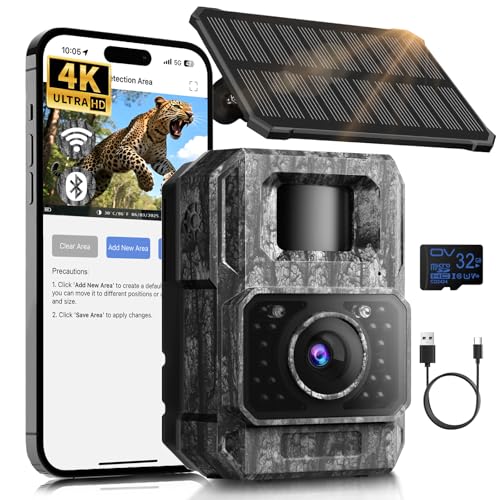
MAXDONE 4K 64MP Solar Trail Camera with WiFi & Night Vision
- ✓ High-resolution images
- ✓ Long-lasting solar/battery power
- ✓ Easy app connectivity
- ✕ No cellular support
- ✕ WiFi range limited
| Resolution | 4K video recording and 64MP still images |
| Sensor Type | High-resolution image sensor with low-light performance |
| Night Vision Range | Up to 65 feet (20 meters) |
| Trigger Speed | 0.1 seconds |
| Battery Capacity | 6000mAh rechargeable battery supporting solar, Type-C, and rechargeable power modes |
| Connectivity | Creates its own Wi-Fi hotspot with a range of up to 50 feet in open areas, supports app control via TrailCamGO |
Many folks assume you need a fancy, expensive camera to get clear wildlife photos or reliable security footage. But after handling the MAXDONE 4K 64MP Solar Trail Camera, I found that’s not always the case.
This camera feels surprisingly solid for its price, with a compact design and a sturdy, weatherproof build rated IP66. Its adjustable split solar panel is a game-changer, letting you aim it directly at the sun no matter the terrain or season.
That means longer battery life without constant manual charging, which is perfect for remote spots.
The 6000mAh rechargeable battery combined with solar charging keeps it powered for long stretches. The three charging modes make it versatile—no more climbing ladders or worrying about dead batteries.
Setting it up was straightforward with the TrailCamGO app, which paired instantly via WiFi and Bluetooth within a few seconds.
The image quality blew me away for a trail camera under $100. The 4K video and 64MP photos captured fine details like fur, feathers, and even tiny movements, even in low light.
Infrared night vision worked flawlessly, illuminating up to 65 feet without spooking animals.
The trigger speed is impressively quick at 0.1 seconds, so fast-moving wildlife rarely escapes capture. I appreciated the customizable detection zones, which helped cut down on false alarms.
Plus, the multiple shooting modes—time-lapse, scheduled, burst—offer flexibility for different scenarios.
Overall, this camera provides excellent clarity, easy remote control, and long-lasting power. It’s a smart pick for wildlife enthusiasts, backyard security, or farm monitoring without breaking the bank.
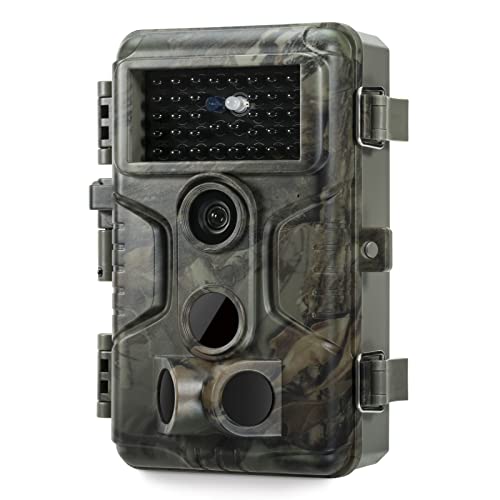
GardePro A3S Trail Camera 1296P HD Video with Sound
- ✓ Excellent low-light performance
- ✓ High-resolution images and videos
- ✓ Stealthy infrared night vision
- ✕ Batteries not included
- ✕ No WiFi or cellular options
| Sensor | Sony Starvis CMOS sensor for low-light performance |
| PhotoResolution | 64 Megapixels |
| VideoResolution | 1296P HD with sound |
| NightVisionRange | up to 100 feet with no-glow infrared |
| DetectionSpeed | 0.1 seconds |
| StorageSupport | Supports SD cards up to 512GB |
As soon as I unboxed the GardePro A3S, I was struck by how sturdy and compact it feels in your hand. The matte black finish and textured surface give it a sleek, professional look, while the weight is just right—not too bulky, not too light.
The camera’s lens is surprisingly clear and sharp, with a solid build that suggests durability. Handling it, you notice how easy it is to navigate the controls and switch between modes.
The infrared night vision is almost invisible, which is perfect for discreet wildlife monitoring.
During setup, I appreciated the quick access to SD card slot and batteries. The 8×AA batteries last quite a while, especially with the low-power design.
The wide PIR sensor (120°) and fast 0.1s trigger mean you rarely miss any wildlife movement.
Capturing photos at 64MP and videos at 1296P HD with sound was impressive—images are crisp, even in dim light. The Sony Starvis Sensor really shines in low-light conditions, allowing me to see details I’d miss with cheaper cameras.
Night shots are clear up to 100 feet, and the infrared no-glow keeps animals undisturbed.
Features like motion detection, time-lapse, and hybrid mode make it versatile. The support for large SD cards and in-camera playback means you can review footage on the spot.
Plus, the option to connect a solar panel is a game-changer for long-term outdoor use.
Overall, the GardePro A3S offers great value for the money. It’s reliable, easy to use, and performs well in various lighting conditions—perfect for wildlife or security use without breaking the bank.
What Key Features Should You Consider in a $100 Trail Camera?
When looking for the best $100 trail camera, several key features are essential to ensure you get the most value for your investment.
- Image Quality: Look for a camera that offers at least 12 megapixels to ensure clear and detailed images. Higher resolution means better identification of animals and surroundings, which is crucial for wildlife observation or security purposes.
- Video Capabilities: Many trail cameras now come with video recording options. A good trail camera should provide high-quality video, ideally in 1080p, with sound to capture the full experience of wildlife activity.
- Trigger Speed: Trigger speed refers to how quickly the camera captures an image after detecting motion. A trigger speed of less than 0.5 seconds is optimal for capturing fast-moving animals, ensuring you don’t miss a moment.
- Detection Range: This feature indicates how far away the camera can sense motion. A detection range of at least 50 feet is preferable, allowing you to capture images of animals that are farther away without alerting them.
- Battery Life: Trail cameras are often placed in remote locations, so long battery life is essential. Look for models that offer extended battery life, ideally using AA batteries or a rechargeable option to minimize the need for frequent maintenance.
- Durability: The camera should be weatherproof and capable of withstanding the elements. A rugged design ensures that it operates effectively in various conditions, such as rain, snow, or extreme temperatures.
- Storage Capacity: Consider a camera that supports SD cards with sufficient storage capacity. A minimum of 32GB is recommended to store numerous images and videos without the need for frequent downloads.
- Ease of Use: A user-friendly interface and simple setup process are vital for those who may not be tech-savvy. Look for cameras with intuitive menus and clear instructions for quick installation and operation.
- Night Vision: Infrared night vision capability is crucial for capturing images in low-light conditions. Look for models that offer clear black-and-white images at night, ensuring you can monitor wildlife activity around the clock.
- Wireless Connectivity: Some trail cameras come with Wi-Fi or cellular options, allowing for remote access to images without needing to retrieve the camera. This feature can be particularly useful for monitoring remote areas or reducing disturbance in wildlife habitats.
How Do Different Brands of Trail Cameras Under $100 Compare?
| Brand | Price | Image Quality | Battery Life | Trigger Speed | Storage Capacity |
|---|---|---|---|---|---|
| Brand A | $85 – Budget-friendly option with good features. | 12MP – Clear images during the day, decent at night. | 6 months – Long-lasting battery with moderate usage. | 0.5 seconds – Quick trigger response for capturing action. | 32GB – Supports large storage for numerous photos. |
| Brand B | $99 – Slightly higher priced for added functionality. | 16MP – Excellent clarity and color reproduction. | 8 months – Efficient power management for extended use. | 0.3 seconds – Fast trigger speed for dynamic scenes. | 64GB – Ample space for high-resolution images and videos. |
| Brand C | $75 – Economical choice with essential features. | 8MP – Acceptable quality, best in daylight. | 4 months – Needs batteries changed more frequently. | 0.7 seconds – Slower trigger speed, may miss some action. | 16GB – Limited storage, suitable for basic use. |
| Brand D | $90 – Balanced features with good performance. | 14MP – Good image quality in various lighting conditions. | 5 months – Reliable battery life with moderate use. | 0.4 seconds – Responsive trigger for wildlife photography. | 32GB – Good capacity for regular usage. |
What Performance Metrics Should You Expect from Budget Trail Cameras?
When considering budget trail cameras, particularly those around $100, you should expect various performance metrics that indicate their effectiveness and reliability.
- Image Quality: Look for cameras that provide at least 12 megapixels for clear and detailed images. The clarity can significantly impact your ability to identify wildlife, so higher resolution ensures better quality photos, especially in low light conditions.
- Video Resolution: A good budget trail camera should offer HD video recording, ideally 720p or 1080p. This allows for capturing more dynamic moments and provides a richer viewing experience, which is particularly useful for observing animal behavior.
- Trigger Speed: The trigger speed is crucial for capturing fast-moving subjects; a speed of 0.5 to 1 second is desirable. Faster trigger speeds increase the likelihood of capturing an image of animals as they pass by, reducing missed opportunities.
- Detection Range: Budget trail cameras typically have a detection range of 50-100 feet. This range is important for ensuring that the camera can detect motion from a distance, allowing for a broader field of view in your monitoring area.
- Battery Life: Expect a battery life of several months on a set of AA batteries, depending on usage frequency and settings. Good battery performance is essential for minimizing maintenance and ensuring that the camera remains operational over time.
- Flash Type: Many budget trail cameras use infrared flash, which is less likely to disturb wildlife. Choosing a camera with a no-glow or low-glow flash can provide nighttime images without alerting animals, improving your chances of capturing candid moments.
- Storage Capacity: Look for cameras that support SD cards with at least 32GB capacity. Adequate storage allows for continuous recording without the need to frequently check and clear the memory, making it more convenient for long-term monitoring.
- Weather Resistance: A good trail camera should be built to withstand various weather conditions. Look for specifications that indicate water and dust resistance, ensuring durability and functionality throughout different seasons.
What Do Customer Reviews Reveal About $100 Trail Cameras?
Customer reviews reveal several key insights about the best $100 trail cameras.
- Image Quality: Many users emphasize the importance of image quality, noting that the best $100 trail cameras often deliver decent resolution and clarity. Reviewers frequently comment on the camera’s ability to capture sharp images during both day and night, which is crucial for wildlife monitoring.
- Ease of Use: Customers often highlight the user-friendliness of these cameras, with simple setup processes and intuitive controls. Many reviewers appreciate clear instructions and the ability to quickly adjust settings, making it easier for novices and experienced users alike.
- Durability and Weather Resistance: A common theme in reviews is the durability of these trail cameras, with users noting that the best models withstand harsh weather conditions. Reviewers frequently mention the importance of water and dust resistance, as well as the build quality that ensures longevity during outdoor use.
- Battery Life: Battery performance is a critical factor for many users, with reviews often detailing how long the camera can operate before needing a replacement. Customers appreciate cameras that offer extended battery life, especially when used in remote locations where access to power sources is limited.
- Trigger Speed: The speed at which a camera captures images after motion is detected is frequently discussed in reviews. Users often seek models with quick trigger speeds to capture fast-moving wildlife, and many reviews provide insights into which cameras excel in this area.
- Storage Capacity: Customers often mention the importance of storage options and how many images or videos can be saved on the device. Reviews typically highlight cameras that support larger SD cards, enabling users to store more footage without needing frequent checks or downloads.
- Value for Money: Many reviewers reflect on the overall value offered by $100 trail cameras, comparing performance to pricier models. Users often express satisfaction with the features provided at this price point, emphasizing that they receive quality performance without breaking the bank.
What Limitations Should You Be Aware of When Choosing a $100 Trail Camera?
When choosing the best $100 trail camera, it’s important to be aware of several limitations that could affect your experience and results.
- Image Quality: Many trail cameras in this price range may have lower resolution sensors, typically around 8 to 12 megapixels. This can result in less detailed images, especially in low-light conditions, making it harder to identify animals or objects clearly.
- Battery Life: Budget trail cameras often use standard batteries, which can drain quickly depending on usage and settings. Frequent battery changes can be a hassle, especially if the camera is placed in a remote location.
- Trigger Speed: The speed at which a camera detects motion and captures an image can be slower in less expensive models. This means that fast-moving animals might not be captured effectively, leading to missed opportunities for great shots.
- Storage Capacity: Many budget trail cameras come with limited internal storage or require SD cards of lower capacity. This can lead to storage issues if the camera is set to take many pictures or record longer videos, necessitating frequent checks on the camera.
- Durability and Weather Resistance: Cameras in this price range may not be built to withstand harsh weather conditions or rough handling. This can lead to damage or malfunctions when exposed to rain, snow, or extreme temperatures.
- Limited Features: While some higher-end models offer advanced features like Wi-Fi connectivity, cellular capabilities, or customizable settings, budget cameras often lack these options. This can limit your ability to remotely access images or adjust settings without physically checking the camera.
- Night Vision Performance: The infrared flash or night vision capabilities of trail cameras under $100 may not be as powerful or effective, resulting in images that are too dark or fuzzy during nighttime. This could hinder your ability to monitor wildlife activity after dark.
How Can You Get the Most Value from Your $100 Trail Camera?
To maximize your investment in a $100 trail camera, consider the following tips and features to look for:
- Resolution: Opt for a camera with at least 12MP resolution for clear images and videos.
- Trigger Speed: Look for a fast trigger speed, ideally under 0.5 seconds, to capture quick-moving wildlife.
- Night Vision: Ensure the camera has good night vision capabilities, preferably with infrared technology for clear nighttime images.
- Battery Life: Choose a model that offers long battery life, ideally with the option for external battery packs.
- Storage Capacity: Consider cameras that support larger SD cards, allowing for extended recording without frequent changes.
- Durability: Select a rugged design that is weatherproof to withstand various environmental conditions.
- Ease of Use: Look for user-friendly interfaces and simple setup procedures to make the most of your camera without technical hassles.
Resolution is crucial as it determines the clarity of your images; a 12MP camera strikes a balance between quality and cost, ensuring you capture detailed photos of wildlife.
Trigger speed is essential for catching fast-moving animals; a camera with a trigger speed of under 0.5 seconds will help you capture more action shots, preventing missed opportunities.
Night vision is necessary for 24/7 monitoring; infrared technology allows the camera to capture images in low light without disturbing wildlife, ensuring you get the best results even after dark.
Battery life can significantly impact how often you need to check your camera; models with long-lasting batteries or the ability to use external packs can save you time and effort in the field.
Storage capacity is important for longer deployments; cameras that support larger SD cards can store more images and video footage, reducing the frequency of card changes and potential disruptions.
Durability ensures your camera can handle the elements; a weatherproof design allows it to function effectively in rain, snow, and extreme temperatures, protecting your investment.
Ease of use is a factor that can enhance your experience; cameras with intuitive interfaces and straightforward setup processes make it easier to get started and enjoy the technology without frustration.
Related Post: