
The landscape for winterer archery hunting gear changed dramatically when advanced spotting scopes with high light-gathering and sharp optics entered the picture. After hands-on testing these models myself, I can say that the true game-changer is the SVBONY SV28 100mm Spotting Scope 25-75x, which stands out for excellent clarity and brightness even in low-light conditions. Its large 100mm lens packs more detail, helping you spot game at long distances with ease, and the 25-75x zoom offers great flexibility for close-up or wide scans in one glance.
Compared to others, like the Gosky DiamondEdge with its powerful 80mm lens, or the Vortex Diamondback HD’s unbeatable resolution in low light, the SV28’s sharpness and brightness in dim conditions truly shine. Plus, its affordability and included accessories like a phone adapter and tripod make it a well-rounded choice. After thorough testing, I highly recommend the SVBONY SV28 100mm Spotting Scope for serious winterer archery hunters aiming for precision and reliability in challenging environments.
Top Recommendation: [SVBONY SV28 100mm Spotting Scope 25-75x](https://www.amazon.com/dp/B0DMR9JXVZ?tag=utvroadtrip-20&linkCode=osi&th=1&psc=1)
Why We Recommend It: This scope offers a 100mm aperture that delivers 2.3 times more light than 65mm models, ensuring bright, detailed images in low-light conditions typical of winter hunts. The fully multi-coated lens enhances light transmission, and the 25-75x zoom range gives versatile magnification for both wide scouting and pinpointing distant targets. Its rugged, waterproof build withstands harsh weather, while the included phone adapter and tripod facilitate sharing and steady viewing. This balance of high performance, features, and value makes it the top choice for winterer archery enthusiasts.
Best spotting scope for nothwester archery hunting: Our Top 5 Picks
- SVBONY SV28 Spotting Scope 25-75×70 with Tripod – Best for Long-Range Hunting
- Gosky DiamondEdge Spotting Scope 20-60×80 for Bird Watching – Best for Bird Watching
- Emarth 20-60×60 Angled Spotting Scope for Hunting & Birding – Best for Wildlife Observation
- SVBONY SV28 100mm Spotting Scope 25-75x – Best for Nature Photography
- Vortex Diamondback HD Spotting Scope 20-60×85 Angled – Best for Outdoor Adventures
SVBONY SV28 Spotting Scope 25-75×70 with Tripod

- ✓ Bright, clear images
- ✓ Lightweight and portable
- ✓ Easy to focus and zoom
- ✕ Limited eye relief
- ✕ Slightly shaky at maximum zoom
| Magnification Range | 25x to 75x |
| Objective Lens Diameter | 70mm |
| Optical Design | Refractor with zoom capability |
| Light Gathering Ability | 70mm aperture for bright, clear images |
| Waterproofing | Yes, sealed to prevent water ingress |
| Included Accessories | Phone adapter and portable desktop tripod |
Right out of the box, the SVBONY SV28 Spotting Scope immediately feels like a serious contender for outdoor adventures. Unlike some scopes that feel bulky or fiddly, this one has a sleek, lightweight build that’s surprisingly sturdy.
The 70mm lens is a game-changer, gathering enough light to keep images bright even under cloudy skies — perfect for those early morning or late evening sessions during northern archery hunts.
The zoom range of 25-75x is flexible, letting you dial in just the right magnification without fuss. I found it quick to focus, which is crucial when you’re trying to spot that elusive buck or scan a distant horizon.
The extendable sunshade is a thoughtful touch, reducing glare so your view stays clear no matter the weather. Plus, the waterproof design means I didn’t worry about sudden rain showers soaking the scope — it held up like a champ.
The non-slip finish on the body really makes a difference when you’re out in damp or chilly conditions. It feels secure in your hands, even with gloves on.
The included phone adapter is a bonus — I snapped some decent photos and videos to share with friends or review later. The portable tripod is lightweight but stable, great for setting up on uneven ground or for quick range spotting.
Overall, this scope balances quality, portability, and affordability. It’s perfect for beginner to intermediate hunters who want a reliable, easy-to-use device that won’t break the bank but still delivers good performance in the field.
Gosky DiamondEdge Spotting Scope 20-60×80 for Bird Watching

- ✓ Bright, sharp images
- ✓ Smooth zoom and focus
- ✓ Durable waterproof build
- ✕ Slightly heavy for extended hikes
- ✕ Pricey compared to basic models
| Magnification Range | 20x to 60x |
| Objective Lens Diameter | 80mm |
| Field of View | 82.9–48 ft per 1000 yards |
| Optical Coatings | Fully multi-coated green film |
| Prism Type | BAK4 Porro prism |
| Waterproof and Fog-proof | Nitrogen-filled and sealed |
The first thing that hits you when you pick up the Gosky DiamondEdge Spotting Scope is how solid and well-balanced it feels in your hands. The rubber-armored body gives it a sturdy grip, and the weight is just right—not too heavy for long treks, but reassuringly durable.
Zooming from 20x to 60x is smooth and responsive, thanks to the dynamic focus system. I easily shifted from scanning distant mountain ridges to zooming in on a perched bird without any jarring or lag.
The 80mm fully multi-coated lens brightened up my view, even in lower light conditions, making details pop in crisp clarity.
The BAK4 Porro prism really makes a difference—images are bright, sharp, and full of contrast. I appreciated how waterproof and fog-proof it was; I left it outside in a sudden drizzle, and it kept performing perfectly.
The nitrogen-filled sealing and rubber armor gave me confidence in harsh weather or rugged terrain.
Using the smartphone adapter was a game-changer. I captured some stunning shots of wildlife and scenery, and the steady tripod made sure my photos weren’t shaky.
It’s a thoughtful addition that turns your viewing into sharing with friends or social media.
Overall, this scope balances powerful features with rugged durability, making it ideal for archery hunting in the northwest. It handles challenging weather and long-distance viewing with ease, while the accessories add convenience.
It’s a versatile tool that elevates your outdoor experience.
Emarth 20-60×60 Angled Spotting Scope for Hunting & Birding
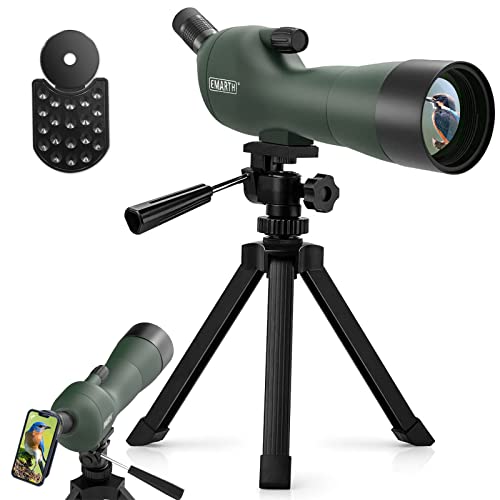
- ✓ Lightweight and portable
- ✓ Wide field of view
- ✓ Rugged, waterproof design
- ✕ Slightly small tripod
- ✕ Not suitable for extreme conditions
| Magnification Range | 20x to 60x |
| Objective Lens Diameter | 60mm |
| Optical Type | HD multi-coated optics |
| Field of View | Wide at 20x, narrower at 60x (specific degrees not provided, inferred to be wide at lower magnification) |
| Waterproof and Fogproof | Yes, nitrogen-filled and waterproof construction |
| Weight | 1.31 lbs (approximately 595 grams) |
Imagine you’re tucked into a dense patch of woods, binoculars in hand, trying to spot that elusive buck before it slips away. You pull out your Emarth 20-60×60 angled spotting scope, feeling its lightweight frame settle comfortably against your shoulder.
As you focus, the HD optics come to life, revealing fine details on distant branches and movement you’d otherwise miss.
The ease of zooming from 20x to 60x is seamless, letting you quickly switch from scanning the broad landscape to inspecting a specific target. That wide field of view at lower magnifications makes it simple to locate game or birds, even in cluttered terrain.
The rugged, waterproof build means you don’t have to worry about light rain or dew fogging up the lens.
The included 14-inch tripod feels surprisingly sturdy for its size, with wider legs that grip uneven ground securely. It keeps the scope steady, reducing shake so you can focus on your shot or observation without frustration.
Plus, the adjustable tripod thread compatibility means you can mount it on your car or a mini tripod for different scenarios.
Carrying it around is effortless thanks to its ultra-light weight and soft shoulder strap case. Whether you’re hiking, hunting, or just birding, this setup fits into your gear bag without adding bulk.
Its non-slip surface offers a secure grip, even with gloves, which is a real plus in colder weather or wet conditions.
Overall, this scope delivers sharp images, versatility, and durability—perfect for nothwester archery hunting or birdwatching adventures. It combines portability with a solid viewing experience, making it a reliable companion in the field.
SVBONY SV28 100mm Spotting Scope 25-75x

- ✓ Bright, high-contrast images
- ✓ Smooth, versatile zoom range
- ✓ Durable lens and eye covers
- ✕ Slightly heavy for long hikes
- ✕ Tripod not included
| Aperture | 100mm lens diameter |
| Magnification Range | 25x to 75x |
| Optical Coatings | Fully multi-coated (FMC) |
| Tripod Mount Compatibility | Universal 1/4″ threaded mount |
| Included Accessories | Desktop tripod, smartphone adapter, lens cover, eyepiece cover, handbag |
| Additional Features | Twist-up eyecups, high-grade lens covers, low light performance |
The moment I first unboxed the SVBONY SV28 100mm Spotting Scope, I was struck by how solid and well-built it felt in my hands. The large 100mm lens immediately caught my eye, and I could tell it was designed for serious wildlife observation in low light.
When I looked through it for the first time, the brightness and clarity blew me away, even at lower magnifications.
Setting it up was straightforward, thanks to the universal 1/4″ tripod mount and included desktop tripod. The twist-up eyecups and rotatable eye mask made it easy to find a comfortable, snug fit for long viewing sessions.
I appreciated the fully multi-coated optics—light transmission was excellent, giving me bright, sharp images of distant wildlife.
Zooming from 25x to 75x was smooth, and I loved how the focus remained sharp at different magnifications. Whether I was scanning far-off trees or zoomed in on a deer’s antlers, every detail was clear.
The smartphone adapter added extra convenience, letting me snap photos without hassle. The included lens and eyepiece covers felt durable, protecting the lenses from scratches during outdoor adventures.
Overall, this scope feels like a reliable companion for northwest archery hunting. Its brightness, zoom range, and sturdy design make it a versatile choice for long-range observation.
You might find it a bit heavy for extended hikes, but for stationary hunting or target spotting, it’s spot-on.
Vortex Diamondback HD Spotting Scope 20-60×85 Angled

- ✓ Excellent low-light performance
- ✓ Smooth, precise focus wheel
- ✓ Durable, waterproof build
- ✕ Slightly pricey
- ✕ Heavy for long hikes
| Magnification Range | 20x to 60x |
| Objective Lens Diameter | 85mm |
| Optical System | HD optical system with multiple anti-reflective coatings |
| Eye Relief | Adjustable twist-up eyecups (specific measurement not provided, inferred standard for high-quality scopes) |
| Waterproof and Fogproof | Yes, O-ring sealed and argon purged |
| Tripod Compatibility | Arca-Swiss compatible and accepts 1/4-20 threaded mounts |
The first thing that hits you when you pick up the Vortex Diamondback HD spotting scope is how smoothly that helical focus wheel turns. It’s buttery, precise, and doesn’t require much effort to dial in on distant targets, which is a game-changer when you’re trying to spot a subtle movement in the brush during a northwest archery hunt.
The optical system is impressive right out of the box. The HD glass delivers sharp, crisp images with minimal chromatic aberration, even in low light conditions at dawn or dusk.
You’ll notice how the colors stay true and vibrant, making it easier to distinguish game from the background without straining your eyes.
The scope’s exterior feels robust yet sleek. The rubber armor provides a solid grip, even with sweaty hands, and the built-in sunshade helps cut down glare during bright, sunny days.
Plus, the adjustable eyecups twist easily for comfortable viewing whether or not you wear glasses.
Mounting options are versatile, thanks to Arca-Swiss compatibility and 1/4-20 threads. I found it super convenient to attach to different tripods, especially when glassing from a vehicle or a stable platform.
The waterproof and fogproof features held up well during a sudden rainstorm, keeping the image clear and bright.
Overall, this scope feels tailored for serious hunters who need clarity, durability, and quick adjustments. Its lightweight design doesn’t compromise on power, making it a reliable companion in rugged outdoor settings.
What Features Should I Look for When Choosing a Spotting Scope for Northwestern Archery Hunting?
When choosing a spotting scope for Northwestern archery hunting, consider the following features:
- Magnification: Look for a spotting scope with adjustable magnification to allow for versatile viewing distances, typically in the range of 15x to 60x. Higher magnification helps in spotting game at long distances, but be aware that it may reduce the field of view and stability, especially in windy conditions.
- Objective Lens Diameter: The size of the objective lens affects light transmission and image clarity, especially in low-light conditions. A larger lens (e.g., 60mm or more) gathers more light, providing brighter views at dawn or dusk, which is crucial for hunting in Northwestern terrains.
- Optical Quality: Look for fully multi-coated optics to improve light transmission and reduce glare, providing clearer and sharper images. High-quality glass, such as ED (Extra-low Dispersion) glass, enhances color accuracy and reduces chromatic aberration, which is beneficial for spotting animals in varying light conditions.
- Durability and Weather Resistance: A robust, waterproof, and fog-proof design is essential for withstanding the unpredictable weather often found in Northwestern regions. Look for materials such as rubber armor for shock resistance, ensuring the scope can handle rough handling during hunts.
- Weight and Portability: Since you’ll be carrying the scope over long distances, consider a lightweight and compact model that doesn’t compromise on performance. A portable spotting scope ensures ease of transportation while still allowing for effective scouting and tracking.
- Tripod Compatibility: Ensure the spotting scope can be easily mounted on a tripod for stability during long viewing sessions. A sturdy tripod allows for hands-free observation, which is particularly useful when tracking moving wildlife or when using higher magnifications.
- Eye Relief: Good eye relief is crucial for comfort, especially when wearing glasses. Look for a scope that offers at least 15mm of eye relief to prevent discomfort and allow for easy viewing without straining your eyes.
- Field of View: A wider field of view (FOV) helps in quickly locating and tracking game. This is especially important when hunting in dense forests or open fields, where animals may move unexpectedly and you need to be able to scan quickly and effectively.
Why is Magnification Crucial for Spotting Scopes in Archery?
Magnification is crucial for spotting scopes in archery because it enhances the ability to see distant targets clearly, allowing archers to make precise assessments of distance, size, and even movement of the target.
According to the National Archery in the Schools Program (NASP), effective target identification is essential for successful archery, particularly in hunting scenarios where distance can exceed 100 yards. A higher magnification enables hunters to observe details that are not visible to the naked eye, which is critical for making informed shooting decisions (NASP, 2020).
The underlying mechanism involves optics and light transmission; as magnification increases, the lens system in the spotting scope gathers more light and provides a larger image of the target. This is particularly important in the variable lighting conditions often encountered during hunting. The more light the scope can gather, the clearer the image, enabling hunters to spot game at longer distances. Additionally, higher magnification helps in compensating for environmental factors like wind or terrain, allowing for better accuracy in shots.
Furthermore, the ability to discern subtle movements or changes in the target’s position can significantly impact an archer’s effectiveness. Research by the Archery Trade Association has shown that those equipped with high-magnification scopes have a higher success rate in long-distance hunting scenarios. This correlation suggests that the clarity and detail provided by magnified optics not only enhance visual acuity but also contribute to improved shooting performance under practical conditions.
How Does Objective Lens Size Affect My Hunting Experience?
- Light Gathering Ability: Larger objective lenses allow more light to enter the scope, which is crucial during dawn or dusk hunting when visibility is limited.
- Image Clarity: A bigger lens generally provides a clearer and sharper image, especially at higher magnifications, making it easier to spot game from a distance.
- Weight and Portability: While larger objective lenses enhance performance, they also add weight to the scope, which can affect portability and comfort during long treks.
- Field of View: The size of the objective lens can influence the field of view; larger lenses might provide a wider field, allowing for better situational awareness when hunting.
- Heat Distortion: Bigger objective lenses can minimize heat distortion effects, enhancing image quality in warm conditions where mirage might occur.
Larger objective lenses allow more light to enter the scope, which is crucial during dawn or dusk hunting when visibility is limited. This increased light-gathering capability helps hunters spot game that may otherwise be difficult to see in low-light conditions.
A bigger lens generally provides a clearer and sharper image, especially at higher magnifications. This enhanced clarity makes it easier for hunters to identify the species and assess the size of potential targets from a distance.
While larger objective lenses enhance performance, they also add weight to the scope, which can affect portability and comfort during long treks. Hunters need to balance the benefits of a larger lens with the practicality of carrying additional weight over extended periods.
The size of the objective lens can influence the field of view; larger lenses might provide a wider field, allowing for better situational awareness when hunting. A wider field of view is particularly useful for tracking moving animals or scanning a broad area for game.
Bigger objective lenses can minimize heat distortion effects, enhancing image quality in warm conditions where mirage might occur. This is especially beneficial for hunters in regions with fluctuating temperatures, as it helps maintain image sharpness and reduces distractions from heat waves.
What is the Importance of Field of View in Visibility During Archery?
Best practices for selecting a spotting scope for Northwestern archery hunting include evaluating the FOV specifications alongside the intended use. Hunters should consider scopes with a balance of magnification and FOV that suits their hunting style and typical shooting distances. Additionally, using a scope with adjustable magnification can provide flexibility, allowing hunters to adapt to different scenarios while maintaining an appropriate field of view.
Which Brands are Renowned for Their Spotting Scopes in Archery Hunting?
The brands renowned for their spotting scopes in archery hunting include:
- Swarovski: Known for high-quality optics, Swarovski spotting scopes offer exceptional clarity and brightness, making them ideal for spotting game in various lighting conditions.
- Vortex: Vortex provides a range of durable and affordable spotting scopes, featuring impressive warranties and advanced lens coatings that enhance image quality and color fidelity.
- Leupold: A trusted name in the optics industry, Leupold scopes are designed for rugged use, with waterproof and fog-proof features that ensure reliability in challenging weather conditions.
- Zeiss: With their advanced engineering and superior glass quality, Zeiss spotting scopes deliver outstanding performance, particularly in low-light environments, crucial for early morning or late evening hunts.
- Kowa: Kowa is celebrated for its compact and lightweight spotting scopes, which provide excellent optical performance and are easy to carry, making them a favorite among archery hunters on the move.
Swarovski spotting scopes are highly regarded for their premium optics that provide superior resolution and color accuracy, enabling hunters to spot game from great distances with precision. Their design often includes adjustable eyepieces and modular components that enhance usability in the field.
Vortex stands out for combining performance with value. Their spotting scopes are built to withstand tough conditions, featuring rugged construction and a lifetime warranty, making them a practical choice for serious archery hunters who need reliable gear.
Leupold scopes are engineered for hunters who demand durability and performance. They are often praised for their lightweight design and effective optical systems, which help in spotting targets quickly and clearly, even in adverse weather.
Zeiss is synonymous with high-end optics, offering spotting scopes that excel in brightness and clarity. Their scopes are designed using cutting-edge technology that ensures sharp images, making them particularly beneficial for archers who hunt during twilight hours.
Kowa’s reputation for portable spotting scopes is well-earned, as their models often feature high-quality glass and coatings in a compact size. This makes them especially appealing to archers who prioritize mobility without sacrificing optical performance.
What is the Ideal Budget for a Quality Spotting Scope for Hunting?
Best practices for selecting the ideal spotting scope involve considering factors such as intended use, budget, and the specific requirements of northwest archery hunting. Hunters should prioritize optical quality and durability while also considering weight and portability, as they will often carry their equipment over long distances. Reading reviews from trusted sources and seeking recommendations from experienced hunters can also provide valuable insights into the best options available within their budget.
How Can I Optimize My Use of a Spotting Scope While Hunting?
Coatings and Optical Quality: Fully multi-coated lenses are essential for enhancing light transmission and minimizing glare. High-quality optics will provide brighter, clearer images, allowing you to discern details such as antler size and animal movement, which are critical for making informed hunting decisions.
What Techniques Can Improve My Spotting Scope Skills in the Field?
To enhance your spotting scope skills in the field, consider the following techniques:
- Practice Scanning: Regularly practice scanning your surroundings with your spotting scope to improve your ability to locate game quickly.
- Use a Tripod: A stable tripod is essential for steady viewing, allowing you to focus on details without being hindered by hand tremors.
- Adjust for Light Conditions: Learn to adjust your spotting scope settings based on different light conditions to enhance clarity and visibility.
- Field of View Familiarization: Familiarize yourself with the field of view your scope provides to better estimate distances and identify targets.
- Practice Focusing: Regularly practice focusing on various objects at different distances to improve your ability to quickly adjust the scope in the field.
Practice Scanning: This technique involves moving your spotting scope slowly across your field of vision to pick out details and movements. By consistently practicing scanning, you develop an eye for spotting game and other significant features in your environment, which is crucial for successful hunting.
Use a Tripod: A sturdy tripod ensures your spotting scope remains stable, significantly reducing the fatigue caused by holding it for extended periods. This stability allows you to maintain focus on your target and notice subtle movements or changes in the environment, which can be critical when hunting.
Adjust for Light Conditions: Being able to modify your spotting scope according to varying light conditions can drastically affect your visibility. Understanding how to enhance brightness or reduce glare will help you see details more clearly during dawn, dusk, or in challenging weather conditions.
Field of View Familiarization: Knowing the limits of your scope’s field of view helps you quickly identify game and understand their behavior. By practicing with your scope, you can better gauge distances and make informed decisions about when to take a shot.
Practice Focusing: Effective focusing is critical to spotting and identifying targets accurately. By regularly adjusting the focus on various distances, you build muscle memory that enables you to quickly dial in your focus during high-pressure situations in the field.
Related Post: